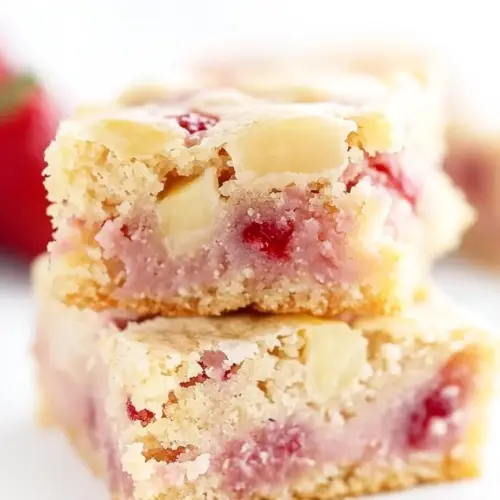
Strawberry Lemon Blondies
Strawberry Lemon Blondies are buttery, fruity bars with a bright citrus twist and pockets of fresh berry. These easy to slice blondies offer a tender crumb, glossy lemon glaze, and a balance of sweet and tart that makes them perfect for spring gatherings or casual treats. Make them for a picnic or potluck and enjoy how they disappear fast.
Equipment
- 9×13 baking dish
- Parchment Paper
- Mixing Bowls
- Whisk
- Mixer
Ingredients
- 1 cups salted butter (softened) Softened to ensure smooth creaming with sugars and to provide rich fat that tenderizes the blondie batter; helps create a moist, tender crumb and contributes to overall flavor depth.
- 3/4 cup granulated sugar Added to contribute sweetness and help with structure during creaming; promotes lightness and helps dissolve into the butter for even texture throughout the blondies.
- 3/4 cup light brown sugar Included to add a deeper caramel-like sweetness and moisture; balances flavor complexity and aids in keeping the blondies soft and chewy.
- 2 large eggs Beaten into the batter to provide structure, moisture, and richness; eggs help bind ingredients, trap air for lift, and contribute to the blondies' tender crumb.
- 1/4 cup fresh lemon juice Squeezed in to provide bright acidity and fresh citrus flavor that balances sweetness; helps enhance the lemon character and slightly tenderize the batter.
- 1 lemon zest (about 1/2 teaspoon) Zested to deliver concentrated citrus oils and aromatic brightness; adds fragrant lemon notes that intensify the overall lemon profile without extra liquid.
- 1 teaspoon vanilla extract Used to add warm, familiar vanilla notes that round out flavors; enhances sweetness perception and harmonizes the lemon and strawberry elements.
- 1 teaspoon lemon extract Added to amplify the lemon flavor with a concentrated citrus essence; provides a stronger lemon profile without extra acidity or liquid in the batter.
- 2 3/4 cups all-purpose flour Measured as the primary dry base to give structure and body to the blondies; all-purpose flour provides gluten for chewiness while binding wet ingredients together.
- 1 teaspoon baking powder Included as a leavening agent to help the blondies rise slightly and create a lighter texture; works with eggs to provide modest lift during baking.
- 1/2 teaspoons salt Added to enhance overall flavor balance by reducing sweetness and strengthening other tastes; salt also helps control and develop gluten for structure.
- 2 teaspoons cornstarch Starch incorporated to tenderize the crumb and help with moisture retention; cornstarch can yield a softer, more cake-like texture in the blondies.
- 1 cup strawberries (diced) Diced and folded in to provide fresh, fruity bursts and natural sweetness; strawberries add color, texture, and a complementary flavor to the lemon.
- 1 teaspoon lemon extract Added to intensify the lemon aroma and taste with a second dose of concentrated extract; boosts citrus notes in both batter and finishing components.
- 1 cup powdered sugar Sifted into glazes or dusted to add fine sweetness and smooth texture; powdered sugar dissolves easily and creates a silky finish for drizzling or frosting.
- 2 tablespoons heavy cream Poured into the glaze to loosen powdered sugar and create a creamy consistency; heavy cream adds richness and helps form a glossy topping.
- 1 to 2 drops red food coloring Used sparingly to adjust color of the glaze or batter to a desired pink hue; a drop or two provides visual appeal without altering flavor.
Instructions
- Preheat the oven to 350°F. Line a 9×13 glass baking dish with parchment paper and set it aside.: As you heat the oven, notice the warm, dry air and the faint scent of metal warming up, which helps the top brown evenly. I like to place the rack in the middle to promote uniform baking. A common mistake is not allowing the oven to reach temperature, which can cause uneven rise and gummy centers, so wait until it fully preheats.
- Cream together butter, sugar, and brown sugar for 1 to 2 minutes.: The parchment provides a nonstick surface and makes lifting the blondies effortless once cooled, and you might hear a slight crinkle as you press it into place. Glass dishes retain heat differently than metal, so they often produce slightly darker edges, which I actually prefer. Avoid skipping the parchment because cutting and removing bars can become messy and the bottoms may stick.
- Add in eggs, lemon juice, lemon zest, vanilla extract, and lemon extract. Beat on medium-high for 3 to 4 minutes, scraping down the sides of the bowl occasionally. The mixture may look a bit separated but should beat into a light, fluffy mixture.: When you cream butter and sugars, the mixture should turn pale and slightly fluffy, with a subtle hum from the mixer. This step traps air that creates lift and tenderness in your bars. If you hurry this step, the texture can be dense and the sugars might not fully dissolve, leaving a grainy batter.
- In a separate bowl, combine flour, baking powder, salt, and cornstarch.: As you incorporate the eggs and lemon components, the batter will become glossy and smell bright, with lemon oils lifting the aroma. Mix until the batter looks cohesive, scraping the bowl so nothing hides on the sides. Overmixing here can create too much gluten development, leading to a tougher crumb, so stop once ingredients are combined and smooth.
- Add the flour mixture to the butter mixture and mix just until combined.: The extended beating aerates the batter and helps the eggs fully emulsify with the butter , producing a light texture. You should see the batter lighten in color and become slightly voluminous. If you see large air pockets or the batter seems gone, you may have overbeat, which risks collapse during baking.
- Beat in diced strawberries, just until combined.: That separated look is normal when fats and liquids first meet; as you continue beating, it should come together into a uniform, airy batter with a soft sheen. If it stubbornly separates, stop and gently fold instead of continuing high speed, because overworking separate mixtures can cause broken emulsion and grainy texture.
- Spread the mixture into the prepared baking dish.: When you whisk these dry ingredients, the cornstarch and baking powder disperse so each bite has the same tender lift. You might notice a faint powdery scent and the even color of the flour blend. Failing to properly combine will lead to pockets of leavening or salt, which make uneven flavor and texture.
- Bake blondies for 30 minutes or until a toothpick inserted in the center comes out clean.: As the dry mix vanishes into the wet, the batter will thicken and the sound of the mixer will soften. Stop mixing as soon as you no longer see streaks of flour to avoid gluten overdevelopment, which keeps bars tender. A common error is to overmix, resulting in a tougher, bread like texture.
- Whisk together glaze ingredients until smooth.: Folding in the diced strawberries should be gentle, preserving some fruit texture and keeping the batter from turning overly pink and wet. You will see bright red flecks distribute through the batter and may smell fresh berry perfume. If you stir too vigorously, the fruit will release juice and make the batter too wet.
- Spread over the warm blondies.: When you spread, press gently to create an even thickness, smoothing the surface so the bars bake uniformly and the top is flat. The batter should feel slightly tacky, and when evened, the edges will begin to set faster in the oven. Pressing too hard can compress the air you worked into the batter, leading to denser bars.
- Allow blondies to cool completely before cutting into squares.: During baking you will notice a warm, fruity aroma and edges turning a deep golden color while the center remains slightly soft. If the toothpick shows damp crumbs, they will likely set as the bars rest; however, a wet batter indicates more time is needed. Overbaking will dry the interior, so check early and watch for that gentle jiggle in the center as the sign to remove from the oven.
- Whisk together glaze ingredients until smooth: The glaze should become glossy and pourable, with the scent of lemon lifting as you whisk powdered sugar and heavy cream . Aim for a consistency that coats the back of a spoon, and tint with a tiny amount of red food coloring if you want a soft pink hue. If the glaze is too thin, add more powdered sugar , and if too thick, thin with a touch more heavy cream .
- Spread over the warm blondies: Pour the glaze while the bars are still warm so it spreads smoothly and sets to a thin sheen. You will see it fill small crevices and give the top a glossy finish that catches the light. If the blondies are too hot, the glaze can run off, and if too cool, it may not spread evenly, so aim to glaze while warm but not piping hot.
- Allow blondies to cool completely before cutting into squares: Cooling lets the crumb set and the glaze firm slightly, giving clean cuts and stable squares. You will notice the bars firming and the aroma mellowing into a concentrated fruit and citrus scent. Cutting too soon can cause the bars to crumble and the glaze to smear, so be patient for best presentation.
Notes
- More fudgy texture: Reduce the all-purpose flour by a quarter cup to create a denser, chewier center that feels almost brownie like, but be mindful that too little flour can make bars overly fragile.
- Intensify lemon: Increase the amount of lemon zest slightly to amplify aromatic oils, which makes the citrus come forward without adding liquid that could affect bake time.
- Presentation upgrade: Top with a thin layer of glaze and scatter a few finely diced fresh strawberries on top for a glossy, bakery style finish that entices guests at first sight.
- Make ahead: Bake the bars a day early and store them covered at room temperature, then glaze them the next day for the freshest appearance and taste.
- Adjust sweetness: If you prefer less sweet treats, reduce the granulated sugar by a tablespoon or two, tasting the batter cautiously because altering sugar changes texture slightly.
- Glaze texture: Add a touch more heavy cream to the glaze for a silkier pour, or chill it briefly to thicken if you want a thicker, pipe friendly icing.