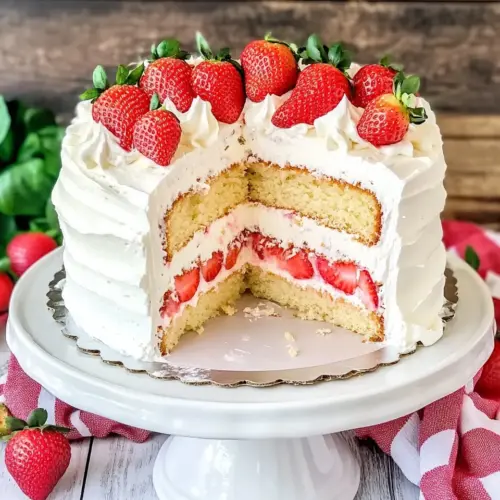
Strawberry Layer Cake
Strawberry Layer Cake is a moist, tender layered cake with bright berry flavor and tangy cream cheese frosting. This easy celebration cake balances soft crumb, real strawberries, and a creamy frosting for an impressive but approachable dessert, perfect for brunch or easy weeknight gatherings. Make it to share and enjoy its lasting freshness and lovely presentation.
Equipment
- 9-inch Round Cake Pan
- Kitchen-Aid Mixer
- Cake Leveler
- Offset Spatula
Ingredients
- 2 cups sugar Sweeten the cake batter and add moisture while contributing to browning and texture during baking; helps dissolve and integrate flavors for an even crumb.
- 3 1/4 cups self-rising flour Provide structure and leavening due to self-rising agents while supplying bulk to the batter; helps create a tender, consistent crumb in the cake.
- 1 (3-oz) package strawberry jello Impart concentrated strawberry flavor and color while dissolving into the batter to enhance overall fruit profile; aids in stabilizing the strawberry notes.
- 1 cup frozen sliced strawberries with juices, thawed Add natural strawberry flavor and juices for moisture and fruit texture; thawed berries distribute pieces and acidity throughout the batter.
- 1 1/2 cups vegetable oil Contribute fat for moisture and richness while promoting a tender crumb; helps suspend ingredients and extend freshness of the cake.
- 5 eggs Bind ingredients, add richness, and contribute to leavening and structure through beaten eggs; help create a stable emulsion with the oil.
- 3 tbsp ricotta cheese Introduce a subtle creaminess and slight tang to the filling or batter while adding moisture; small amount enriches texture without overpowering.
- 12 -oz cream cheese, room temperature Provide rich, creamy body and tang for the frosting or filling while creating a smooth, spreadable consistency at room temperature.
- 1/2 cup butter, room temperature Add buttery flavor and contribute to a smooth, spreadable frosting texture while helping achieve desired consistency and mouthfeel.
- 2 cups sugar Sweeten the frosting substantially and provide structure when creamed with butter and cream cheese; balances tang and stabilizes sweetness.
- 1 tsp strawberry extract Deliver concentrated strawberry aroma and flavor to the frosting or batter; a small amount intensifies the fruit profile without adding liquid.
- 1 (2-lb) bag powdered sugar Sweeten and thicken the frosting while providing structure and stability; powdered sugar blends smoothly to create a silky, pipeable consistency.
- 1/3 cup frozen sliced strawberries, thawed and drained Offer bursts of strawberry flavor and small fruit pieces for texture in fillings or as garnish; thawed and drained to avoid thinning frostings.
Instructions
- Preheat oven to 350ºF. Grease and flour two 9-inch cake pans. Set aside.: You will notice the oven begin to warm and the air in the kitchen becomes cozy, which is the first sign that baking is starting. Preparing the pans properly is crucial because a well greased and floured surface allows the layers to release cleanly, preserving their shape when you invert them. A common mistake is uneven greasing, which can cause the cake to stick on one side and tear when removed. Use a light brush of oil or a paper towel with shortening then dust with flour, tapping out excess, so the batter climbs evenly as it bakes, producing uniform rise and a smooth outer crust.
- In the bowl of an electric mixer fitted with the paddle attachment, mix together the sugar, flour, and jello. Add the thawed strawberries and juice, oil, eggs, and ricotta cheese. Mix until thoroughly combined.: As the paddle turns, you will hear a steady, gentle hum and see a glossy batter form, dotted with pink flecks from the strawberries . This harmonizing step builds structure while distributing flavor, and the smell of sugar and strawberry starts to lift. If the mixture looks curdled, it usually means temperature differences between ingredients, so bring eggs and ricotta closer to room temperature before combining. Avoid overmixing at high speed, which can develop gluten and create a tougher crumb; mix just until homogenous and slightly ribbon like.
- Pour batter into prepared pans. Bake 25 to 30 minutes, until a toothpick comes out clean. Remove from oven and cool completely.: Pouring the batter should feel smooth, viscous, and pourable; it will settle into a uniform surface. As it bakes, you will smell warm sugar and strawberries intensifying, and the tops will turn a light golden pink. The toothpick test is key, and a clean pick means moisture is balanced. If the center is still wet, return it to the oven in short increments to avoid overbaking the edges. Cooling completely prevents the frosting from melting into the crumb; patience here yields neat layers and stable frosting.
- To prepare the frosting, in the bowl of an electric mixer fitted with the paddle attachment, mix together cream cheese and butter until light and fluffy, about 1 to 2 minutes. Add sugar, strawberry extract, and thawed strawberry slices. Slowly add the powdered sugar until the desired consistency is reached.: When the cream cheese and butter are properly creamed, the mixture will look pale and airy and have a faint buttery aroma. Adding the sugar and strawberries brings sweetness and fruit perfume, while the powdered sugar thickens the mixture into a spreadable paste. Work slowly to incorporate the powdered sugar so the frosting stays smooth rather than gritty, and if the texture becomes too soft, chill briefly. A common error is using cold cream cheese , which leaves lumps; always start with room temperature ingredients for the silkiest frosting.
- Cut cake each layer into two making four layers. Place one cake layer on a cake stand or plate. Spread some of the strawberry frosting on top. Top the frosting with the second layer and frost. Repeat with remaining layers and frost the tops and sides of the cake with remaining strawberry frosting.: When slicing the cooled layers, you will feel a satisfying resistance as the knife moves through, revealing a moist interior streaked with pink. Arranging layers on a stand gives you a central workspace to rotate and frost easily. The frosting should spread like silk, with a slight sheen, and the aroma of strawberries becomes more pronounced as you work. One pitfall is pressing too hard while smoothing, which compresses layers; use light, even strokes to preserve lift. Alternating frosting and cake layers ensures each bite is balanced across texture and flavor.
- Refrigerate until ready to serve.: After assembling, chilling the cake firms the frosting and helps flavors meld, and you will notice the aroma settle into a rounded, well blended scent. Refrigeration also makes cleaner slices, as the chilled frosting resists smudging. Be mindful that too long in the fridge can tighten the crumb; allow the cake to sit at room temperature for a short while before serving so the frosting softens slightly and the flavors open up. A common oversight is skipping the brief rest before slicing, which can lead to a cold, firm mouthfeel rather than the intended creamy texture.
Notes
- Use fresh strawberries for extra brightness If you have fresh, ripe strawberries available, chop them and fold gently into the frosting instead of frozen fruit. Fresh berries deliver a brighter aroma and small bursts of juice, though they will shorten frosting life so serve sooner.
- Make the frosting firmer for hot climates Add powdered sugar slowly and chill the frosting between additions until you reach a spreadable yet firm consistency. This helps the cake stand up to warmer rooms and keeps edges neat when displaying.
- Create a drizzle finish Reserve a few of the thawed strawberries juices and reduce them into a syrup to drizzle over the top. This adds glossy shine and concentrated berry flavor, but use sparingly to avoid soggy layers.
- Layer with thin jam for extra fruit density Spread a thin layer of sieved strawberry jam between cake layers before frosting for amplified fruit flavor and an elegant look. Use a light hand to maintain balanced sweetness and avoid sliding layers.
- Stabilize the frosting for taller cakes If you plan to stack tall layers, chill the frosted cake between applications and consider folding in a little sifted powdered sugar to provide additional structure. This helps keep tall tiers from leaning while preserving taste.