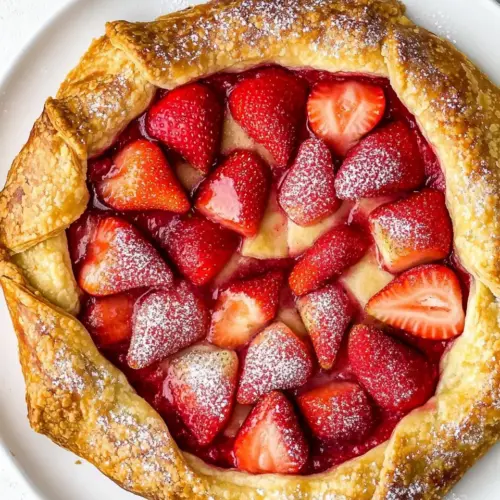
Strawberry Galette
Strawberry Galette is a crisp, flaky pastry filled with juicy, sugar kissed strawberries. This easy, rustic tart delivers bright, tangy fruit and a buttery crust that is perfect for an easy weeknight dessert or spring celebration, and it bakes into a golden, glossy finish that tempts every palate to take a second slice.
Equipment
- Food Processor
- Parchment Paper
- Rolling Pin
- Plastic Wrap
- Baking Sheet
- Pastry Brush
Ingredients
- 1 1/2 cups all-purpose flour Provides structure and body to the pastry; its gluten develops when mixed, giving the crust enough strength to hold filling while keeping a tender crumb when handled minimally. Use as measured to ensure proper dough texture and balance with fats and liquids for a flaky result.
- 1/4 cup finely ground white cornmeal Adds a slight grainy texture and subtle corn flavor to the crust; helps absorb some moisture and contributes to a more rustic, golden bake. Finely ground cornmeal also prevents the pastry from becoming soggy where it contacts the fruit filling.
- 1 tablespoon granulated sugar Balances sweetness in the dough and enhances browning during baking; a small amount subtly lifts flavor without making the crust noticeably sweet. Dissolve into dry ingredients to distribute evenly for consistent taste and color.
- 1/4 teaspoon salt Defines basic seasoning for the pastry and controls flavor balance; salt strengthens gluten slightly and brightens the overall taste of both crust and filling. Mix with dry ingredients to ensure even seasoning throughout the dough.
- 1 stick (8 tablespoons) unsalted butter cubed Provides cold fat necessary for flaky layers; cubed butter distributed throughout the dough creates steam pockets that separate layers during baking. Keep butter cold and work quickly to maintain distinct pieces for optimal flakiness.
- 1/4 cup (4 tablespoons/60ml) ice water divided Hydrates the flour to form dough while keeping the mixture cold; dividing the water helps control consistency so dough comes together without becoming sticky. Use ice water to minimize butter melting and preserve flakiness in the pastry.
- 1 egg for egg wash mixed with 1 teaspoon of water Forms a glossy, golden finish on the baked crust; beaten together, the egg and water create an egg wash that promotes even browning and helps jams or sugars adhere. Brush on just before baking for a shiny, attractive appearance.
- 3 cups strawberries sliced Provides the primary fresh fruit component and natural sweetness; sliced strawberries release juices and soften during baking to create a saucy, fruity filling. Choose ripe strawberries and slice uniformly to ensure even cooking and texture.
- 1 tablespoon lemon juice Adds bright acidity to balance sweetness and enhance fruit flavor; lemon juice helps macerate the strawberries and prevents them from tasting flat. Mix into the fruit to lift flavors and contribute subtle tartness.
- 1 tablespoon granulated sugar Contributes additional sweetness to the filling and assists in caramelization; sprinkling sugar over the fruit helps draw out juices and creates a syrupy consistency during baking. Adjust slightly for fruit ripeness but maintain the measured amount for balance.
- 2 tablespoons cornstarch Thickens the strawberry juices released during baking into a cohesive filling; cornstarch forms a smooth, clear gel when heated with fruit liquids. Toss with the fruit to coat pieces evenly and prevent a runny galette.
- 1 tablespoon strawberry jam Adds sheen and concentrated strawberry flavor to the finished filling; warming and brushing jam over the top enhances gloss and reinforces fruit taste. Thin slightly if needed before brushing to ensure smooth application and even coverage.
- 1 teaspoon water Thins and helps dissolve the jam for glazing while controlling consistency; a small splash of water loosens the jam so it spreads smoothly without clumping. Mix with the jam before brushing to achieve an even, shiny glaze on the galette.
Instructions
- By hand: In a large bowl, combine the flour with cornmeal, salt, and sugar. Add the butter, and using a pastry cutter, cut the butter into the flour until it resembles coarse sand. Gradually add the water until the dough comes together but not wet.: In a large bowl, combine the flour with cornmeal, salt, and sugar. Add the butter, and using a pastry cutter, cut the butter into the flour until it resembles coarse sand. Gradually add the water until the dough comes together but not wet. : The moment you begin this step you will notice the dry flour mixture smelling faintly nutty from the cornmeal . As you work the cold cubed butter in with a pastry cutter, listen for the rustling of the butter being broken into small pieces, and watch the mixture change from dusty to pebbly, with small butter bits distributed through the flour. This texture is crucial because those pockets of butter melt during baking and create flaky layers. Add the ice water tablespoon by tablespoon and stop when the dough just holds together when pinched, you should not see it become wet or tacky. A common mistake is adding too much water which yields a dense, tough crust, so err on the side of dryness and chill the dough if it feels soft.
- Using a food processor: Combine the dry ingredients, then add the butter and pulse 10-12 times and the mixture will resemble coarse sand. Gradually add the water (1 tablespoon at a time, you might not need all of the water) until the dough comes together but not too moist (about 1/4 a cup, 60 ml).: Combine the dry ingredients, then add the butter and pulse 10-12 times and the mixture will resemble coarse sand. Gradually add the water (1 tablespoon at a time, you might not need all of the water) until the dough comes together but not too moist (about 1/4 a cup, 60 ml). : When using a food processor , the process is faster and you will hear quick pulses as the butter is cut into the dry mix. Stop pulsing when the texture looks like coarse sand with pea sized butter pieces. The dough will clump when you squeeze it, but should not be glossy. The advantage here is minimal handling so the butter stays cold, which equals a flakier crust. Avoid overprocessing; if the mixture becomes too smooth you will lose those desirable pastry layers.
- Over plastic wrap, shape the dough into a flat disk and chill in the fridge for 30 minutes and up to an hour.: After forming the dough into a disk, you will feel it firm as it chills. This resting period relaxes the gluten in the dough, which prevents shrinking during baking, and it rehardens the butter , so it creates steam pockets when baked. You might notice the dough tightening slightly; that is normal. Skipping this chill time often leads to a tough crust or a dough that tears easily while rolling.
- Preheat the oven to 400°F (200°C). The galette will be baked on the middle rack.: A fully preheated oven ensures even browning and a crisp bottom. You will be greeted with a dry oven scent and a steady warm hush; this means the environment is right for good oven spring. Placing the galette on the middle rack promotes even heat exposure top to bottom. If you slide it into an oven that is not hot enough, the crust will absorb more moisture and become soggy instead of crisp.
- Between 2 pieces of parchment paper, roll out the dough into a 12-inch circle.: Rolling between parchment prevents sticking and keeps the dough intact. As you press and roll, you will feel the dough soften slightly; if it becomes too pliable, pop it back in the fridge for a few minutes. Aim for even thickness so the crust cooks uniformly, and try to keep the edges a bit thicker to hold the filling. Rolling a smaller disk will yield a thicker, heavier crust that bakes chewier, which is a common error.
- To make the filling, in a bowl combine the sliced strawberries with sugar, lemon juice, and cornstarch.: When you toss the strawberries with the sugar , they will start to exude juices within minutes, creating a fragrant, syrupy perfume. The cornstarch will look dusty at first but dissolves into the juices as the mixture rests. The lemon brightens the profile, cutting through the sweetness. Let the mixture sit briefly so the cornstarch hydrates and the berries macerate. A typical misstep is not allowing the juices to mingle, which can cause the filling to be too dry or unevenly sweet.
- Place the galette over a baking sheet and add the filling into the center of the pie leaving about 2-2.5 inches border and then fold the edges over the filling. Brush with the egg wash and sprinkle with granulated sugar if desired.: As you scoop the filling onto the dough, you will hear a soft thud and see a glossy mound of pink-red berries. Leave the exposed border so you can fold it up and create those rustic pleats that hold the filling. The egg wash gives the crust a luminous, deep golden tone, and a sprinkle of sugar adds a crunchy contrast. Be cautious not to overfill; too much filling can gush out and make the crust soggy. Tucking and sealing the edges prevents juice leakage during baking.
- Bake until the pie crust is deep golden brown for about 30-35 minutes. Transfer to a wire rack to cool completely before you brush the fruit with glaze and serve.: During baking you will notice the crust turning from pale to a warm amber, and the filling will bubble gently, releasing a sweet, roasted berry aroma. The sound of the oven quiets as moisture evaporates, and small caramelized spots may appear on the fruit surface. Cooling on a wire rack allows steam to escape from beneath the crust so it keeps crispness. If you cut into the galette too soon, the filling will run, so patience at this stage pays off.
- Mix the jam with the water then carefully brush the glaze over the strawberries (the filling will be soft, so do it carefully).: The glaze adds shine and intensifies flavor; when you brush it on, do so with gentle strokes so you do not disturb the soft berries. The glossy top cools and sets quickly, giving the galette a bakery finish. A heavy hand with the brush can smudge the fruit and make the surface uneven, so be deliberate and light.
- Serve the galette with vanilla ice cream, whipped cream, whipped mascarpone cream, or on its own.: When plated, you will notice steam rising from the warm filling and a contrast of temperatures if you add cold ice cream. The creamy element softens the tart edges of the strawberries and balances the buttery crust. Serving immediately offers a dynamic texture contrast, while waiting a bit allows the filling to set firmer. Avoid leaving toppings on too long, as they can melt and dilute the flavors.
Notes
- Chill for flakiness: Always chill the dough after shaping it into a disk; cold dough keeps the butter solid so it creates better steam pockets in the oven for a flaky crust.
- Pulse in a food processor: If you are short on time, the food processor method is faster and reduces handling, which helps maintain the butter in small pieces for a tender result.
- Don’t overfill: Too many strawberries will release extra juice when baking; measure the filling so the border can fold up and hold everything without leaking.
- Use a light wash: The egg and water wash gives a golden sheen; apply it with a soft pastry brush to avoid tearing or pushing the dough outward.
- Glaze for shine: Heat the strawberry jam with a teaspoon of water and brush after cooling for a vibrant, glossy finish that brightens flavor.