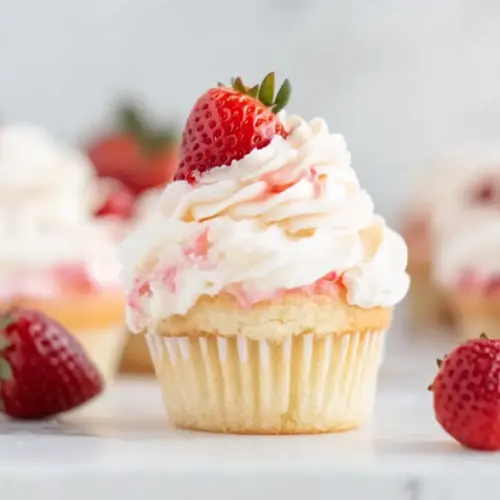
Strawberry Cupcakes
Strawberry Cupcakes are tender, fruit studded treats topped with a light, airy strawberry buttercream. The recipe balances fresh strawberry puree with classic cupcake structure for a bright, moist dessert perfect for spring gatherings and easy weeknight baking. Make a batch to enjoy immediate fresh flavor and a satisfying, fruity frosting that will win over guests.
Equipment
- Mixing Bowl
- Whisk
- Rubber spatula
- Muffin Tin
- Paper liners
- Wire Rack
- Food Processor
- Fine mesh sieve
- Stand mixer
- Piping Bag
Ingredients
- 1/2 cup whole milk Adds creaminess and moisture to the batter while helping dissolve sugar for a tender crumb; warm milk also helps incorporate melted fats and supports gluten development control. Enhances overall texture and mouthfeel in the cupcakes, contributing to a softer interior.
- 1/2 cup vegetable oil Provides fat that tenderizes the crumb and keeps cupcakes moist; oil helps create a fine, uniform texture and extends shelf life by preventing staling. Also aids in emulsifying with liquid ingredients for a consistent batter.
- 2 large eggs Incorporates structure and lift through coagulated proteins when baked; eggs also add moisture and richness to the cupcakes. Helps emulsify fats and liquids, producing a smooth batter and improved crumb stability.
- 1 teaspoon pure vanilla extract Adds aromatic depth and enhances the overall flavor profile, bringing a warm, sweet fragrance to both batter and frosting. Complements the strawberry notes and balances sweetness without altering texture.
- 1 cup granulated sugar Sweetens the batter and contributes to structure through moisture retention; granulated sugar helps with browning and creates tender cupcakes by interfering with gluten formation. Also aids in aeration when creamed or mixed properly.
- 1 1/2 cups all-purpose flour Provides the primary structure-forming proteins and starches for the cupcake crumb; flour absorbs liquids and determines thickness of the batter. All-purpose flour yields a balance of tenderness and strength suitable for cupcakes.
- 1 teaspoon baking powder Leavens the batter by producing carbon dioxide when combined with moisture and heat, giving cupcake rise and a light texture. Also helps create an even crumb and lift when properly distributed through the flour.
- 1/4 teaspoon Morton kosher salt Enhances flavor by amplifying other ingredients and slightly suppressing bitterness; kosher salt also strengthens gluten network aiding structure. Uses measured amounts to avoid overwhelming sweetness while improving overall taste balance.
- 1 1/4 cups finely diced fresh strawberries Contributes fresh strawberry flavor and small fruit pieces for bursts of texture and juiciness within the cupcake batter; finely dicing ensures even distribution. Adds natural sweetness and bright color, enhancing the fruit profile without large chunks.
- 2 cups diced fresh strawberries Offers larger strawberry pieces for garnish, topping, or folding into frosting to provide noticeable fruit texture and visual appeal. Helps deliver concentrated strawberry flavor and a fresh finishing touch to each cupcake.
- 2 tablespoons freshly squeezed lemon juice Adds bright acidity that balances sweetness and enhances the strawberry flavor; freshly squeezed lemon juice also preserves color and prevents oxidation in diced fruit. Incorporates a clean tartness that sharpens overall taste.
- 1/2 cup unsalted butter softened Provides richness and creamy fat for the frosting, creating a smooth, spreadable texture when whipped; softened butter also helps carry flavors like vanilla and strawberry. Contributes to stability and mouthfeel in the icing.
- 5 cups powdered sugar Sweetens and stabilizes the frosting while providing a silky, smooth texture when sifted and whipped with butter. Powdered sugar dissolves readily to create a consistent, pipeable icing suitable for decorating cupcakes.
- 1 teaspoon pure vanilla extract Adds a delicate vanilla aroma and flavor to the frosting, rounding out sweetness and enhancing other flavors like strawberry and butter. Acts as a finishing flavor note that improves the complexity of the icing.
Instructions
- Preheat oven to 350° F and line a regular muffin tin with paper liners.: You will notice a warm, dry scent as the oven reaches temperature, and lining the muffin tin ensures easy removal and neater presentation. Allow the oven to fully preheat so the cupcakes begin rising immediately when placed inside, which helps create an even dome. A common mistake is placing batter into a not fully heated oven, which can cause uneven rise and denser centers.
- In a large bowl, whisk together the milk, vegetable oil, eggs, and vanilla. Add the sugar and whisk to combine.: As you whisk, the mixture should look homogeneous and slightly glossy, with no streaks of oil or separate egg whites. The whisking incorporates air and helps emulsify the oil with the wet ingredients, which aids tenderness. If you see lumps of egg white or oil pooling, pause and whisk thoroughly until smooth to avoid uneven texture later.
- Next, add the flour, baking powder, and salt. Mix just until no large lumps of flour remain.: After adding the granulated sugar, the mixture will become slightly thicker and grainy until dissolved. The sugar helps tenderize while adding sweetness, and you want it well distributed to avoid sweet pockets. If the sugar feels gritty, give a few extra vigorous whisks to help dissolve it into the liquid base.
- Gently fold in the diced strawberries.: When these dry ingredients first join the wet bowl, the batter will look shaggy and floury. Gently fold until no large lumps remain, keeping in mind that overmixing develops gluten and yields a tougher crumb. Stop mixing as soon as the streaks of flour disappear for a tender cupcake.
- Divide the batter evenly between the 12 muffin wells.: The batter should be smooth but not overly worked, with a ribbonlike quality when lifted. This texture indicates the right balance of incorporation and lightness. If you overmix, you will see a denser batter and the final cupcakes may be chewier, so fold with care and patience.
- Bake for 18-20 minutes, or until a toothpick inserted into the center comes out just clean.: Folding in the finely diced strawberries should be done with a rubber spatula so you keep as much air in the batter as possible and avoid smashing the fruit. Look for evenly distributed red flecks throughout the batter, which signal that every cupcake will have strawberry pockets. A frequent error is stirring too vigorously, which releases excess juice and can lead to soggy cupcakes.
- Remove the cupcakes to a wire rack and let cool for 10 minutes. Then remove cupcakes from the pan and let cool completely before frosting.: Use a scoop or tablespoon to portion batter so the cakes bake uniformly and finish at the same time. The batter should fill each liner about two thirds full, yielding a nice dome without overflowing. Uneven filling results in some cupcakes baking faster and others needing more time, so take a moment to level them.
- Place strawberries and lemon juice in a food processor and pulse until they form a smooth puree, about 1 minute.: During baking you'll notice the aroma shift to a warm, sweet strawberry and sugar scent, and the tops will become set and lightly golden. The toothpick test is the reliable indicator, since overbaking leads to dryness while underbaking leaves gummy centers. If a toothpick shows wet batter, return the cupcakes to the oven and check every few minutes.
- Strain the strawberry sauce through a fine mesh sieve, extracting as much liquid as possible. If your sieve is not very fine, add a layer of cheese cloth before pouring in the strawberry sauce. Discard the seeds.: Cooling briefly in the pan lets the structure set so the cupcakes hold together when removed. The residual heat will continue gentle cooking, and then transferring them to a wire rack prevents steaming and sogginess. Pulling them out too quickly can cause them to break, and leaving them in the pan too long can trap moisture under the liners.
- Add the softened butter to the bowl of a stand mixer fitted with the paddle attachment. Beat on medium-high speed until the butter is very smooth, about 30 seconds.: Once on the rack, the cupcakes will emit a faint, lingering sweet aroma and the tops will slightly firm. Frosting warm cupcakes causes the buttercream to melt and slide off, so patience here ensures neat decoration. If you skip this cooling step, the frosting will look glossy and may run off the sides.
- With the mixer on low speed, slowly mix in the powdered sugar.: The puree should smell bright and fruity, and you will see a vibrant pink liquid. The lemon juice accentuates the strawberry flavor and helps balance the sweetness in the frosting. If the puree seems too watery, pulse briefly and then strain to concentrate the flavor.
- Once all of the powdered sugar has been incorporated, add the smooth strawberry puree and vanilla extract.: Press the mixture with a spoon or spatula to force the juice through, leaving seeds behind. The strained puree will be smooth and glossy, and removing seeds gives a silky frosting texture. If your sieve is not fine enough, line it with cheese cloth to catch stray seeds, otherwise you may notice small gritty bits in the buttercream.
- Turn the mixer to high speed and beat for 1-2 minutes, or until the frosting is very light and fluffy, scraping down the bowl as needed to keep everything incorporated. If you'd like the frosting sweeter or thicker, add more powdered sugar, a bit at a time, whipping after each addition.: When you beat the unsalted butter , it should become paler and creamier, signaling it is ready to accept the sugar. This step builds volume and lightness in the frosting, so beating on medium-high speed for about 30 seconds is appropriate. If the butter is too cold it will not smooth properly, and if too warm the frosting can separate.
- Transfer the buttercream to a piping bag and frost the cooled cupcakes as desired – or simply add the frosting using an offset spatula or even a spoon.: The butter will change from dense to silky, and the sound of the mixer will shift to a consistent hum. A smooth base prevents lumps when powdered sugar is added, ensuring a glossy buttercream. If lumps persist, pause and scrape down the bowl before continuing to avoid uneven texture.
- With the mixer on low speed, slowly mix in the powdered sugar: Adding the powdered sugar gradually prevents a sugar cloud and helps it incorporate evenly. The mixture becomes thick and slightly stiff at this stage, and keeping the mixer low avoids puffing powdered sugar into the air. If you add sugar too quickly you may create a gritty texture or an overpoweringly sweet frosting.
- Once all of the powdered sugar has been incorporated, add the smooth strawberry puree and vanilla extract: The frosting will shift color to a soft pink and release a fragrant strawberry aroma as the puree blends in, and the vanilla ties flavors together. Mixing at low speed at first ensures even distribution without splattering, then increase speed to fully combine. If the frosting becomes too loose, add a bit more powdered sugar; if it is too stiff, a tiny splash of milk or cream can loosen it.
- Turn the mixer to high speed and beat for 1-2 minutes, or until the frosting is very light and fluffy: At high speed the frosting aerates, becoming cloudlike and smooth, and you should see ridges hold when lifted with a spatula. This aeration gives the frosting a luxurious mouthfeel and helps it pipe cleanly. Be mindful not to overbeat, which can break down the structure and make the buttercream grainy.
- Scrape down the bowl as needed to keep everything incorporated: Periodically scraping ensures no pockets of sugar or puree remain, giving a uniform texture and color. Scraping is quick but important for a consistent frosting, and skipping it can leave uneven streaks in your final presentation. If you see streaks, pause and fold them in to achieve a smooth finish.
- Transfer the buttercream to a piping bag and frost the cooled cupcakes as desired: The act of piping releases a sweet, strawberry perfume and lets you control the swirl size and height for presentation. Use a plain or star tip depending on the look you want, and practice a few swirls on a plate if piping is new to you. If the frosting seems too soft to hold shape, chill it briefly to firm up before piping.
- Or simply add the frosting using an offset spatula or even a spoon: Spreading creates a more rustic, charming finish and is forgiving if you prefer a relaxed aesthetic. The tactile motion of spreading also compresses the frosting slightly, which can showcase the cupcake's crumb when sliced. If you want a cleaner look, pipe; if you want cozy and homey, spread and enjoy.
Notes
- Storage tip: Store leftover cupcakes in an airtight container in the fridge for up to 3 days to maintain freshness and prevent the buttercream from sweating.
- Frosting consistency: If your buttercream is too thin after adding the puree, sift in small additional amounts of powdered sugar and whip briefly until you reach the desired stiffness for piping.
- Speed up cooling: After the initial 10 minute rest in the pan, transfer cupcakes to a wire rack and let cool completely at room temperature, but avoid placing them in direct sunlight or in a closed warm oven.
- Prevent soggy bottoms: If your diced strawberries are very juicy, gently pat them with a paper towel before folding them into the batter to reduce excess moisture.
- Adjust sweetness: Taste the strawberry puree before adding to the frosting and adjust the sugar level of the frosting accordingly by adding powdered sugar a tablespoon at a time if you prefer a sweeter result.