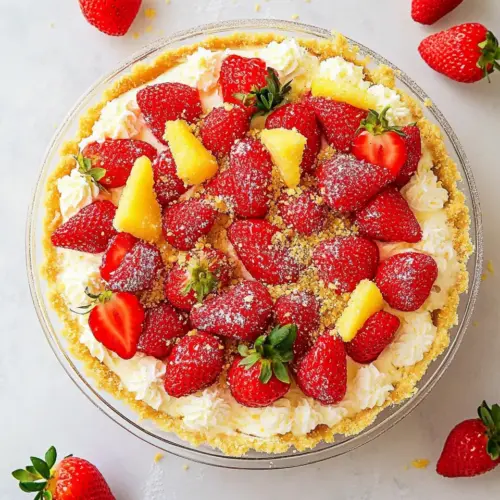
Strawberry Cream Cheese Pie
Strawberry Cream Cheese Pie is a creamy, tangy dessert with a crisp buttery crumb crust and bright, sugared strawberries on top. The filling is luxuriously smooth, making it perfect for spring gatherings or an easy weeknight treat. This pie balances richness and freshness in every forkful, giving you a slice worth making again and again.
Equipment
- Oven
- Food Processor
- 9-inch pie plate
- Rimmed Baking Sheet
- Wire Rack
Ingredients
- 5 ounces Ritz crackers (you could also use graham crackers, Nilla wafers or pretzels) Crumble into fine pieces to form the base of the crust; adds buttery, slightly salty structure and a toasty flavor that contrasts with the creamy filling. Combine with brown sugar and melted butter to bind and press into the pie pan evenly. Provides a neutral, familiar crunch that supports the delicate texture of the pie without overpowering it.
- 2 tablespoons packed light brown sugar Add a concentrated molasses sweetness that helps balance the crackers and enhance browning in the crust. Sprinkle and mix thoroughly with crushed crackers to create cohesive crumbs that hold shape when pressed into the pan. Contributes depth of flavor that complements both the butter and the cream cheese filling.
- 4 tablespoons unsalted butter, melted Melt and pour over the cracker mixture to bind crumbs into a compact, sliceable crust; imparts a rich, silky mouthfeel and toasted flavor. Measure accurately and mix until crumbs are fully coated to ensure the crust firms up properly when chilled or baked. Adjust amount slightly if using alternative crumbs to achieve the desired texture.
- Fine grain sea salt Sprinkle sparingly to amplify the cracker crust’s savory notes and balance the sweetness from sugars. Use just a pinch to avoid salting the overall dessert, especially since other components include salted elements. Incorporates mineral complexity that heightens the overall flavor profile.
- 1 pound (2 packages) full-fat cream cheese, at room temperature (this is very important!) Soften to room temperature and beat until smooth to create the luscious, tangy base of the filling; provides richness, body, and stability to the pie. Use full-fat varieties and proper temperature to prevent lumps and ensure a silky texture when combined with other filling ingredients. Acts as the primary flavor carrier and structural element once chilled.
- 1 cup full-fat sour cream Whisk into the cream cheese to lighten and add a subtle tang that brightens the filling while contributing creaminess and a velvety finish. Use full-fat sour cream for optimal texture and to prevent a runny filling; incorporate gently to maintain smoothness. Helps balance richness and adds slight acidity for flavor complexity.
- 1/2 cup sugar Dissolve into the filling to sweeten and stabilize the overall taste without overwhelming the cream cheese’s tang. Add gradually and taste to reach the desired sweetness, ensuring the filling remains balanced with lemon and strawberries. Also helps with texture by integrating into the dairy components.
- 2 eggs Beat in one at a time to help set and thicken the filling while providing structure when baked or chilled. Use at room temperature to incorporate evenly and avoid curdling the filling mixture. Eggs also contribute a subtle richness and help the pie slice cleanly.
- 3 tablespoons fresh lemon juice Stir in to cut through the richness with bright acidity, enhancing the cream cheese’s flavor and lifting the overall profile. Add freshly squeezed lemon juice for the freshest, cleanest acidity and mix thoroughly to distribute evenly. Balances sweetness and adds a refreshing note that pairs well with strawberries.
- Fine grain sea salt Season lightly to highlight the filling’s flavors and balance sweetness; add a very small pinch to avoid making the dessert noticeably salty. Incorporate into the cream cheese mixture to bring out depth and roundness in the creamy components. Use a fine-grained salt for even distribution without detectable grains.
- 1 pound fresh strawberries, hulled and halved (or quartered if large) Hull and halve to provide juicy, fresh fruit topping that adds vibrant color, natural sweetness, and texture contrast to the pie. Choose ripe, flavorful strawberries and slice uniformly so they sit neatly atop the filling for an attractive presentation. Fresh berries contribute acidity, aroma, and seasonal brightness to each bite.
- 2 tablespoons confectioners sugar Dust over the prepared strawberry topping to add a gentle, refined sweetness and help macerate the fruit slightly for syrupy juices. Sift evenly to avoid clumps and adjust amount to taste so the berries remain fresh-tasting rather than overly sweet. Creates a glossy finish and enhances natural berry sugars.
- Flaky sea salt Sprinkle lightly as a finishing touch to introduce a delicate crunchy pop and a nuanced mineral saltiness that contrasts the sweet berries and creamy filling. Use flaky sea salt sparingly so it accentuates flavors without overpowering the dessert. Adds a gourmet visual appeal as well as a subtle flavor lift.
Instructions
- Start by making the crust. Preheat an oven to 325˚F. Add crackers to a food processor, and blitz to a fine crumb. Add the melted butter, brown sugar and a pinch of salt, pulsing to combine. The mixture should resemble damp sand.: The smell of warm butter and toasted crumbs is immediate, and you should notice a faint nutty aroma as the mixture comes together. The texture will be like damp sand, cohesive when squeezed between your fingers, which ensures it will press and hold in the pie plate. This tactile check matters more than timing because an under-browned crust can fall apart and an overworked crumb can become greasy. A common mistake is adding too much butter, which makes the crumb overly soft and hard to set, so add it gradually and test the squeeze. Pulsing in short bursts prevents overprocessing and keeps the crumbs light rather than pasty.
- Transfer the crust to a 9-inch pie plate and press evenly and well into the bottom and sides of the plate. I like to use the bottom of a 1/2 measuring cup to help with the pressing. Bake until the crust is set and golden (about 15 minutes). Transfer to a cooling rack once done.: When pressing the crust, pay attention to edges and corners; they should be uniform in thickness so the pie slices hold their shape. As the crust bakes, it will release a toasty, slightly caramelized aroma and the surface will deepen to a warm golden color, signaling readiness. Letting it sit on a cooling rack prevents residual steam from making the base soggy. A frequent error is pressing too thin in places, which leads to breakage when slicing, so keep pressure steady and even. If the crust browns too quickly at the edges, tent with foil to avoid bitterness.
- Meanwhile, make the filling. Wash and dry out the food processor, then add cream cheese, sour cream and sugar, blitzing until smooth and scraping down the sides as needed. Add the eggs, lemon juice and pinch of salt, and continue to process until the mixture is completely smooth.: You will notice the filling transform from lumpy to glossy as the processor works, releasing a tangy dairy perfume with a hint of citrus. The smooth texture is crucial for a creamy, uniform bake and avoids curdling or uneven set. Scraping down the sides ensures no pockets of cream cheese remain, which would cause lumps. A common trap is using cold cream cheese , which resists pureeing and leaves grainy bits, so be sure it is at room temperature. Also, avoid overwhipping which can introduce air, leading to cracks as the pie cools.
- Place the pie plate onto a rimmed baking sheet, then pour the filling into the warm pie crust. You may not use all the filling. Bake the pie until the filling is set and no longer jiggles when slightly shaken (30 - 35 minutes). Turn the oven off, crack the door and let the pie cool in the oven for 15 minutes. Transfer the pie to a wire rack and let cool completely before transferring to the fridge. Let chill in the fridge for at least 1 hour before serving.: As the pie bakes, the filling will puff gently and the edges will take on a subtle sheen. The aroma will be gentle, a soft dairy scent with citrus highlights. The no-jiggle test is very reliable: the center should feel set but still slightly wobbly like a custard. Cracking often happens if the oven temperature is too high or the pie is overbaked, so aim for a gentle, even set. Letting it cool in the oven with the door ajar reduces thermal shock and greatly reduces cracking. The chill time firms the filling and makes slicing clean; rushing to slice a warm pie is a sure way to end up with messy pieces.
- While the pie is cooling, add strawberries to a medium bowl and toss with confectioners sugar. Once ready to serve, pile the strawberries on top of the chilled pie and sprinkle with flaky sea salt.: Tossing the strawberry with a little confectioners sugar draws out a fragrant syrup that glistens when spooned atop the pie. The contrast of the glossy red fruit on the pale filling is visually striking, and the tiny pops of flaky sea salt at the finish cut through the sweetness for complexity. A common oversight is adding the berries too early, which makes them watery; instead, top just before serving to keep the presentation fresh. If you prefer, arrange the berries decoratively for a special occasion, but piling them high creates an inviting, rustic look.
Notes
- Chill time is key Allowing the pie to rest in the fridge for at least one hour firms the filling and improves sliceability, which is especially helpful when serving on a platter at gatherings.
- Use full fat dairy Full fat cream cheese and sour cream give the richest mouthfeel and prevent a watery filling, ensuring each bite feels indulgent.
- Control sweetness Taste the filling before baking and adjust the sugar if your strawberry season is exceptionally sweet or tart, so the final dessert balances nicely.
- Prevent cracks Cooling the pie slowly with the oven door cracked reduces sudden temperature shifts that commonly cause cracking in cheesecakes and custard pies.
- Make the crust even Use the bottom of a measuring cup to press the crumbs into the pan for an even thickness which helps the pie hold together when sliced.