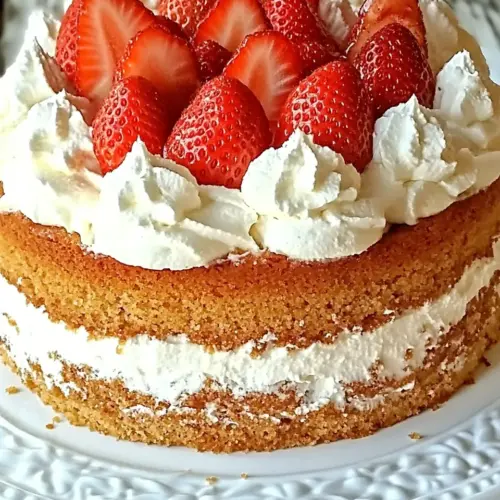
Strawberry Cream Cake
Strawberry Cream Cake is a creamy, tender layered cake with bright citrus notes and fresh strawberries. The soft crumb made with sour cream pairs beautifully with lightly sweetened whipped cream and juicy berries for an easy springtime dessert that looks elegant. Perfect for brunches or casual celebrations, it offers a balanced mix of richness and fresh fruit to make it worth baking.
Equipment
- KitchenAid stand mixer
Ingredients
- 12 tablespoons unsalted butter room temperature Cream until soft and airy to provide a rich, tender crumb and help incorporate air for cake lift; use at room temperature for even blending and smooth batter texture.
- 2 cups granulated sugar Sweeten the batter and aid browning while helping with structure; measure precisely to balance sweetness and crumb tenderness in the cake.
- 4 extra-large eggs room temperature Bind and leaven the batter while adding richness and moisture; use at room temperature so eggs emulsify evenly for a stable, airy cake.
- 3/4 cups sour cream room temperature Add moisture and tender richness while contributing a slight tang that balances sweetness; incorporate at room temperature to prevent curdling and ensure smooth batter.
- 1/2 teaspoon grated lemon zest Brighten flavor with citrus aroma and subtle acidity; zest finely to distribute fragrant oils without adding bitter pith to the cake.
- 1/2 teaspoon grated orange zest Complement citrus notes with warm fruity oil and aroma; grate thinly to infuse the batter with a light orange fragrance that enhances overall flavor.
- 1/2 teaspoon pure vanilla extract Enhance and round other flavors with sweet floral notes; add a measured amount to boost the cake's aroma without overpowering citrus or strawberry elements.
- 2 cups all-purpose flour Provide bulk, structure, and texture through gluten formation when mixed; sift or whisk for even distribution to avoid dense or lumpy cake batter.
- 1/4 cup cornstarch Lighten texture and reduce gluten intensity to yield a tender, delicate crumb; blend with flour to create a softer, cake-like structure.
- 1/2 teaspoon kosher salt Season and balance sweetness while strengthening gluten bonds just enough for structure; use measured kosher salt to enhance overall flavor complexity.
- 1 teaspoon baking soda React with acids to produce carbon dioxide, contributing lift and an open crumb; mix thoroughly with dry ingredients for even leavening throughout the cake.
- 1 cup heavy cream chilled Whip into peaks to create a stable cream topping or filling that adds richness; keep chilled so it whips faster and holds structure when sweetened.
- 3 tablespoons granulated sugar Sweeten whipped cream and stabilize flavor while keeping it smooth; add gradually to adjust sweetness without making the cream grainy.
- 1/2 teaspoon pure vanilla extract Add fragrant vanilla warmth to whipped cream or batter for complexity; use pure extract for a clean, natural vanilla profile that complements fruit.
- 1 pint fresh strawberries hulled and sliced Top and flavor the cake with fresh, bright juiciness and color; hull and slice to release natural sweetness and provide a fresh contrast to the creamy components.
Instructions
- Preheat the oven to 350°F.: The warmth fills the kitchen with a faint scent of metal and heat, and you should feel the oven stabilize before you place the pans inside. A properly preheated oven ensures even rise and predictable browning on the cakes surface. If you skip this, cakes can bake unevenly or take longer, so allow the oven to reach temperature and avoid opening the door repeatedly while baking.
- Butter the bottom of two 8-inch cake pans. Then line them with parchment paper and butter and flour the lined pans.: Greasing and lining introduces a tactile routine, where you press the parchment into the pan and feel the give of the paper. The butter creates a slick surface so your cakes release easily, and a thin dusting of flour prevents sticking. If you skip parchment, cakes can tear when you remove them, so take these small steps to ensure a clean release and even browning.
- Cream the butter and sugar on high speed in the bowl of an electric mixer fitted with the paddle attachment until light and fluffy. On medium speed, add the eggs, 1 at a time, then the sour cream, zests, and vanilla, scraping down the bowl as needed. Mix well. Sift together the flour, cornstarch, salt, and baking soda. On low speed, slowly add the flour mixture to the butter mixture and combine just until smooth.: As you whip the butter and granulated sugar , watch the texture change from dense to pale and airy, and listen for the smoother, quieter whir of an aerated batter. Adding eggs one at a time helps maintain that emulsion, preventing separation. The sour cream and zests bring moistness and aromatics. Combining dry ingredients by sifting ensures even distribution of baking soda and prevents lumps of cornstarch . When adding dry mix on low, you preserve the trapped air, which is crucial for a tender crumb. A common mistake here is overmixing after the flour goes in, which can produce a dense cake, so stop once the batter looks homogeneous and smooth.
- Pour the batter evenly into the pans, smooth the tops, and bake in the center of the oven for 40 to 45 minutes, until a toothpick comes out clean. Let cool in the pans for 30 minutes, then remove to wire racks and let cool to room temperature. If using 1 cake, wrap the second well and freeze.: As you pour, notice the batter flowing thickly and evenly, then smooth the surface with a spatula. While baking, the kitchen fills with a gentle, sweet aroma that hints at butter and citrus. The tops should turn lightly golden and spring back when touched. The toothpick test ensures the center is set without overbaking, which would dry the crumb. Cooling in the pan helps the cake settle, so resist removing too soon and avoid slicing warm layers, which can compress and tear.
- To make the filling for one cake, whip the cream, sugar, and vanilla in a mixer fitted with the whisk attachment until firm. Slice one of the cakes in half with a long, sharp knife. Place the bottom slice of the cake on a serving platter, spread with 1/2 the whipped cream and scatter with sliced strawberries. Cover with the top slice of the cake and spread with the remaining cream. Decorate with strawberries.: When whipping the heavy cream , the sound changes from splashing to a heavier patter as it thickens, and visually it goes from glossy to billowy peaks. Using a long, sharp knife to slice a cake yields clean edges, and take your time for an even cut. Spreading the cream should feel cool and smooth against the cake, and the sliced strawberries add bursts of ruby color and juicy texture. Avoid overwhipping the cream to dry stiffness, which makes it lose silkiness, and if your berries are very wet, blot them so the filling does not become soggy.
Notes
- Swap the arrangement: Instead of a neat layered cake, try a rustic stack for a relaxed look and easier assembly.
- Vary the berry placement: Toss some sliced strawberries with a teaspoon of sugar and let them macerate briefly to intensify sweetness before layering.
- Adjust cream sweetness: Add less of the second portion of granulated sugar in the whipped cream to let fruit acidity shine.
- Presentation trick: Pipe the whipped heavy cream for a cleaner look around the edges and decorate the center with fan sliced strawberries.
- Freeze a spare layer: Wrap extra cake layers tightly and freeze for quick future use; thaw fully before assembly for best texture.