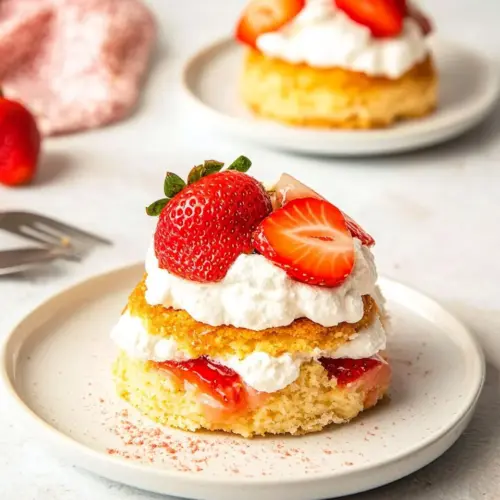
Strawberry Cornmeal Shortcake
Strawberry Cornmeal Shortcake blends tender flour shortcakes with gritty cornmeal, macerated strawberries, and whipped heavy cream for a creamy yet crisp summer dessert. This easy, seasonal treat is perfect for a relaxed weekend or an easy weeknight celebration, offering bright fruit, lush cream, and a rustic texture that makes it irresistible to share.
Equipment
- Food Processor
- Electric Mixer
- Baking Sheet
- Parchment Paper
- 3 inch Cookie Cutter
Ingredients
- 1 1/2 cups all-purpose flour + more as needed Provide structure and tender crumb to the shortcakes; sifts together with cornmeal and leavening to create the dry base. Adds bulk and allows the dough to be handled and rolled without sticking, with extra flour available to adjust consistency as needed.
- 1/2 cup cornmeal Impart a slightly gritty texture and subtle corn flavor to the biscuits; balances the wheat flour for a hearty shortcake. Helps absorb moisture and gives a pleasant contrast to the soft strawberries and cream.
- 1 tablespoon baking powder Leaven the shortcakes to produce a light, fluffy interior; activates during baking to lift the dough. Works with cold butter to create air pockets that yield tender, risen biscuits.
- 1/2 teaspoons salt Enhance overall flavor by balancing sweetness and leavening; preserves the savory edge needed in shortcakes. Regulates gluten development slightly and prevents the finished product from tasting flat.
- 1/4 cup granulated sugar + 2 tablespoons for tops Add mild sweetness to the dough and provide a crunchy, caramelizing finish when some is sprinkled on top; portioned for both batter and topping. Help activate browning reactions on the exterior for attractive, slightly crisp tops.
- 8 tablespoons cold unsalted butter 1 stick Cut into the dry ingredients to create flaky layers and richness; kept cold to prevent over-melting and ensure tender, laminated pastry texture. Contributes butterfat that enriches flavor and promotes browning during baking.
- 1 large egg Bind the dough and add richness; beaten into the wet ingredients to help create a cohesive batter. Provide structure and a bit of color to the baked shortcakes when combined with milk.
- 1/2 cup whole milk (or half & half) + 1 tablespoon for tops Moisten the dough to form a cohesive batter or dough; can be substituted with half-and-half for a richer texture. Brushed on top with a little added for finishing to promote browning and help the sugar adhere.
- 5 cups fresh strawberries, sliced Provide fresh, bright fruit flavor and natural juiciness for the filling; sliced to release juices that macerate with sugar. Offer contrast in texture and acidity to balance the rich cream and buttery shortcakes.
- 1/4 cup granulated sugar Sweeten and macerate the strawberries, drawing out juices to create a syrupy release; combined with the fruit to intensify flavor. Help maintain consistency of the filling and balance acidity for serving.
- 2 cups cold heavy cream Whip into soft peaks to create a rich, airy whipped cream; kept cold to ensure stability and volume. Offer a luxurious, creamy component that complements the tart-sweet strawberries and tender shortcakes.
- 1 teaspoon vanilla extract Add aromatic flavor to the whipped cream; a small amount enhances overall sensory depth. Combine with cream before whipping to distribute the vanilla evenly and accentuate sweetness.
- 3 tablespoons granulated sugar Stabilize and sweeten the whipped cream while helping it hold shape; added gradually during whipping to taste. Promote a smooth, glossy finish and prevent over-whipping by providing controlled sweetness.
Instructions
- Place 1 cup of strawberries in a large bowl and smash (macerate) them with 1/4 cup of sugar. Use the back of a ladle or a wooden spoon to do this. Mix with the rest of the berries into the bowl and chill until ready to serve.: The berries should release bright red juices that smell intensely sweet and tart, almost perfumed; this liquid is what will soak into the shortcakes and keep them juicy. I love hearing the soft squish as the berries give up their juices, and noticing the syrup slowly deepen in color. Letting them sit chills the flavor and helps the sugar dissolve, creating a glossy sauce. A common mistake is mashing too vigorously so the berries turn mushy, lose their shape, and become overly soft. Gentle pressure preserves nice pieces for texture, while still extracting enough juice to flavor the shortcakes.
- Preheat oven to 425 degrees F. Combine the flour, cornmeal, baking powder, salt, and 1/4 cup sugar in the food processor. Pulse to mix.: The dry mixture should look pale and evenly speckled with the cornmeal . I pay attention to the aroma here, which is faintly toasty from the cornmeal, and the texture, which should be light and free of lumps. Pulsing briefly ensures the baking powder disperses evenly, giving consistent rise. Overprocessing can warm the mixture and start to mash the cornmeal, so pulse just enough to combine. If you skip this even mix, you might notice uneven pockets of leavening or sugar, which can cause inconsistent browning.
- Chop the cold butter into cubes and add to the processor. Pulse the processor several times until the pieces are the size of peas. Add 1 egg and 1/2 cup whole milk to the food processor. Pulse one or two times, until just combined. You still want to be able to see butter clumps.: The sound of pulses will be short and mechanical, and when you open the lid you should see tiny, distinct butter flecks like little granules of gold; this is the secret to flaky layers. The dough will look shaggy when the egg and milk are added, not smooth or cohesive, because those pea sized butter bits must remain. If you overmix, the dough becomes homogeneous and dense, robbing the shortcakes of lift. A useful check is pressing a bit of dough between fingers, feeling for small butter pieces rather than a paste.
- Dump the dough onto a floured work surface and shape with your hands into a rectangle about 3/4- to 1-inch thick. Use a 3-inch cookie cutter to cut out 6-8 shortcakes.: The dough will feel cool and slightly tacky, not sticky; if it seems too wet sprinkle a touch more all purpose flour . Shaping with your hands warms the edges slightly, which helps the dough knit just enough to hold shape. When you cut with the cookie cutter, press straight down and avoid twisting, which seals the edges and can prevent a good rise. If your cuts are ragged, the shortcakes may bake unevenly, so re knead gently and press again for clean rounds.
- Place them on a parchment paper-lined baking sheet. Brush the shortcakes with milk and sprinkle the extra 2 tablespoons of sugar over the tops.: Brushing with the extra milk creates shine and helps the coarse sugar adhere, and in the oven the sugar caramelizes to form a thin, crisp top. The visual cue while brushing is a subtle sheen and a slightly darker surface tone. A common slip up is using too much liquid when brushing, which can dissolve the sugar and prevent the crunchy finish; use only the tablespoon called for and apply lightly.
- Bake for 12-14 minutes, until golden. Cool the shortcakes for just a few minutes.: In the oven you will notice a toasty aroma and the tops turning a warm golden brown; that's when you know theyre ready. The cornmeal will crisp subtly at the edges and the centers will be tender when pressed gently. Letting them cool for a short time is important so the interiors set and you dont burn yourself during assembly. A typical error is leaving them too long on the pan, which can cause overcrisping; transfer briefly to a rack to stop carryover cooking if needed.
- Whip the heavy cream in an electric mixer, with the vanilla and 3 tablespoons sugar, until soft peaks form.: As you whip the chilled heavy cream , the texture will transform from liquid to billowy; the mixer will change pitch and the cream will start holding gentle peaks that curl when the whisk is lifted. The vanilla scent will bloom and the sugar will give a polished sweetness. Stopping at soft peaks is crucial so the cream stays light and spreads easily; overwhipping leads to grainy butter formation. If that happens, you can rescue slightly overwhipped cream by folding in a tablespoon of cold cream to loosen it.
- Find a crack in the side of each shortcake and gently separate them into tops and bottoms. Spoon berries over the bottom half of each shortcake, add a large dollop of whipped cream, and place the shortcake top on the cream. Serve immediately.: The assembly moment is where all textures meet; the smell of warm shortcake , the cool sweetness of macerated strawberries , and the richness of whipped cream come together. Spoon generously so the juices soak into the crumb but avoid oversaturating which can turn the biscuit soggy. Serve right away for maximum contrast between warm shortcake and chilled cream. One mistake is assembling too far ahead which softens the shortcakes; if you must wait, store components separately and assemble just before serving.
Notes
- Serve with a citrus twist by folding a teaspoon of lemon zest into the whipped heavy cream for a bright lift that complements the strawberries.
- Make mini shortcakes by using a smaller cutter to create individual bites, ideal for parties and easier to assemble while keeping the baking time nearly the same.
- Use half and half instead of whole milk if you prefer a slightly richer dough without adding more fat, which still produces tender shortcakes.
- Adjust sugar on berries if your strawberries are extremely sweet, reduce the macerating sugar to let more fruit character come forward.
- Chill dough briefly before cutting if your kitchen is warm, this firms the butter and prevents excess spreading during baking.
- Top with extra whole berries for a dramatic presentation when serving guests, arranging them on the whipped cream so each portion looks abundant.