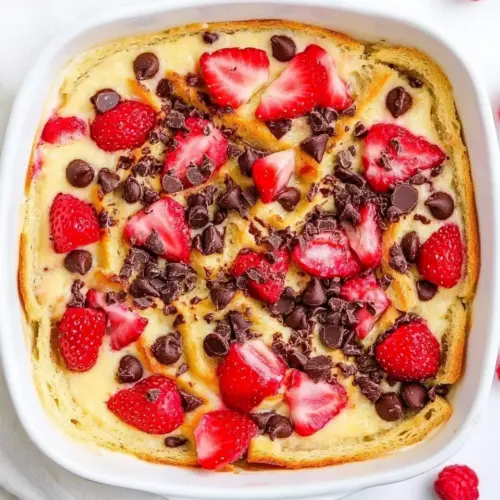
Strawberry Chocolate Chip Bread Pudding
Strawberry Chocolate Chip Bread Pudding is a creamy, comforting dessert that balances rich custard with fresh, tart strawberries and pockets of melted chocolate chips. This easy make ahead treat uses challah or egg bread to create tender, custardy slices with crisped edges, perfect for brunch or dessert. Try it for a crowd pleasing, nostalgic dish that is simple to assemble and impossible to resist.
Equipment
- Oven
- Roasting Pan
- Large Baking Sheet
- Glass baking dish
- Saucepan
- Fine sieve
Ingredients
- One 1-pound loaf challah or egg bread (cut into 1/2 to 3/4-inch slices or buy bread that is already sliced) Sliced into half- to three-quarter-inch pieces and used as the bread base to soak up custard, providing structure and texture to the pudding. Offers a slightly sweet, enriched crumb that crisps at the edges during baking while remaining tender inside. Can be lightly toasted or left fresh depending on desired texture and to ensure even custard absorption.
- 5 tablespoons unsalted butter, at room temperature (divided) Softened at room temperature and portioned for melting and dotting, contributing rich fat that promotes a tender, silky mouthfeel and helps caramelize the top. Provides flavor depth and golden color when melted into the custard or dotting the surface before baking. Can be divided between the custard mixture and brushed on the bread to improve browning.
- 2 1/2 cups trimmed and sliced fresh strawberries Trimmed and thinly sliced to distribute fresh, bright strawberry flavor and moisture throughout the pudding, adding fruity contrast and pleasant acidity. Supplies color, natural sweetness, and a soft texture that complements the custardy base and chocolate chips. Can be folded gently into the soaked bread so pieces remain distinct without becoming purée.
- 1 cup + 2 tablespoons granulated white sugar, divided Measured in two portions to sweeten both the fruit layer and the custard separately, balancing sweetness without overpowering the strawberries or custard. Helps dissolve into the liquid base to create a smooth, cohesive custard while additional sugar macerates the strawberries for enhanced juiciness. Division allows control of overall sweetness and texture in different components.
- 1/3 cup miniature chocolate chips Provided as small chips scattered through the pudding to deliver bursts of bittersweet or sweet chocolate in each bite, melting partially into the custard for pockets of chocolate. Adds contrast in flavor and texture, complementing the fruit and enriched bread. Miniature size ensures even distribution without weighing down the mixture.
- 1 quart half-and-half cream Poured as the primary liquid component of the custard to create a creamy, luxurious base that soaks into the bread and sets during baking. Contributes fat and body for a rich mouthfeel and helps bind the eggs and sugar into a smooth custard. Can be warmed slightly to help dissolve sugar and meld flavors before combining with eggs.
- 5 large egg yolks Whisked in to thicken and enrich the custard, yielding a silky, dense texture while adding concentrated yolk richness and color. Provides emulsifying properties that help create a stable, custard-like set when baked. Should be tempered carefully with warm cream to avoid curdling and ensure smooth incorporation.
- 4 large eggs Beaten whole and incorporated to give structure and stability to the custard while contributing additional protein and moisture for a balanced set. Works with yolks to create the proper custard firmness and contributes to a tender, slightly custardy crumb when baked. Should be mixed evenly with cream and sugar to ensure uniform texture.
- 1 tablespoon vanilla extract Added for aromatics and subtle sweetness, enhancing the overall flavor profile of the custard with warm, familiar vanilla notes. Helps round out dairy and egg flavors and ties together strawberry and chocolate elements for cohesive taste. Stirred into the custard mixture toward the end to preserve its fragrant character.
Instructions
- Place an oven rack in the center of the oven. Preheat oven to 350°F.: The kitchen will begin to warm and you may smell the faint metallic note of heating elements, signaling the oven is ready. Preheating ensures that when the bread goes in it toasts reliably and the timing for the later custard bake remains accurate. If you skip preheating, the bread can toast unevenly and the timing for the water bath step will be off.
- In a small bowl, melt 4 tablespoons of butter in the microwave. Brush the melted butter onto one side of each of the bread slices. Set the bread, buttered-side-up, on a large baking sheet and bake 10 to 15 minutes, or until lightly toasted.: As the bread toasts you will notice the surface taking on a pale golden color and a faint nutty aroma from the butter. Toasting dries the exterior slightly so the slices can absorb custard without collapsing. Avoid leaving them too long or they will become hard and dry instead of providing that tender chew inside.
- Place the strawberries in a bowl and sprinkle them with 2 tablespoons of the sugar. Toss and set aside.: The sugar draws out the juices from the strawberries , creating a glossy, slightly syrupy coating that will mingle with the custard. You will hear a soft, wet sound as the berries release liquid and see them glisten. Do not over macerate or the berries will break down completely and flood the pudding with excess moisture.
- When the bread is toasted, reduce the oven temp. to 325°F and set a large roasting pan half-filled with hot water on the middle rack to act as a water bath. Trim the crusts off the bread and cut each slice of bread diagonally in half into triangles.: The shower of steam from the pan will gently regulate oven temperature around the baking dish, helping the custard set smoothly with no rubbery edges. A steady stream of small bubbles will not form in the custard if the water bath is present, just a calm, even heat. If the water is not hot or the pan is too shallow, you risk uneven baking and a cracked surface.
- Use the remaining 1 tablespoon of butter to grease a 9 x 12-inch glass baking dish at least 1 1/2-inches deep. Line the sides of the baking dish with the pieces of bread, points up. Line the bottom of the dish with more of the bread. Stand the remaining bread, points up, wedged between the bottom slices. (Don't worry if there are some spaces in between the slices or if the pieces standing up lean over a bit.): The triangular pieces create pockets and angles that trap custard and fruit, giving varied textures. As you cut, notice how the crumb yields and exposes absorbent surfaces. Avoid compressing the slices too much while cutting, which can seal the crumb and reduce absorption.
- Scatter the strawberries onto the bread and around the baking dish. Scatter half of the chocolate chips over the bread and between the slices.: Lining the pan this way creates a structured, decorative assembly that allows custard to pool between slices. The buttered edges will brown slightly and add flavor. If the bread is placed too tightly, the custard may not circulate well and interior pockets could stay dry.
- In a large saucepan, heat the half-and-half and the remaining 1 cup of sugar over moderate heat, stirring to dissolve the sugar, until the mixture is hot but not boiling.: As you spread the strawberries and chocolate chips , notice the contrast of colors and the way juices begin to tint the adjacent bread. The chips will begin to soften from residual heat and nestle into corners, promising melty bites. Be mindful not to overload any one area with fruit, or the custard may have trouble penetrating evenly.
- In a medium bowl, whisk the egg yolks and whole eggs to blend. Whisk in the vanilla. Remove the hot half-and-half from the heat. Whisk the hot mixture into the eggs 1/2 cup at a time, gradually warming up the egg mixture and not 'cooking' it. Pour the custard through a fine sieve into the baking dish. Sprinkle the remaining chocolate chips on top. Set the dish in the roasting pan in the oven and bake for 35 to 40 minutes, or until the custard is just set. Remove from the water bath and serve warm, at room temperature, or chilled.: You will see steam rising and smell the sweet cream as the sugar melts. Warming the liquid helps it integrate with the eggs without shocking them. Take care not to let it reach a boil, as boiling can change the cream's texture and make tempering riskier.
- In a medium bowl, whisk the egg yolks and whole eggs to blend. Whisk in the vanilla: The eggs should be smooth and lightly homogeneous, with strands of pale yellow visible as you whisk. Adding vanilla now builds aromatic layers. Overwhisking can incorporate too much air, which leads to a spongy custard rather than a dense, silky set.
- Remove the hot half and half from the heat. Whisk the hot mixture into the eggs 1/2 cup at a time, gradually warming up the egg mixture and not 'cooking' it: As you whisk in the warm cream you will notice the egg mixture loosening and taking on a luminous sheen. Tempering prevents the eggs from scrambling and ensures a smooth custard. A common mistake is adding too much hot liquid at once, which causes curdled, grainy texture.
- Pour the custard through a fine sieve into the baking dish. Sprinkle the remaining chocolate chips on top: Straining removes any tiny bits of cooked egg and gives a uniformly silky custard that will set evenly. When poured, the custard should glide into nooks between the bread, filling pockets without overflowing. If the custard looks lumpy after straining, it likely indicates overheating earlier in the process.
- Set the dish in the roasting pan in the oven and bake for 35 to 40 minutes, or until the custard is just set. Remove from the water bath and serve warm, at room temperature, or chilled: During baking you will notice the edges turn golden and the center will wobble slightly when gently shaken, a sign it is perfectly set. The aroma will become deeper, with toasted butter and warm cream notes. Overbaking will yield a dry, rubbery texture, so check for a tender jiggle to avoid this problem.
Notes
- Toast first: Toasting the bread gives it a firmer exterior so it soaks custard without collapsing. Aim for light golden edges, not deep brown, because overtoasting can make the interior too dry to absorb moisture evenly.
- Use a water bath: Baking the dish set inside a pan with hot water ensures gentle, even heat, producing a smooth custard without curdling. Make sure the water reaches halfway up the sides of the baking dish for best results.
- Trim crusts for aesthetics: Removing crusts helps you arrange neat, attractive layers that catch the eye and allow custard to pool thoughtfully. Keep the discarded crusts for breadcrumbs or another use to avoid waste.
- Temper eggs carefully: Add hot liquid to eggs in small increments while whisking so they warm gradually. This prevents grainy cooked egg bits and yields a silky custard texture.
- Let it rest before slicing: Allowing the pudding to cool slightly makes clean slices possible and improves texture. Serve slightly warm or chilled depending on preference, both are delightful.