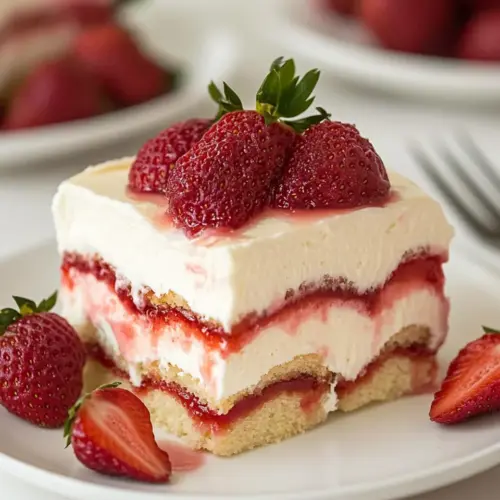
Strawberry Cheesecake Tiramisu
Strawberry Cheesecake Tiramisu is a creamy layered dessert featuring airy whipped cream and tangy cream cheese, bright strawberries, and pomegranate soaked lady fingers. This easy make ahead treat blends cheesecake richness with tiramisu style layers for a crowd pleasing dessert, perfect for spring gatherings and casual entertaining.
Equipment
- Saucepan
- Mixing Bowls
- electric hand mixer
- 9 by 9 inch baking dish
Ingredients
- 1 1/2 cups pomegranate juice Adds bright, tart liquid and a fruity backbone to macerate strawberries or soak ladyfingers, contributing color and subtle acidity to balance the dessert.
- 1/2 cup + 2 Tbsp granulated sugar, divided Provides sweetness and structure; divided usage allows part to sweeten the strawberry mixture and part to be whipped or folded into the cream layer for balanced flavor.
- 1 1/4 cups heavy cream Contributes rich, airy texture when whipped and creates a light, creamy layer that contrasts with soaked ladyfingers and supports the cheesecake component.
- 12 oz . cream cheese, softened Delivers tangy, creamy density and classic cheesecake flavor; softened texture blends smoothly into the filling to provide body and richness.
- 32 lady fingers, such as these (from 2 packages) Supplies structure and spongey layers that absorb pomegranate juice and strawberry juices, forming the tiramisu’s distinctive soaked cake layers.
- 1 tsp vanilla extract (optional) Imparts warm, familiar aroma and enhances overall sweetness; optional use allows for a subtle vanilla note without overpowering the strawberry and cream flavors.
- 1 1/2 lb chopped strawberries, stems removed, plus more for top garnish if desired Offers fresh, juicy fruit flavor and texture; chopped strawberries add natural sweetness, brightness, and a fresh contrast to the rich cream and soaked ladyfingers.
Instructions
- Pour pomegranate juice into a small saucepan, bring to a simmer over medium heat. Let simmer until reduced by half, about 6 to 10 minutes. Stir in 2 Tbsp sugar until dissolved. Pour into a shallow dish and let cool completely.: The kitchen will fill with a bright, tangy scent as the pomegranate warms, and you should see gentle bubbles forming across the surface which signal a proper simmer; reducing concentrates the flavor so you will notice the aroma deepen and the liquid thicken slightly, indicating it is nearing the target reduction; a common mistake is letting it boil vigorously which can scorch and make the juice bitter, so maintain medium heat and stir occasionally to prevent sticking.
- Pour heavy cream into a medium mixing bowl. Using an electric hand mixer whip until very stiff peaks form.: Visually the volume will shrink and the liquid will gain a glossy sheen, clinging to the spoon in a syrup like way which shows it has concentrated; the reduced sugar content will dissolve faster into this syrup, and the scent will intensify to a fruity, slightly floral note; avoid over reducing as it can become too syrupy and overly sweet, and if it seems too thick remove from heat and thin with a splash of fresh juice.
- In a separate mixing bowl whip cream cheese, remaining 1/2 cup granulated sugar and vanilla extract on low speed until combined, then increase to high speed and whip until light and fluffy, about 2 to 3 minutes.: You will notice the granules disappear into the warm reduction leading to a smooth, glistening finish, and the added sugar mellows sharp edges in the pomegranate flavor; stir until no graininess remains and allow it to cool so it does not melt the lady fingers on contact; a common issue is adding sugar to a cold liquid which can leave undissolved grit, so always add to warm reduction and stir until silky.
- Add heavy cream into cream cheese mixture and blend just until combined.: Cooling changes the syrup from actively steaming to a calm, glossy pool and prevents it from wilting the lady fingers on contact; place in a cool spot or refrigerate briefly, but avoid freezing which can alter texture; many people rush this step and dunk warm liquid which makes the biscuit overly soggy, so ensure it is fully cooled before dipping.
- Working with one lady finger at a time dip both sides quickly into reduced pomegranate juice then transfer to a deep 9 by 9-inch baking dish. Create a layer of half the lady fingers doing this setting them side by side.: The sound of whisking will change as you create volume, starting as a soft swoosh then brightening to an energetic whip when air is incorporated; chill the bowl for best results because cold metal helps the heavy cream hold structure; skipping this can result in under whipped cream that weeps later.
- Spread half the strawberries into a single layer over the lady fingers, then spread half the cream cheese mixture over strawberry layer.: You want the peaks to stand tall without collapsing, creating a light, billowy texture that yields slowly when the beater is lifted; stop frequently to check texture because over whipping turns cream grainy into butter; a typical pitfall is whipping at too high speed which creates small curd like bits, so increase speed gradually and watch closely as firm peaks form.
- Repeat this process once more of dipping remaining half of the lady fingers and aligning in dish, then topping with remaining half of the strawberries, and remaining half of the cream cheese mixture.: The cream cheese will first loosen into a slightly thick paste and then transform into airy, pale clouds as air is incorporated, producing a subtly tangy aroma that pairs beautifully with the fruit; ensure the cream cheese is softened to room temperature for smooth, lump free whipping; working too cold causes uneven texture and overworking it can make it too loose and difficult to set.
- Cover and chill 4 hours. Optionally garnish on top with extra strawberries just before serving.: The sound becomes softer as the airy heavy cream folds into the denser cream cheese , and visually you should see streaks vanish leaving a uniform pale filling; fold gently to preserve volume, because vigorous mixing knocks out air and yields a dense result; a frequent error is to overmix which flattens the filling, so stop as soon as the mixture is homogeneous.
- For best results cut and serve within 24 hours (the strawberries will start to break down and the juices over time will make the lady fingers soggy).: When dipped briefly the lady fingers will darken slightly and smell subtly fruity, they should be pliable but not falling apart, giving a tender foundation for the layers; use a quick motion because soaking too long turns them into a mushy base; a common mistake is lingering too long which ruins the textural contrast, so a second or two per side is usually enough.
- Create a layer of half the lady fingers doing this setting them side by side: As you align them you will feel the soft, sponge like give under your fingertips and visually a neat grid forms that promises even slices later; pressing too hard compresses the soak and can make the layer overly dense, so arrange gently and keep edges neat to maintain structure when slicing.
- Spread half the strawberries into a single layer over the lady fingers, then spread half the cream cheese mixture over strawberry layer: The bright red of the sliced strawberries will contrast with the pale filling creating an inviting mosaic, and the first lick of the filling should be cool and tangy; spread evenly to avoid high peaks which can cause uneven chilling; a common misstep is piling fruit in the center, which leads to an unstable top, so distribute fruit evenly to support the next layer.
- Repeat this process once more of dipping remaining half of the lady fingers and aligning in dish, then topping with remaining half of the strawberries, and remaining half of the cream cheese mixture: Building the second tier should mirror the first, and the result is a balanced stack where each forkful will capture all elements; smooth the final top with a spatula for good presentation, and chill promptly so the layers marry; waiting too long before chilling can let juices redistribute and make the dessert runny, so move to refrigeration soon after assembling.
- Cover and chill 4 hours: Cooling allows the textures to set and the flavors to blend, and you will notice the filling firm slightly while the lady fingers achieve an ideal yielding texture; chilling also helps slicing clean squares; cutting too soon yields loose slices and a messy presentation, so plan ahead and respect the chilling time.
- Optionally garnish on top with extra strawberries just before serving: Fresh strawberries add a lively finish and a fresh scent, and adding them just before serving preserves their color and firmness; avoid garnish too early because the fruit will weep and stain the surface, so place them immediately prior to presenting the dish.
- For best results cut and serve within 24 hours: Over time the strawberries release juices that will continue to soften the lady fingers , so serving within a day means you enjoy the intended contrast of textures; if stored longer expect a softer, more trifle like consistency, which is still tasty but different; many people underestimate this and are surprised when layers lose definition after extended refrigeration.
Notes
- Use a quicker pomegranate soak If you are short on time, substitute with 3/4 cup pomegranate juice combined with 1 Tbsp sugar as the note in the recipe suggests, this short cut still offers fruity flavor though less concentrated.
- Adjust fruit amount Increase or decrease the strawberries to suit your preference, more fruit will brighten each bite while less will emphasize the cheesecake like filling.
- Make single servings Assemble in individual jars or cups for portable portions, layering the same elements in smaller vessels yields pretty presentations for parties.
- Control sweetness Taste the filling before assembling and adjust sugar in small increments to suit your palate, some berries are naturally sweet and need less added sugar.
- Presentation focus Garnish with whole or halved strawberries right before serving to keep them firm and visually striking, and consider a light dusting of powdered sugar for a soft finish.