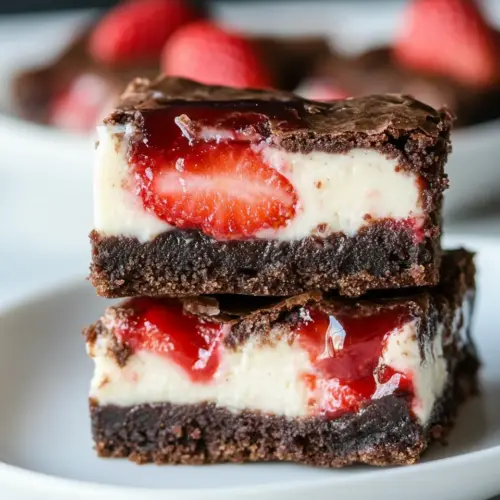
Strawberry Cheesecake Brownies
Strawberry Cheesecake Brownies combine a fudgy, cocoa rich brownie base with a silky cheesecake layer and bright strawberry swirls. Creamy, tangy, and slightly fruity, these bars deliver textural contrast and showstopping visuals, perfect for casual gatherings or special occasions. Make them when you want an easy yet impressive dessert that always disappears fast.
Equipment
- 8 x 8 x 2-inch baking pan
- Parchment Paper
- Hand mixer or stand mixer
- Rubber spatula
Ingredients
- 1/2 cup room-temperature unsalted butter Soften and enrich the batter by providing creamy fat that helps create tender, fudgy brownies when creamed with sugars and eggs. Maintain room temperature to ensure even mixing and to help incorporate air for a consistent texture. Contribute subtle richness and mouthfeel that balances the cocoa's bitterness.
- 1/2 cup granulated sugar Sweeten the chocolate base and help dissolve fats and eggs when creamed, contributing to structure and chewiness in the brownies. Help create a glossy batter and promote even browning during baking. Control overall sweetness level and balance other flavors.
- 1/2 cup lightly packed light brown sugar Add deeper, caramel-like sweetness and moisture that enhances chewiness and complexity in the brownie layer. Provide slight acidity and hygroscopic properties that keep the baked bars tender. Complement the granulated sugar to build a layered sweet profile.
- 2 large eggs Bind the batter and contribute to structure by coagulating proteins that set during baking, yielding a cakey yet fudgy crumb depending on proportion. Add moisture and help emulsify fats for uniform texture. Incorporate air when beaten for lift in the brownies.
- 1 teaspoon vanilla extract Impart warm, aromatic flavor and deepen the overall profile of the brownies with a small amount that amplifies other flavors. Help round out both the chocolate and cream cheese elements without being overpowering. Enhance perceived sweetness and complexity.
- 1/4 cup all-purpose flour Lightly thicken and provide minimal gluten structure to the batter, ensuring the brownies hold together without becoming cakey. Contribute to the overall mouthfeel while allowing the cocoa to remain the dominant dry ingredient. Prevent excess spread during baking.
- 3/4 cup unsweetened cocoa powder Deliver rich chocolate flavor and color while contributing to the dry structure and intense cocoa bitterness that defines the brownies. Absorb fat and moisture to influence fudginess and density of the final bars. Balance sweetness and add depth to each bite.
- 1/4 teaspoon salt Enhance flavor development and control overall taste by balancing sweetness with a touch of salt that brightens chocolate notes. Regulate yeast-like interactions and strengthen dough proteins slightly for improved texture. Keep salt proportion low to avoid overpowering other ingredients.
- 8 ounces room-temperature cream cheese Create a smooth, tangy cheesecake layer that contrasts the rich brownie base by adding creaminess and slight acidity. Work best at room temperature to blend seamlessly with sugar and egg for a lump-free filling. Provide richness and a silky mouthfeel to the swirled topping.
- 1/4 cup granulated sugar Sweeten the cheesecake layer and help stabilize it by dissolving into the cream cheese to create a smooth, lightly sweetened filling. Balance the tanginess of the cream cheese and enhance the overall dessert sweetness. Contribute to texture by reducing curdling risk when mixed at room temperature.
- 1 large egg Bind and set the cheesecake layer by coagulating proteins when baked, giving structure and a custardy firmness to the topping. Add moisture and richness while helping to emulsify the cream cheese and sugar for a consistent filling. Ensure even mixing at room temperature for smooth results.
- 1/2 teaspoon vanilla extract Add a delicate aromatic note to the cheesecake filling that elevates flavors without overpowering the strawberry component. Work with vanilla's sweet, floral profile to complement both chocolate and cream cheese. Use measured amounts to avoid masking the fruit topping.
- 2 tablespoons strawberry sauce, or strawberry jam Introduce concentrated strawberry flavor and a touch of acidity to the cheesecake swirl, providing fruity contrast and visual appeal when marbled into the batter. Use sauce or jam to add sweetness and small bits of fruit while contributing to moisture and flavor pockets. Distribute in ribbons for attractive swirls and bursts of strawberry in each bite.
Instructions
- Preheat the oven to 350 degrees Fahrenheit. Line an 8 x 8 x 2-inch baking pan with parchment paper, leaving a 1-inch overhang on either side, and spray with nonstick cooking spray. Set aside.: As the oven warms, you will notice a faint warmth and the smell of dry heat building in the kitchen, which readies the pan for even baking. Getting the parchment overhang right gives you leverage to lift the brownies out later, so take a moment to center it, and spritz the pan lightly so the paper cannot slip. A common mistake is skipping the spray, which can cause the edges to stick to the pan once baked, so always prep carefully. Visual cue: the oven should feel consistently warm when you open the door to place the pan inside.
- In large bowl, add 1/2 cup room-temperature unsalted butter, 1/2 cup granulated sugar, and 1/2 cup lightly packed light brown sugar and beat with a hand mixer or a stand mixer fitted with the paddle attachment until light and fluffy, about 3 minutes.: As you cream the butter and sugar , listen for a steady, light whir and watch the mixture turn paler and slightly aerated, which traps small pockets of air that help the top crust form. Scrape down the bowl so no pockets of unmixed butter remain. Overbeating can introduce too much air and make the crumb lighter than intended, so stop when it is visibly lighter and smooth. The aroma will start to hint at caramel as the brown sugar blends in, which is a good sign.
- Add 2 large eggs and 1 teaspoon vanilla extract and mix until combined.: At this point the batter will relax and become silkier, and you may see thin ribbons form as the eggs incorporate. The vanilla aroma will lift the chocolate notes later, so mix just until homogenous. A common error is adding eggs that are too cold, which can cause the butter to seize and appear curdled, so use room temperature eggs . Visual cue: a smooth, glossy batter without streaks of white indicates proper mixing.
- Add 1/4 cup all-purpose flour, 1/4 teaspoon salt, and 3/4 cup unsweetened cocoa powder and mix until smooth and combined.: When you fold in the flour , salt , and cocoa , you should see the batter deepen to a rich chocolate color and thicken to a spreadable consistency. The dry ingredients provide structure and concentrated chocolate flavor, so mix until there are no streaks of dry powder. Overmixing can develop gluten in the flour which will make the brownies cakier, so stop as soon as it looks even. The batter should hold in a ribbon when lifted slightly with a spatula.
- Add the brownie batter to the prepared baking pan and bake for 12-15 minutes, until the brownies are mostly set.: As the pan goes into the oven, you will smell warm chocolate and a toasty note as the top sets. Look for edges to pull slightly away from the parchment and the center to look just set but still slightly glossy, which signals it is ready for the cheesecake layer. A typical misstep is overbaking here, which leaves no room for the cheesecake to rest on a fudgy base, so err on the side of underdone by a minute or two. When you gently jiggle the pan, the center should tremble very slightly, not slosh.
- While the brownies bake, prepare the cheesecake layer by adding 8 ounces room-temperature cream cheese and 1/4 cup granulated sugar to a medium bowl. Beat with a hand mixer until smooth and creamy, scraping down the sides and bottom of the bowl as needed to ensure all of the cream cheese is incorporated and no lumps remain.: The texture here should turn luscious and satin like, and the scent will be mildly tangy. Scraping is essential to prevent pockets of dense cream cheese , which can create lumps in the final layer. If you stop too soon you will have grainy filling, and if you whip too long you will incorporate air that leads to tiny holes, so aim for a smooth, homogenous cream that slides off the whisk.
- Add 1 large egg and 1/2 teaspoon vanilla extract and mix again until smooth and fully combined.: Incorporating the egg binds the filling so it sets gently in the oven, creating that custardy mouthfeel. The mixture should be glossy and pourable; if it is too stiff the filling can bake unevenly. A common issue is adding a cold egg , which can cause lumps, so use room temperature. The finished filling should coat a spoon and slowly run off in a thick ribbon.
- Spoon the cheesecake mixture on top of the pre-cooked brownies and carefully smooth out with a rubber spatula. Be gentle so you don't pull at the delicate brownie layer beneath it.: As you spread, aim for an even layer without pressing down. The contrast between the matte brownie and the creamy filling will be visible. Pressing too hard can tear the top of the brownie and cause the layers to mix, so use light, feathered strokes. The filling should rest on the brownie, not sink through, which is a sign your first bake was the right doneness.
- Drizzle 2 tablespoons strawberry sauce on top of the cheesecake layer. Use the very tip of a butter knife to gently swirl the strawberry sauce into the cheesecake, again being careful not to disturb the brownies beneath the cheesecake layer.: The strawberry aroma will lift the kitchen as you dot the sauce, and the swirl should be gentle and artistic. Keep your motions shallow, creating marbling rather than full mixing. If you over-swirl, the fruit can bleed into the brownie layer and lose its distinct ribbon, so stop when you like the pattern. Visual cue: defined pink veins across the white cheesecake are perfect.
- Return the pan to the oven and bake for another 20 minutes.: During this second bake, the filling will set into a delicate custard while the edges may take on a faint golden hint. The oven will release a combined scent of chocolate and warm fruit. Avoid opening the oven frequently, which can cause temperature fluctuation and lead to cracked filling. Look for a slightly set center that still has a gentle wobble when nudged, which tells you it will firm up as it cools.
- Allow the brownies to cool for about 20 minutes on the counter before placing the pan in the fridge to chill for 2-3 hours before cutting and serving.: Cooling first prevents temperature shock when the pan hits the fridge, and chilling ensures clean slices and a settled texture. The cheesecake will firm up and the flavors will meld, making cutting neater. Rushing to cut them warm will produce ragged edges and a softer set, so patience here pays off. After chilling, use the parchment overhang to lift the slab and slice with a sharp knife for neat squares.
Notes
- Room temperature matters Use room temperature butter, eggs, and cream cheese for seamless mixing and smooth textures.
- Don’t overmix the dry ingredients Fold the flour and cocoa until just combined to keep the brownie fudgy not cakey.
- Check early for doneness Start checking the brownie at the lower end of the baking time to avoid overbaking the base before adding the cheesecake layer.
- Use a gentle swirl technique When adding the strawberry sauce, shallow circular motions with a knife create attractive marbling without collapsing the layers.
- Chill for clean slices Refrigerate the baked bars for at least two hours to get neat, professional-looking squares when cutting.