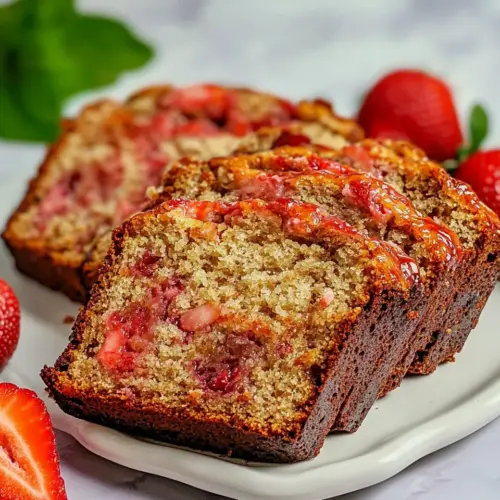
Strawberry Bread
Strawberry Bread is a moist, tender loaf bursting with fresh berry flavor and bright lemon zest. This easy quick bread yields soft slices studded with juicy strawberries and crunchy nuts making it perfect for brunch or an easy weeknight treat. The straightforward method and pantry ingredients make it a reliable bake you will want to make again and again.
Equipment
- 9x5x3-inch Loaf Pan
Ingredients
- 2 cups all-purpose flour Provide structure and bulk to the bread by forming the gluten network when mixed with liquids; sifts easily to remove lumps and ensures even texture. Use measured cups and avoid overmixing to keep the loaf tender and light.
- 2 teaspoons baking powder Leaven the batter by releasing carbon dioxide when heated, helping the bread rise and become airy. Always measure accurately and mix with the dry ingredients to distribute it evenly for consistent lift.
- 1/2 teaspoon baking soda React with acidic components to create additional lift and a finer crumb, complementing baking powder. Use sparingly as too much can alter flavor; ensure it is fresh for effective leavening.
- 1/2 teaspoons salt Enhance overall flavor balance and help control the dough's fermentation and chemical reactions; also strengthens gluten slightly for structure. Measure carefully since excess salt can inhibit rising and mask other flavors.
- 1 1/2 cups strawberries (hulled and chopped) Contribute moisture, natural sweetness, and fresh fruit flavor while adding soft texture and color to the loaf when hulled and chopped. Fold in gently to avoid crushing and maintain small fruit pieces for even distribution.
- 3/4 cup vegetable oil (unsalted, softened) Provide tenderness and moisture by coating starches and preventing gluten from overdeveloping; contributes to a soft crumb when at room temperature. Choose a neutral-flavored oil and combine with wet ingredients for an even batter.
- 2 large eggs Bind ingredients, add richness, and trap air for improved rise and structure when beaten into the batter; contribute color and stability. Use large eggs at room temperature to incorporate more evenly and improve emulsion.
- 1 cup granulated sugar Sweeten the bread, assist with browning, and enhance overall flavor; also influences moisture and crumb. Dissolve into wet ingredients for even sweetness and avoid over-sugaring to prevent a dense loaf.
- zest of 1 lemon Brighten the flavor with citrus oils and aromatic lift; add subtle acidity that complements strawberries and balances sweetness. Zest carefully to avoid the bitter white pith and distribute evenly through the batter.
- 1 teaspoon vanilla extract Add aromatic depth and a warm, sweet-savory note that enhances the other flavors without overpowering them. Measure by teaspoon and mix with wet ingredients to infuse flavor uniformly throughout the loaf.
- 1/2 cup pecans (or walnuts, chopped) Introduce crunchy texture and a toasty, nutty flavor when chopped; contribute mouthfeel contrast and visual interest. Toast lightly if desired to deepen flavor, and fold in at the end to keep pieces intact.
Instructions
- Preheat your oven to 350°F (175°C). Grease and flour a 9×5 inch loaf pan or line it with parchment paper.: As you preheat, you should notice a warm, dry scent from the oven as it reaches temperature, and preparing the pan now prevents sticking and uneven edges later. Properly greasing and flouring the pan or using parchment gives the loaf a smooth release and preserves its crust, which should be lightly golden after baking. If you skip this, the crust can cling to the pan and tear when removed; to avoid that, be thorough and tap out excess flour after dusting. This step matters because a loaf that releases cleanly holds its shape and looks inviting.
- In a large bowl, sift together the flour, baking powder, baking soda, and salt.: The dry mix will smell faintly of mild grain and mineral notes from the leaveners, and sifting breaks up little clumps so the texture is even. This step distributes the rising agents and salt uniformly, which ensures an even rise and consistent flavor throughout the loaf. A common misstep is rushing and skipping sifting, which can leave pockets of concentrated baking powder, causing uneven domes or small bitter pockets. Use a whisk if you do not have a sifter to aerate the mixture gently.
- Toss the diced strawberries in a small amount of flour to coat them lightly. This helps prevent them from sinking to the bottom of the bread.: When you gently coat the strawberries they will look powdered and slightly drier, which is good because it mitigates excess moisture sinking during baking. This flour coating acts like a tiny anchor, suspending the fruit within the batter so every slice has juicy pockets instead of a dense, wet bottom. The berries will still release juices as they heat, contributing to streaks of color and flavor, but they will not all drop to the pan base. If you skip this, expect some sinking, which is the most common issue with fruit loaves; lightly tossing is a quick fix that makes a big difference.
- In a separate bowl, whisk together the vegetable oil, eggs, granulated sugar, lemon zest and vanilla extract until well combined.: As you whisk, watch the sugar begin to dissolve and the mixture take on a glossy sheen, with the citrus aroma becoming noticeable. This emulsified mix is crucial because it helps incorporate fat evenly into the batter, giving a tender crumb and moist mouthfeel. Room temperature eggs blend more smoothly into the vegetable oil , avoiding a separated mixture. Overbeating at this stage can introduce too much air leading to uneven texture, so whisk until combined and glossy, not frothy.
- Fold the wet ingredients into the dry ingredients gently, just until the flour is moistened. Don't overmix.: At this point you should hear minimal sound, and the batter will look streaked with flour before you finish folding, then become cohesive and slightly thick. Gentle folding preserves tenderness by preventing excess gluten development; vigorous stirring creates a tough crumb. Aim to stop when no dry patches remain. A typical error is overmixing in an attempt to make the batter perfectly smooth, which actually harms texture; a slightly lumpy batter is perfectly fine and yields a better loaf.
- Gently fold in the flour-coated strawberries and nuts until they are evenly distributed throughout the batter.: The batter will take on flecks of red and bits of brown from the chopped nuts, and the texture will become studded and inviting. Folding slowly ensures the fruit stays intact and that the nuts do not clump together. This even distribution guarantees balanced bites with fruit and crunch in each slice. Avoid vigorous mixing which can mash the strawberries , releasing juices and making the batter overly wet; use a spatula and a light hand instead.
- Pour the batter into the prepared loaf pan. Smooth the top with a spatula. Place in the preheated oven and bake for about 1 hour, or until a toothpick inserted into the center of the bread comes out clean.: As the loaf bakes you will notice a delicate sweet aroma and the top will slowly turn golden, sometimes with tiny cracks that are a good sign of proper rise. The internal structure firms up as steam sets the crumb, so when a skewer comes out clean or with a few moist crumbs the loaf is ready. A common mistake is underbaking which leaves the center gummy; if the top browns too fast, tent loosely with foil after 30 to 40 minutes to prevent overbrowning while the center finishes baking.
- Allow the bread to cool in the pan on a wire rack for 10 minutes, then turn out the loaf and let it cool completely on the rack. Slice and serve the bread as desired.: The cooling phase is sensory in its own way, with residual steam rising and the aroma mellowing into a warm berry scent. Cooling briefly in the pan helps the loaf set so it does not collapse, while finishing on a rack prevents a soggy bottom from trapped steam. Slicing too soon yields a crumb that tears; waiting until it is mostly cool gives clean slices and a nice mouthfeel. Patience here rewards you with a loaves that looks as good as it tastes.
Notes
- Room temperature ingredients: Let your eggs come to room temperature so they blend smoothly with the vegetable oil, giving a uniform batter that traps the right amount of air for rise.
- Coat fruit in flour: Toss the chopped strawberries with a spoonful of flour first, this prevents sinking and keeps the loaf visually balanced with pockets of fruit.
- Gentle folding: Use a spatula and fold slowly when combining wet and dry components, this preserves tenderness by minimizing gluten development.
- Check leaveners: Ensure your baking powder and baking soda are fresh; old ones reduce lift and lead to dense results.
- Even nut distribution: Chop nuts uniformly and fold them in last so they do not sink or clump, giving consistent crunch in each slice.
- Cooling matters: Cool in the pan briefly, then transfer to a rack to prevent soggy bottoms and to allow the crumb to set for clean slicing.