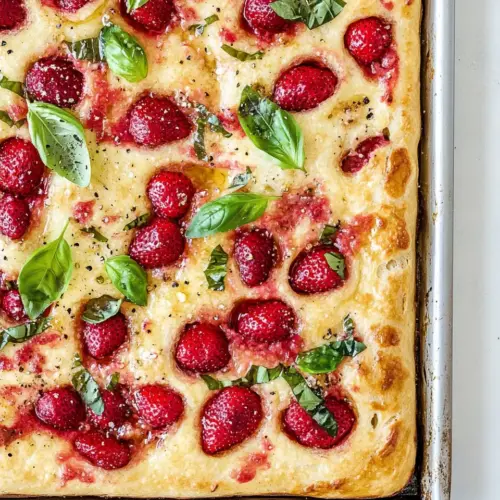
Strawberry Basil Focaccia Bread
Strawberry Basil Focaccia Bread is an olive oil rich, slightly crisp focaccia topped with caramelized onion and fresh strawberries for a vibrant sweet savory contrast. Soft, pillowy crumb meets herbal basil and juicy strawberries, creating an easy weeknight or brunch showstopper that is both elegant and approachable. Make it for company or a relaxed spring gathering and watch it disappear.
Equipment
- Stand mixer
- Dough Hook
- 15 1/2 x 10 inch Jelly Roll Sheet Pan
- Large Skillet
- Mixing Bowl
Ingredients
- 1 3/4 cups warm water Hydrate and activate yeast by providing warm liquid to dissolve sugars and encourage fermentation; contributes to dough elasticity and crumb development when combined with yeast and flour. Ensure water is around 105–115°F to avoid killing the yeast and to promote a reliable rise. Warm water also helps dissolve honey and integrate ingredients smoothly.
- 2 1/4 teaspoons active dry yeast Activate yeast quickly by providing live culture that metabolizes sugars to produce carbon dioxide for leavening; measure accurately to ensure proper rising time and dough structure. Sprinkle yeast into warm water with honey for proofing and look for foamy bubbles as a sign of viability. Adjust timing if proof is slow to maintain recipe schedule.
- 1 tablespoon honey Sweeten and feed yeast while adding subtle flavor to the dough; contributes to browning and helps yeast fermentation proceed efficiently. Dissolve honey in the warm water during proofing to ensure even distribution and improved rise. Use measured amount to balance sweetness without overpowering the focaccia.
- 5 cups all-purpose flour plus more for your workspace Build dough structure and bulk as the primary dry component providing gluten-forming proteins that create chew and texture; sift or measure well for consistent hydration. Combine with water, yeast, honey, and salt to form a pliable, extensible dough that traps fermentation gases. Add extra for dusting the workspace to prevent sticking while kneading and shaping.
- 1 tablespoon kosher salt plus more for sprinkling Season the dough for balanced flavor and regulate yeast activity to strengthen gluten slightly; also used for finishing the bread when sprinkled on top. Dissolve part into the dough and reserve some for sprinkling before baking to create savory contrast. Use kosher salt for an even distribution and crisp crust formation.
- 1 cup extra virgin olive oil Enrich the dough and contribute to moist crumb, tender texture, and rich flavor; provides cooking fat for pan coating and helps develop a golden crust during baking. Brush liberally on the dough surface and in the pan to encourage a flavorful, crisp bottom and edges. Use good-quality extra virgin olive oil for pronounced flavor and aroma.
- 2 tablespoons unsalted butter Add richness and depth to the onion topping when sautéed, contributing buttery mouthfeel and caramelization; aids in browning and flavor layering. Melt with olive oil to cook the sweet onion until soft and golden without burning. Use unsalted butter to better control overall salt levels in the recipe.
- 1 large sweet onion, thinly sliced Provide sweet, savory aromatics and a tender caramelized layer that complements strawberries and basil; slice thinly for even cooking and distribution. Sauté until translucent and lightly browned to release sweetness and mellow sharpness before assembling on the focaccia. Adjust cooking time to avoid over-browning which can introduce bitterness.
- salt and black pepper Enhance seasoning balance and control final taste with sprinkles during cooking and serving; apply to both the onion and bread as needed for immediate flavor correction. Use coarse or fine grind of black pepper to taste, freshly cracked for bright aroma. Combine thoughtfully with flaked or kosher salt to avoid over-salting.
- 2 tablespoons balsamic vinegar Concentrate sweet-tart flavor and add a glossy, slightly acidic finish to the sautéed onions and strawberries; helps balance sweetness and enrich overall complexity. Stir into the cooked onions toward the end of cooking to deglaze the pan and concentrate flavors without becoming overpowering. Use measured amount to maintain harmony with honey and strawberries.
- 1 1/2 cups sliced strawberries Provide bright, juicy fruity notes and tender texture when scattered over the dough, offering contrast to savory elements and a pop of color. Slice evenly so strawberries distribute across the surface and roast gently during baking without releasing excessive moisture. Add at the appropriate stage to preserve shape and avoid soggy spots in the focaccia.
- flaked salt, for sprinkling Create crunchy finishing texture and visual appeal when sprinkled before baking or after, enhancing the savory-sweet contrast; use sparingly to avoid excessive saltiness. Choose flaked salt for pronounced crystals that remain distinct on the crust and deliver bursts of saline flavor. Apply just before baking for best adhesion and crunch.
- 1 big handful of basil leaves, thinly sliced or torn Introduce herbal brightness and aromatic lift when torn or sliced and scattered on top, complementing strawberries and olive oil with fresh-green notes. Tear or chiffonade leaves to release essential oils and distribute flavor evenly without overwhelming the bread. Add toward the end or after baking to preserve vibrant color and fragrance.
Instructions
- In a bowl, stir together the water, yeast and honey. Let it sit for 10 to 15 minutes until foamy.: You will notice a foamy, bubbly surface forming on the water after the yeast and honey are combined, which smells faintly yeasty and sweet. This foam is the proof that the yeast is alive and ready to leaven the dough, and it should look frothy and active within the given time. If nothing appears, it often means the water was too hot or the yeast is old; start over with new yeast and warm but not hot water . The sound you get when stirring is a soft, hollow slosh rather than a thick paste, which is a good sign.
- In the bowl of your stand mixer, add the flour, 1 tablespoon of salt, 1/2 cup of olive oil and the yeast mixture. Stir, using the dough hook, until the mixture comes together. Knead it on medium-low speed for 5 to 6 minutes. If it's super sticky, sprinkle in a bit of extra flour. You want it to be silky!: As the ingredients combine, the dough transforms from shaggy to a smoother, slightly tacky mass that pulls away from the bowl, and it will give a soft, elastic thrum when stretched. The smell is mildly wheaty and oiled because of the olive oil . Kneading builds gluten which gives the bread its airy interior; the suggested time usually produces a dough that is pliable and not tearing. A frequent mishap here is over flouring; add bits only sparingly or you risk a dry loaf. If you under-knead, the crumb will be dense and the loaf may not rise as well.
- Put the dough in an oiled bowl and cover it. Place it in a warm spot and let it rise for 1 hour, or until it's doubled in size.: During this first rise the dough will puff and become visibly larger, and you can smell faint fermentation, a wholesome, bready fragrance. The surface should be smooth and slightly domed. Keeping the dough covered prevents a skin from forming and ensures even rising. A common problem is placing it in a cold spot, which results in sluggish fermentation, so find a draft free, slightly warm area. If it rises too quickly and collapses, your room may be too hot or the yeast too active.
- After it's doubled, place the remaining oil in a 15 1/2 x 10 inch jelly roll sheet pan. Place the dough in the sheet pan and turn it over to cover it in the oil once, then press and spread it until it fits in the pan (or almost fits in the pan. it's going to rise again!). While doing this, press to make finger marks in the dough so it looks like traditional focaccia. Cover the sheet pan and place the dough back in a warm place to rise for another hour.: When you transfer the dough, the olive oil should shimmer across the pan and coat your hands to prevent sticking. Pressing the dough creates dimples that trap little pools of olive oil and toppings, and that tactile technique also influences the final crumb by opening air pockets. You will hear a soft tearing sound as you stretch the dough and feel gentle resistance when the gluten is doing its job. If the dough snaps back and resists stretching, allow it to rest for a few minutes and try again to avoid tearing. An overlooked error is using too little oil , which causes the dough to stick to the pan and lose those attractive dimples.
- While it’s doing the second rise, heat a large skillet over medium-low heat and add the butter. Stir in the onions with a pinch of salt. Cook for 10 minutes, stirring often, until softened. Stir in the balsamic vinegar. Cook for another 10 to 15 minutes, until caramely.: As the butter melts and the onion softens, you will notice a sweet, savory aroma emerge and the slices will slowly turn a deep golden color. The sound is a gentle sizzle that becomes quieter as moisture evaporates and sugars concentrate. Adding the balsamic vinegar introduces acidity that helps the onion reach a glossy, jam like finish. Patience is critical here; rushing the heat will char the edges rather than coax natural sugars out. A typical mistake is stirring too infrequently which prevents even caramelization, or cooking too hot, which causes burning rather than proper browning.
- Preheat the oven to 425 degrees F. Uncover the pan and cover the bread with the caramelized onions and thinly sliced strawberries. Sprinkle with a pinch of flaked salt. Drizzle with olive oil. Bake the bread for 15 to 20 minutes, until it's golden and toasty. Remove from the oven and let it cool. Top with fresh sliced basil and cut into pieces. Serve!: The oven heat encourages the edges to crisp and the top to take on an inviting golden color, while the strawberries warm enough to release aromatic juices but not so long that they dissolve into the dough. You will hear a faint crackle as the crust browns, and the loaf should smell of toasted flour , caramelized onion , and fruity sweetness. Letting it cool slightly stabilizes the crumb and prevents runaway juices from soaking the bottom. Avoid leaving it in the oven too long or the strawberries will overcook and the top will darken excessively.
- You can make this ahead of time and slice right before serving. You can reheat in a low temp oven (like 250) for a few minutes before eating.: The loaf keeps well for a day or two when loosely covered, and reheating gently at low temperature revives the crust without drying the interior. The aroma returns when warmed, and the basil added after reheating will provide fresh contrast. One pitfall is reheating at high heat which can harden the crumb and dry out the loaf, so always use a low temperature and check frequently.
Notes
- Proof your yeast: Always check for foam when you bloom the yeast in warm water with honey, it saves time and ensures proper rise.
- Mind the dough texture: The dough should be slightly tacky not dry, adding flour sparingly prevents a heavy loaf.
- Temperature control for onions: Cook the onion over medium-low so sugars caramelize slowly, giving depth without burning.
- Oil the pan generously: A well oiled pan helps you spread the dough easily and produces crisp, golden edges.
- Layer toppings thoughtfully: Arrange the onion and strawberries evenly so each slice gets both sweet and savory notes.
- Rest before slicing: Let the loaf cool slightly to stabilize the crumb and prevent sogginess from warm juices.