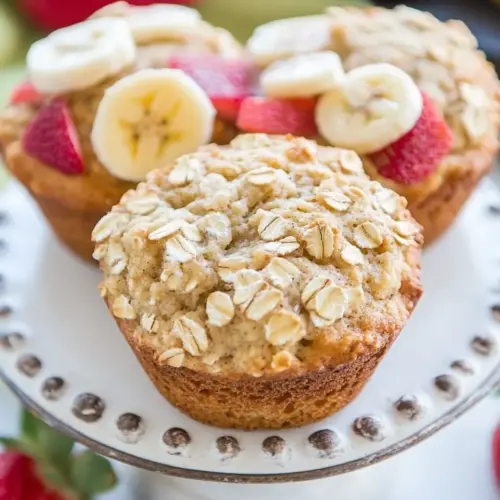
Strawberry Banana Oat Muffins
Strawberry Banana Oat Muffins are moist and tender with bright pockets of fresh strawberry and sweet mashed banana, a light oat chew, and a golden top. This easy batch makes a great weekend brunch or grab and go breakfast, delivering bakery style flavor with simple pantry ingredients. Make them for busy mornings or to share with neighbors for an approachable crowd pleasing treat.
Equipment
- Mixer
- Muffin Pan
- Mixing Bowls
- Cooling rack
Ingredients
- 1/4 cup old-fashioned oats Adds rustic chew and subtle nutty flavor while providing texture contrast to the soft muffin crumb; sprinkle on top before baking for a toasted finish or fold into batter for pockets of hearty oats.
- 1 tablespoon brown sugar Adds a deep caramel sweetness and helps balance the fruit flavors; sprinkle into the oat topping or incorporate into batter to enhance moistness and create gentle browning.
- 1 pinch ground cinnamon Lends warm aromatic notes and brightens the overall flavor profile; use sparingly to complement the bananas and strawberries without overpowering the muffins.
- 1 tablespoon melted salted butter Provides rich, savory fat and helps bind ingredients while adding flavor; melted form makes it easy to incorporate into wet ingredients for even distribution throughout the batter.
- 1/2 cup softened unsalted butter Contributes creamy fat and structure, tenderizing the crumb while promoting moisture retention; softened form allows smooth creaming with sugar for a light, aerated batter.
- 1 cup granulated sugar Sweetens the muffins and aids in creating a tender, moist crumb while contributing to browning and caramelization during baking; creamed with butter, it incorporates air for lift.
- 2 large eggs, beaten Adds structure and moisture while helping to emulsify fats and liquids; beaten eggs contribute to leavening and a cohesive texture within the muffin batter.
- 3 mashed ripe bananas, about 1 cup Provides natural sweetness, moisture, and banana flavor while acting as a binding agent; mashed ripe bananas also contribute to browning and tenderizing the crumb.
- 2 cups + 1 tablespoon all-purpose flour, divided Supplies the bulk of the dry structure and forms the muffin framework; dividing allows portion to be used in the crumb and part for folding with fruit to prevent overmixing.
- 1 teaspoon baking soda Reacts with acidic components to produce carbon dioxide for leavening, creating lift and a light crumb; distribute evenly through the dry ingredients for consistent rise.
- 1/2 teaspoon salt Enhances and balances sweetness while strengthening gluten slightly to improve structure; salt also amplifies other flavors and rounds out the overall taste.
- 1 1/2 cups chopped fresh strawberries Contributes fresh, juicy sweetness and bright tartness while adding color and texture; fold in gently to avoid crushing and to keep fruit pockets throughout the muffins.
Instructions
- Preheat the oven to 425 degrees Fahrenheit. Spray a muffin pan with nonstick cooking spray and set aside.: The oven should be fully hot so the muffins get an initial burst of heat that helps them rise and form golden tops. You will notice a sharp, warm aroma filling the kitchen the moment the temperature climbs, signaling the batter will react quickly. If you skip preheating the muffins may spread instead of doming, leading to flatter tops. Be sure the pan is greased well so the muffins release easily after baking, and place the rack in the center so heat circulates evenly.
- Combine the oats, brown sugar, ground cinnamon, and melted butter in a medium bowl and set aside.: This mixture becomes a rustic streusel like topping and begins to meld aromas as the melted butter warms the brown sugar. You will sense a toasty, slightly caramel fragrance from the oats and brown sugar , and the cinnamon adds a subtle spice that rounds the profile. If the butter is too hot it can overly soften the brown sugar, so let it cool slightly. A common misstep is skipping this step and losing that crisp, flavorful contrast on top.
- Add the butter and sugar to a large bowl and beat with a hand mixer or a stand mixer fitted with the paddle attachment until light and fluffy.: Creaming incorporates air into the mixture, which you will see as the texture turns paler and slightly ribbon like when the beaters lift out. This trapped air is crucial for lift and tender crumb. Listen for a steady, even mixing sound; overly vigorous mixing can warm the batter too much. If your butter was not softened properly the mixture will look chunky instead of smooth, so ensure it has a soft, spreadable consistency before you start.
- Add the eggs and bananas to the sugar mixture and beat until combined.: The aroma will deepen as the eggs and mashed banana fold in, releasing a sweet, fruity scent. The batter will become more fluid and glossy, and you should see small streaks of banana disappear as it blends. Avoid overbeating once the eggs are incorporated, as excess mixing can make the muffins tough. If the batter looks curdled it usually smooths out once the dry ingredients are added, so don’t panic.
- Add 2 cups of flour, baking soda, and salt to a medium bowl and whisk to combine. Slowly add the flour mixture to the sugar mixture and mix with the hand mixer until just combined.: Whisking the dry ingredients ensures the baking soda and salt are evenly distributed for consistent rise. As you fold the flour in slowly you will notice the batter thicken and the surface change from shiny to matte, indicating proper hydration. Stop mixing as soon as you no longer see streaks of flour, because overmixing develops gluten and leads to dense muffins. A common error is rushing and overblending, which reduces tenderness.
- In a separate bowl toss the chopped strawberries with the remaining tablespoon of flour. Gently fold the coated strawberries into the muffin batter.: Coating the strawberries with a bit of flour prevents them from sinking and distributes their juices more evenly. When you fold them in you will notice bright red streaks and pockets of juice that promise fresh berry bites in the finished muffins. Fold gently to avoid breaking up the fruit and turning the batter pink. If you fold too aggressively the fruit will bleed excessively and the texture can become gummy.
- Fill each well of the muffin pan until they are 3/4 of the way full. Sprinkle the tops with the streusel topping, distributing it evenly between all 12.: Filling the wells to the correct level ensures the muffins bake into tall domes rather than overflowing or staying flat. You will see the batter settle slightly when the pan moves, so use a scoop for consistent portions. The streusel topping will crisp and brown during baking, offering a crunchy contrast to the soft interior. Overfilling will cause spillover, while underfilling yields small, pale muffins.
- Bake with the oven at 425 degrees Fahrenheit for 5 minutes before reducing the oven to 350 degrees Fahrenheit. Continue to bake for an additional 12-15 more minutes, or until a toothpick inserted in the center of a muffin comes out clean.: That initial high heat quickly sets the muffin tops, producing a domed, golden finish, and the lower temperature allows the centers to finish baking gently. You will observe rapid oven spring in the first minutes, then a steady browning as the temperature drops. A clean toothpick, or one with a few moist crumbs, indicates doneness. Avoid opening the oven repeatedly during the early burst of heat, as losing steam will reduce rise.
- Let muffins cool on a cooling rack for at least 10 minutes before enjoying.: Cooling allows the crumb to set and stops carryover steam from making the muffins soggy. You will notice the aroma intensify as they cool, and the tops will firm slightly while remaining tender inside. If you try to remove them too soon they may break or stick to the pan. Letting them rest also improves slicing or handling for packed lunches.
Notes
- Room temperature ingredients ensure even mixing and better emulsion, so let the eggs and softened butter sit out briefly before starting.
- Measure flour correctly by spooning into the cup and leveling, avoiding compacted all purpose flour that can make muffins dense.
- Check doneness with a toothpick inserted near the center rather than the edge, as edges bake faster and can give a false impression of doneness.
- Keep the strawberries cold until chopping and tossing with flour to limit juice release into the batter.
- Cool before storing to avoid trappping steam in containers, which causes soggy tops; store at room temperature for two days or freeze for longer keeping.