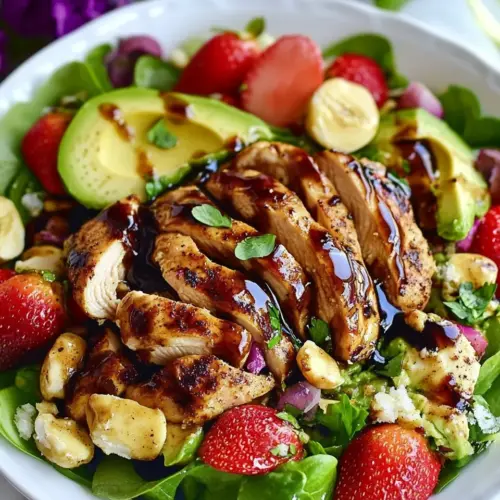
Strawberry Avocado Salad with Balsamic Chicken
Strawberry Avocado Salad with Balsamic Chicken blends creamy avocado, juicy strawberries, and tender balsamic glazed chicken for a bright and satisfying dish. This easy weeknight dinner delivers sweet tang, crunchy pistachios, and fresh greens in every bite, perfect for spring gatherings or a quick impressive meal. Try it when you want a light but filling plate that looks restaurant worthy and is simple to prepare.
Equipment
- Large Skillet
- Mixing Bowl
- Whisk
- Platter
Ingredients
- 1 tablespoon olive oil Drizzle to provide a light cooking fat and subtle fruitiness; helps prevent sticking when searing the chicken and adds a glossy finish to the balsamic glaze. Use sparingly to keep the salad bright and not greasy.
- 16 ounces boneless, skinless chicken breast Cook to serve as the main protein for the dish; boneless, skinless chicken breast quickly absorbs the balsamic and brown sugar glaze and becomes tender when properly seared and finished. Slice after resting to retain juices and present atop the greens.
- 1/4 cup brown sugar Sweeten to balance the acidity of the balsamic vinegar and create a caramelized glaze on the chicken; brown sugar adds depth with its molasses notes during reduction. Sprinkle gradually to control sweetness and avoid overpowering the salad.
- 1/4 cup balsamic vinegar Acidify to provide bright, tangy flavor that forms the base of the chicken glaze and vinaigrette; balsamic vinegar offers a rich, slightly sweet complexity. Reduce with brown sugar and water to create a glossy sauce that coats the chicken.
- 1/2 cup water Thin to adjust the viscosity of the glaze and dressing; water helps dilute the vinegar and sugar while enabling even cooking of the glaze. Add a little at a time to reach the desired consistency without washing out flavor.
- 1 tablespoon Dijon mustard Emulsify to bind the glaze and dressing components while contributing a sharp, savory note; Dijon mustard helps stabilize the vinaigrette and accentuates the chicken's flavor. Whisk in gradually to create a cohesive, silky sauce.
- 1 teaspoon dried thyme Season to impart herbal warmth and depth; dried thyme pairs well with chicken and complements the balsamic's earthiness. Sprinkle into the glaze early so the herb rehydrates and infuses its flavor during cooking.
- 7 cups baby spinach or mixed greens (washed, dried) Bed to provide a fresh, leafy foundation for the salad; baby spinach or mixed greens bring tender texture and a mild, slightly sweet green flavor. Toss gently with the dressing just before serving to keep leaves crisp and vibrant.
- 2 cups sliced strawberries Brighten to deliver juicy sweetness and tartness that contrasts the savory chicken and creamy avocado; sliced strawberries add color and seasonal freshness. Add near the end to preserve their shape and prevent muddiness in the salad.
- 1 large avocado, peeled & sliced Creamify to lend rich, buttery texture and healthy fats that balance the sweet and acidic components; peeled and sliced avocado creates a luscious mouthfeel. Keep slices intact and add just before serving to avoid browning.
- 1 small red onion, thinly sliced Pique to introduce sharp, crunchy flavor with a slight bite; thinly sliced red onion provides a pungent contrast that enhances the overall balance. Soak briefly in cold water if you prefer milder onion flavor before assembling.
- 1/2 cup chopped pistachios Crunch to add nutty texture and a delicate, slightly sweet flavor; chopped pistachios bring vibrant color and a satisfying finish to the salad. Sprinkle over the top for contrast and to enhance the dish's visual appeal.
Instructions
- Heat the olive oil in a large skillet over medium heat.: You will notice the oil shimmer and move smoothly across the pan when it is hot enough, and a small drop of water should dance on the surface. This preheat step primes the pan so the chicken sears instead of stews, creating a golden crust that adds flavor. If the oil smokes, lower the heat immediately to avoid bitter notes. A common mistake is adding the chicken too soon when the oil is not hot enough, which leads to sticking and pale meat, so wait for that gentle shimmer before proceeding.
- Season the chicken breasts with salt and pepper. Add to the pan and cook for 5 to 6 minutes on each side.: As the chicken hits the hot oil you should hear a steady sizzle, and you will see the edges go from pale to golden brown. This Maillard reaction locks in juices and builds flavor, so resist the urge to flip constantly. If the pan crowding causes steaming instead of searing, cook in two batches. Overcooking is the usual trap here, so aim for a firm but springy feel and check that juices run clear.
- While the chicken is cooking, whisk together the brown sugar, vinegar and water. Pour the mixture over the chicken and bring to a boil.: Combine these ingredients in a small bowl until the sugar dissolves into the liquid, creating a thin, glossy mixture. This blend will become the sweet and tangy base of the pan sauce, so dissolving the sugar prevents grainy texture during the reduction. If you skip whisking and add undissolved sugar to the hot pan, it can clump and burn, so make sure it is smooth before pouring.
- Continue cooking the chicken in the balsamic syrup for an additional 3 to 4 minutes until cooked through and no longer pink. Transfer to a platter and keep warm.: When the liquid meets the hot pan it will hiss and steam as it heats, and you will see the surface break into rolling bubbles. That initial boil helps the sugar dissolve further and starts concentrating the balsamic. Keep an eye on the heat because an aggressive boil can reduce too quickly and scorch the sugars; a gentle vigorous boil is ideal to form a syrup without burning.
- Remove the pan from the heat. Whisk in the mustard and thyme. Set aside.: The chicken will take on a glossy, sticky coating as the syrup clings to the surface, and the aroma will shift toward caramelized vinegar and brown sugar. This finishing phase both flavors and warms the meat through, so test with a thin slice near the center for doneness. If the sauce reduces to dryness before the chicken is cooked, lower the heat and add a splash of water to prevent burning. Avoid slicing too early, which lets juices escape and dries the meat.
- Arrange the greens on a large platter. Top with the strawberries, avocado and red onion. Slice the chicken and arrange on top of the salad.: Off the burner, the pan temperature is perfect for stirring in the Dijon mustard and dried thyme without diminishing their brightness. Whisking here emulsifies and slightly thickens the sauce, smoothing any sharp edges from the vinegar. If you add these while the pan is super hot it can mute their flavors, so removing from heat ensures they remain vibrant. A slippery sauce can occur if you over dilute, so adjust by simmering briefly if you need more body before serving.
- Sprinkle with pistachios and drizzle with the dressing. Serve immediately.: The greens should look glossy but not wet, and placing the sliced chicken warm on top helps wilt the leaves slightly for a melded texture. The sliced strawberries and thin red onion add bursts of color, and the avocado brings a creamy counterpoint. If your avocado shows brown spots, trim them away to maintain presentation. A frequent misstep is tossing everything too aggressively which bruises the fruit and breaks the avocado, so gentle layering preserves the visual appeal.
- Sprinkle with pistachios and drizzle with the dressing. Serve immediately.: The final action is crunchy pistachios scattered over the salad and the warm pan dressing spooned in ribbons, creating glossy highlights on the fruit and leaves. The contrast of warm sauce and cool greens is part of the charm, and serving right away keeps textures distinct. If you let it sit, the greens will soften and the avocado will darken, so aim to plate and serve promptly. A common oversight is applying too much dressing, which can weigh the salad down, so drizzle judiciously and offer extra on the side.
Notes
- Swap the nuts: If pistachios are unavailable, try toasted almonds or walnuts for a different crunchy profile, though keep the quantity roughly the same to maintain texture balance.
- Greens variation: Mix peppery arugula with baby spinach for a livelier bite, or use romaine for more crunch and structure if you plan to pack leftovers.
- Make it grainy: Stir in a cup of cooked farro or quinoa to turn this into a more substantial bowl meal that holds well for lunches the next day.
- Adjust the sweetness: Tweak the brown sugar amount to suit your taste; reduce slightly if your strawberries are very ripe and sweet so the dressing stays balanced.
- Herb swap: Fresh basil or mint can replace or accompany thyme for a brighter herb note, added at the end to preserve freshness.
- Double the dressing: If you love a saucier salad, multiply the glaze ingredients by one and a half, but serve extra on the side to avoid overdressing the greens.