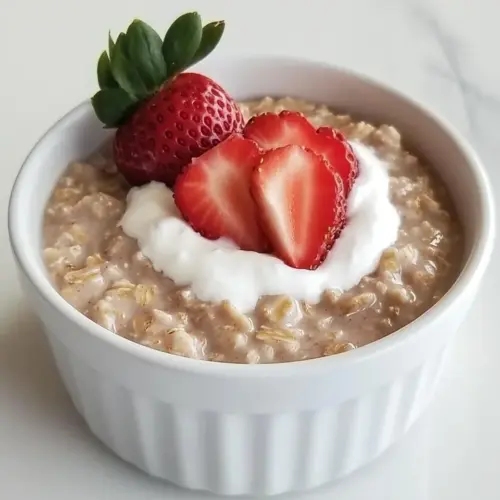
Strawberries and Cream Oatmeal
Strawberries and Cream Oatmeal is a creamy, comforting breakfast with nutty steel-cut oats, bright strawberries, and a touch of maple syrup. This easy slow cooker recipe makes a large batch perfect for an easy weeknight brunch or a relaxed weekend morning, delivering warm aroma and satisfying texture that keeps you fueled.
Equipment
- 6 to 8 quart slow cooker
Ingredients
- 2 cups steel-cut oats,no substitution Provide hearty, chewy texture and absorbent base for cooking; simmer slowly to develop nutty flavor and creamy consistency while remaining toothsome throughout serving.
- 4 cups water Bring liquid volume to cook the steel-cut oats and help them soften; simmer with oats to extract their flavor and achieve desired porridge thickness.
- 3 cups milk,any variety Add creaminess and richness to the oatmeal while contributing dairy flavor; incorporate gradually during or after cooking to adjust consistency and mouthfeel.
- 1 1/2 cups strawberries,+ more for serving Offer bright, sweet-tart fruit flavor and fresh juiciness; fold in toward the end to preserve color and texture and add natural sweetness and acidity.
- 1 teaspoon cinnamon Impart warm, aromatic spice that complements fruit and oats; sprinkle during cooking to infuse subtle cinnamon flavor throughout the porridge.
- 1 teaspoon vanilla extract Contribute warm aromatic depth and enhance overall sweetness perception; stir in at the end to preserve delicate vanilla notes and round out flavors.
- dash of sea salt Enhance and balance flavors by slightly heightening sweetness and reducing blandness; add sparingly to accentuate other ingredients without overpowering.
- 1/4 cup maple syrup,or honey Provide natural sweetness and subtle caramel notes while sweetening the dish; drizzle to taste to control overall sugar level and complement strawberries.
- 1 cup plain Greek or regular yogurt Introduce tangy creaminess and a thick, luscious finish; serve dolloped on top to contrast warm oats with cool, slightly acidic yogurt.
Instructions
- Grease the inside of the slow cooker with melted butter, coconut oil, or spray for easier clean-up.: The interior should glisten slightly, which helps prevent the steel-cut oats from clinging to the sides as they swell and release starch. You will notice a faint buttery scent or a tropical whisper from the coconut oil, and this thin film encourages even cooking and simpler washing afterward. If you skip greasing the pot you may find bits stuck to the bowl, so take a moment to coat it. A common pitfall is using too much oil which can pool, so wipe excess with a paper towel. Expect a quiet kitchen as the cooker hums, and look for a consistent sheen across the base and sides so the mixture can move freely as it simmers.
- In the slow cooker, combine 2 cups steel-cut oats, 4 cups water, 3 cups milk, 1 1/2 cups strawberries, 1 teaspoon cinnamon, 1/4 cup maple syrup, 1 teaspoon vanilla extract, and a dash of sea salt.: When you add these ingredients, notice the contrast between the pale oats and the ruby strawberries , the sticky gloss of the maple syrup , and the faintly sweet perfume of vanilla . Stir gently so the strawberries are distributed but not completely mashed; they should release juices during cooking to color the liquid. This step matters because even distribution ensures each spoonful has balanced flavor, and the sugar and salt help extract the fruit juices for richer aroma. A frequent mistake is over stirring which pulverizes the fruit and darkens the color too early, so keep movements slow and minimal. You should hear only the quiet clink of spoon on ceramic, and the mixture should sit level in the pot before you close the lid.
- Place the lid on the slow cooker and cook for 6 hours on low for a firm texture and 8 hours on low for a softer texture. Alternatively, cook on high for 3-4 hours.: As it cooks you will notice a rising, warm smell of fruit and spices, and the oats will slowly swell, creating a thick, porridge like consistency. Choosing 6 hours yields oats that hold a pleasant chew, great for those who enjoy distinct grain texture, while 8 hours yields a creamier, more tender bowl. Cooking on high shortens the wait but can reduce some nuanced flavors from slow melding. This timing is important because steel-cut oats need time to hydrate and break down to release their nutty oils, which enrich the overall profile. A troubleshooting note: if the mixture seems very dry partway through, add a splash of milk to prevent scorching. You should not hear bubbling like a rapid boil, rather a low steady soft simmer that keeps the kitchen cozy.
- Right before serving stir 1 cup plain Greek or regular yogurt.: At this moment you will see steam lift from the pot and smell the brightened fruit tones. Swirling in the yogurt cools the mixture slightly and lends a silky finish that contrasts the chewier oats. This addition is about balancing texture and brightness, since the tang cuts through the sweetness and makes each bite lively. Avoid adding yogurt too early because high heat can change its texture and mute the tangy notes. If your yogurt separates slightly, stir gently off heat and it will reincorporate; aggressive stirring can thin the bowl excessively. Look for a glossy surface and a light tang on the first spoonful to know you have the balance right.
- Serve with additional strawberries.: Garnishing with fresh strawberries adds a cool, juicy pop against the warm, creamy base; the fresh fruit provides contrast in temperature, texture, and acidity. Place slices strategically so each bowl has a mix of warm oatmeal and chilled berry, which elevates the experience and creates a pleasing visual. This finishing touch is about the final sensory impression, and fresh berries will release tiny perfume bursts as you serve. A common error is adding too many toppings which can overwhelm the bowl, so use a light hand. The ideal cue is a bowl that looks inviting, with varied colors and textures inviting you to dig in.
Notes
- Swap the fruit: Try blueberries, raspberries, or diced peaches in place of strawberries for seasonal variety and different acidity profiles.
- Adjust the creaminess: Use more or less milk to reach your preferred thickness, and consider plant based milks for a lighter texture.
- Sweetener options: Substitute maple syrup with honey if you want a floral note, but keep the ratio the same to maintain balance.
- Make ahead: Cook the batch overnight in the slow cooker and refrigerate leftovers for up to five days, reheating with a splash of milk to revive creaminess.
- Stovetop method: When you need a faster option, bring water to a boil, add milk and oats, then simmer about 20 minutes until tender, stirring frequently to prevent sticking.