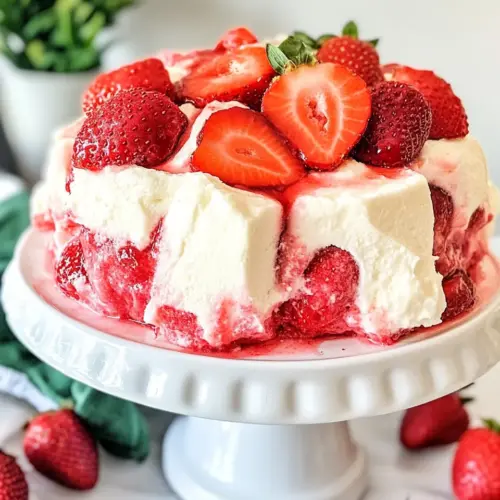
Strawberries and Cream Cake
Strawberries and Cream Cake is a creamy, fruity dessert that combines a tender strawberry cake base with a syrupy strawberry and condensed milk soak, finished with airy whipped cream. It is easy to assemble, crowd friendly, and perfect for summer gatherings when fresh strawberries shine, making it a must try for a sweet, nostalgic treat.
Equipment
- Hand Mixer
Ingredients
- 1 box strawberry cake mix, plus ingredients to make cake Provides a quick, pre-mixed base and leavening for the cake; follow included instructions to prepare the batter and bake until golden. Offers strawberry flavor and structure while simplifying the baking process for consistent results.
- 1 (11.75-oz) jar Strawberry ice cream topping Adds a glossy, sweet strawberry sauce that soaks into the cake and enhances fruit flavor; spoon over layers or warm slightly for easier spreading. Contributes moisture and concentrated sweet strawberry notes to complement the cake base.
- 1 (14-oz) can sweetened condensed milk Supplies rich, concentrated sweetness and a creamy texture when poured over the baked cake; helps create a moist, tres leches–style soak or filling. Bolsters sweetness and body while pairing well with fresh berries and whipped cream.
- 1 cup chopped fresh strawberries Delivers fresh, bright strawberry flavor and natural texture; fold into batters, scatter between layers, or use as a garnish. Contributes color, aroma, and bursts of fresh fruit that balance the cake's sweetness.
- 1 cup heavy whipping cream Provides a stable, airy whipped topping when chilled and beaten; use to frost or layer the cake for a light cream finish. Adds richness and mouthfeel, helping to meld the condensed milk and fruit into a cohesive dessert.
- 1/4 cup powdered sugar Sweetens and stabilizes whipped cream while smoothing texture; sift and incorporate gradually to avoid lumps. Enhances sweetness subtly and helps the whipped cream hold peaks for frosting or piping.
- 1 tsp vanilla Adds aromatic depth and warmth to the whipped cream and cake components; stir into cream or batter for subtle vanilla flavor. Enhances overall flavor complexity and rounds out the dessert's sweetness.
Instructions
- Bake cake in a 9×13-inch pan according to direction on the package.: Warmth from the oven will produce a golden, fragrant crumb that signals doneness, with a slight bounce when pressed gently at the center. You should notice a pleasant baked aroma, and the edges will pull slightly away from the pan. This initial bake sets the structure that will absorb the syrupy topping correctly; underbaking leaves a gummy center while overbaking dries the cake and prevents full absorption. A common mistake is opening the oven too early which can cause uneven rise, so resist peeking until the last third of the bake time. Use a toothpick to check for a few moist crumbs but not raw batter.
- While cake is baking, mix milk and strawberry topping until well blended. When the cake is done and while it’s still hot, poke holes in it with a fork or straw. Pour milk mixture over the cake. Allow cake to cool completely.: As the cake bakes, the combined sweetened condensed milk and jarred strawberry topping should form a uniform, pourable mixture with glossy texture. The aroma will be sweet and fruity, and you should see the sauce become slightly smoother as you stir. This mixture soaks into the cake and delivers concentrated strawberry flavor, so blending until smooth helps even distribution. Avoid making the mixture too thin which can oversaturate the cake; if it seems very runny, stir gently to thicken slightly. A pitfall is adding cold ingredients straight to a just baked cake without testing viscosity, causing uneven absorption.
- Sprinkle chopped strawberries over cake.: The act of creating holes lets the milk and strawberry mixture penetrate deeply, producing an evenly moistened crumb. You will see tiny punctures across the surface, which later disappear beneath the topping but are essential for texture. Work methodically across the pan so the holes are spaced uniformly; clustering holes in one spot leads to uneven soaking. A frequent error is making holes too wide which can collapse crumb structure, so use a fork or narrow straw for best results.
- In a chilled bowl, whip together heavy cream, powdered sugar and vanilla. Whip on high speed of an electric mixer for 1-2 minutes. Spread over cake. Keep refrigerated until ready to serve.: As you pour the glossy condensed milk and strawberry sauce, listen for the gentle splatter and watch the liquid bead and sink into the warm crumb. Start pouring slowly, pausing to let it absorb in sections so the top does not pool excessively. The cake should glisten as it drinks in the mixture, and you may tilt the pan gently to encourage even coverage. Pouring too fast floods the surface and prevents proper absorption, so patience pays off here. If you notice a few dry spots, spoon a little extra mixture onto them rather than drenching the whole cake.
- Allow cake to cool completely: Cooling is when the soaked crumb stabilizes and the flavors meld. The surface will lose the initial steam, and the texture firms slightly, making it ready for the final assembly. Cooling completely also prevents the whipped cream from melting when spread. A common slip is attempting to frost while the cake is still warm, causing the topping to weep and lose structure; allow ample time or chill briefly to speed the process.
- Sprinkle chopped strawberries over cake: The fresh chopped strawberries added at this stage provide pops of acidity and fresh texture, visually brightening the surface. Arrange evenly so each slice receives a similar amount of fruit. The berries should be ripe but firm to avoid releasing excess juice that could wet the topping. Avoid overly ripened fruit, as it can make the cake soggy and mask the delicate balance between cream and sweetness.
- In a chilled bowl, whip together heavy cream, powdered sugar and vanilla: When you whip the cold heavy cream , it will transform from silky liquid to soft peaks, developing a light, airy body with a faint sweet scent from the powdered sugar and vanilla. The speed and timing matter, as whipping too long will turn the cream grainy and eventually into butter. Chill the bowl and beaters to help reach stable peaks quickly. One mistake is adding the sugar too late or in lumps, which can create uneven sweetness and texture; sift the powdered sugar if needed.
- Whip on high speed of an electric mixer for 1 to 2 minutes: Expect a progression from glossy liquid to soft peaks in this short burst; you will hear a change in motor pitch as the mixture thickens and see the cream hold shape briefly when the beaters are lifted. Timing depends on bowl temperature and cream fat content, so watch closely. Overwhipping will make the cream buttery and separate, so stop as soon as it holds soft peaks that still move slightly when stirred. A common error is leaving the mixer unattended which often leads to overwhipping.
- Spread over cake: Using a spatula, smooth the whipped cream across the chilled cake, covering the fruit and creating a light, cloud like layer. The cool cream will contrast with the tender, fruity crumb, and the act of spreading should feel silky under the spatula. If the cream seems too loose, chill it briefly until it firms slightly; if too stiff, fold gently to soften before spreading. Avoid aggressive spreading which can tear the cake surface and redistribute the soaked syrup unevenly.
- Keep refrigerated until ready to serve: Refrigeration helps the flavors marry and keeps the whipped cream stable, giving clean slices when cut. Store covered to prevent absorption of fridge odors and to keep the topping from drying. This cake benefits from chilling at least a few hours, and can be made a day ahead for convenience. A typical mistake is leaving it out too long at room temperature, which softens the cream and reduces shelf life, especially on warm days.
Notes
- Choose a quality boxed cake mix: Using a reliable strawberry cake mix ensures consistent crumb and flavor, which is crucial because the cake acts as the sponge for the sweet condensed milk and strawberry topping.
- Measure the condensed milk carefully: The sweetened condensed milk provides concentrated sweetness and moisture, so accurate measurement prevents the cake from becoming overly saturated or too dry.
- Work while the cake is warm: Poking and pouring the milk and topping while the cake is still warm helps the liquid absorb more evenly and quickly, creating a tender, infused crumb.
- Keep the cream and tools cold: Chilling the bowl and beaters ensures the heavy whipping cream whips faster and reaches stable peaks, producing a loftier topping that holds shape longer.
- Garnish lightly with fresh fruit: Scatter chopped fresh strawberries just before serving to maintain bright color and texture, and to avoid added moisture from macerated berries.
- Make ahead for convenience: This recipe improves when refrigerated overnight, as flavors meld and the texture becomes cohesive, making slicing and serving neater the next day.