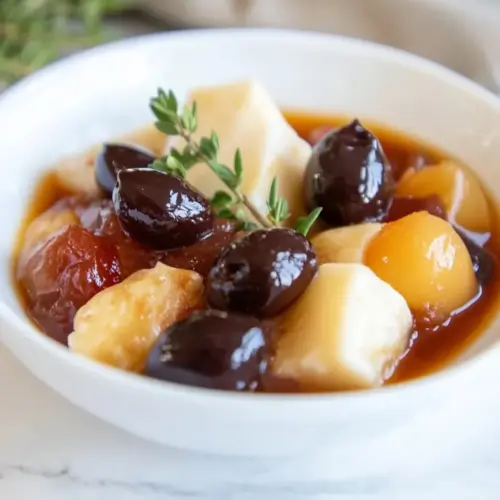
Stovetop Tzimmes
Stovetop Tzimmes arrives with warm, citrus scented steam, tender root vegetables, and plump dried fruit. This easy, cozy side balances sweet and bright notes for an unforgettable holiday or weeknight accompaniment, perfect as an easy weeknight dinner complement or festive plate addition, and it rewards patience with rich, layered flavor.
Equipment
- Large heavy pot
- Medium Bowl
Ingredients
- 1 1/2 pounds orange yams, peeled and cut into 1-2 inch pieces (2 potatoes) Peel and chop to even 1–2 inch pieces to provide a tender, sweet base that cooks evenly; contributes vibrant color and natural sugars that caramelize slightly during simmering.
- 1 1/2 pounds white sweet potatoes, peeled and cut into 1-2 inch pieces (2 potatoes) Peel and cut into 1–2 inch pieces so it matches cooking time with the orange yams; adds a milder, creamy sweetness and balances texture in the stew.
- 1 pound carrots peeled and cut into 1-inch rounds (8 carrots) Peel and slice into 1-inch rounds to ensure uniform cooking and easy eating; adds earthy sweetness, subtle firmness, and visual contrast to the root vegetables.
- 6 ounces dried apples (1 1/2 cups) Rehydrate if desired and fold in to impart concentrated apple sweetness and chewiness; offers a depth of fruit flavor and pleasant texture variation throughout the dish.
- 6 ounces dried cranberries (1 1/4 cups) Scatter or rehydrate to introduce bright, tart-sweet bursts that contrast the root vegetables; helps balance richness with acidity and enhances color.
- 2 cups orange juice Pour as the primary liquid to infuse citrus brightness and natural acidity; helps deglaze the pan and melds flavors while providing sweetness without added sugar.
- 1/2 cup honey Drizzle to sweeten and glaze the vegetables while contributing a floral, rounded sugar note; helps create a sticky, caramelized coating as the mixture reduces.
- 1/2 cup brown sugar Sprinkle to deepen caramelized sweetness and add molasses complexity; combines with honey and juices to form a rich syrup that coats the fruit and vegetables.
- 2 teaspoons cinnamon Dust in to warm and aromaticly season the dish; provides familiar holiday spice that complements the sweetness of the yams, sweet potatoes, and dried fruit.
- 1 teaspoon salt Measure and add to enhance overall seasoning and bring out natural flavors; balances sweetness and prevents the dish from tasting flat.
- 1/2 teaspoon black pepper Grind or sprinkle to add subtle heat and complexity; contrasts sweetness with a mild peppery note that brightens the overall profile.
- 1 1/2 cups chicken broth (you may substitute 'no chicken' broth) Pour in as additional savory liquid to balance sweetness and round out flavors; supplies umami and depth while helping vegetables simmer tender without drying out.
- 12 ounces pitted prunes (3 cups) Pit and add to offer rich, jammy sweetness and a lubricating texture; contributes deep plum flavor, natural sugars, and a satiny finish that enriches the tzimmes.
Instructions
- Place cut yams, sweet potatoes, and carrots on the bottom of a large heavy pot.: The air is filled with a faint earthy scent as you arrange the orange yams , white sweet potatoes , and carrots in a single layered bed, which helps heat circulate evenly. You will notice a dull thud when the pieces settle into place, and visually the pot should look layered and organized, not crowded. This method matters because even contact with the pot base and steam distribution prevents some pieces from overcooking while others lag behind. A common mistake is piling ingredients, which traps heat and causes uneven tenderness; aim for a roomy bottom layer to keep textures consistent.
- Pour dried apples and cranberries on top.: As the dried fruit lands, there is a dry, papery rustle and a sudden visual contrast against the bright vegetables. The dried apples and cranberries will rehydrate during cooking, so placing them on top allows sweet juices to trickle downward and infuse the layers below. This technique encourages gradual hydration rather than immediate saturation, which preserves some texture in the fruit. Avoid burying all fruit beneath heavy vegetables at the start, because early immersion can make them break down too quickly.
- In a medium bowl, whisk together orange juice, honey, brown sugar, cinnamon, salt, and black pepper. Pour mixture over the fruits and vegetables in the pot.: The moment you whisk, the aroma of orange juice and cinnamon brightens the air, and the honey helps the mixture become shiny and cohesive. Pouring the mixture creates a glossy coating that begins to marinate the top layer, seeping down as it warms. This step is critical because it distributes seasoning evenly and initiates the flavor marriage, otherwise the dish can cook blandly. A frequent error is under-whisking, which leaves pockets of undissolved sugar; mix until smooth for uniform flavor.
- Add chicken broth or 'no chicken' broth to the pot, covering the vegetables halfway. Heat pot over medium high until it begins to simmer. Stir the ingredients once gently. Reduce heat to a gentle but constant simmer. Cover the pot.: When the chicken broth hits the warm pot, it exhales a savory steam that balances the sweet notes. Bring it to a simmer where small bubbles rise steadily, creating a soft, rhythmic hiss. Stirring once prevents sticking and redistributes flavors, then lowering the heat to maintain a gentle simmer preserves the integrity of the vegetables. This technique matters because a vigorous boil will agitate delicate fruit and cause rapid breakdown, while no simmer will not loosen the dried fruit properly. A common issue is letting the pot boil too hard; watch for steady small bubbles rather than a rolling roar.
- After 45 minutes, open the pot and gently stir again. Place pitted prunes on top of the simmering ingredients.: At this point a rich, citrus and spice scented steam escapes when you lift the lid, and you will hear a soft bubbling chorus as you stir. The vegetables should look plump and slightly translucent at the edges, a sign they are nearing tenderness. Adding the pitted prunes on top lets them warm gradually and maintain recognizable shape, contributing texture and concentrated flavor without dissolving. This matters because prunes added too early will disperse into the sauce and lose their charm. Avoid stirring vigorously here, which can break down the softened pieces.
- Cover pot. Continue to cook on lowest heat for another 15 minutes, until potato pieces are tender and prunes have warmed and softened. Don't cook too long, or the prunes will dissolve-- it will make a nice sauce for the tzimmes, but it won't look so pretty on the table. Serve warm as a side dish to a festive holiday meal.: During this final gentle phase, a warm, sticky aroma develops as sugars concentrate and the broth reduces slightly. The sound becomes a soft, patient simmer and visually you will see glossy edges and plump fruit. The low heat encourages melding of flavors while protecting the fruit from complete breakdown, which keeps the dish attractive and texturally varied. A typical mistake is leaving it unattended on higher heat, leading to mushy fruit and overly reduced liquid; monitor and remove from heat as soon as the potatoes are tender and prunes are soft but intact.
Notes
- Prep consistency: Cut the orange yams, white sweet potatoes, and carrots into even pieces so everything reaches tenderness at the same time.
- Layering matters: Place dried apples and cranberries on top to allow gradual rehydration, preventing them from dissolving into the broth too early.
- Control the simmer: Maintain a gentle simmer rather than a rolling boil to keep the fruit intact and to develop flavor slowly.
- Taste balance: If the mixture tastes overly sweet at the end, a small pinch of salt can reorient the flavors without changing the character of the dish.
- Timing the prunes: Add the pitted prunes near the end so they warm through but keep shape, avoiding a completely saucy appearance.