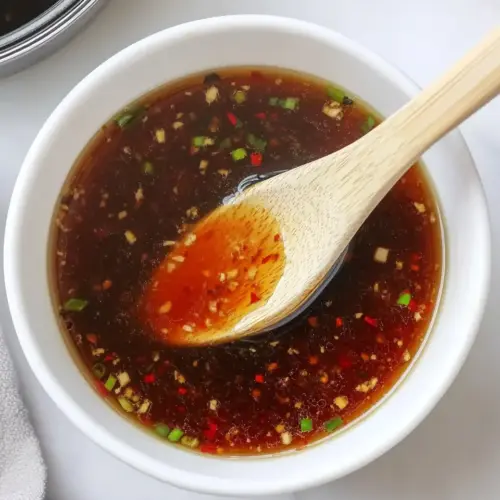
Stir Fry Sauce
Stir Fry Sauce is a glossy, balanced blend of savory soy sauce, sweet honey, and toasty sesame oil that transforms weeknight vegetables and proteins into a restaurant style meal. It is easy to whisk together, slightly sticky when reduced, and perfect for quick dinners or meal prep. Keep a jar ready for fast flavor and consistent results.
Equipment
- Medium Bowl
- Whisk
- Measuring Spoons
- Measuring Cups
Ingredients
- 1 tablespoon corn starch Thickening: Dissolve in cold liquid to create a glossy, smooth sauce texture; prevents separation and helps the sauce cling to proteins and vegetables. Mix thoroughly to avoid lumps before adding to hot pans and simmer briefly to activate its thickening power.
- 2 tablespoons water cold Diluting: Combine with corn starch to create a slurry that evenly disperses thickener and prevents clumping when added to hot sauce. Use cold water so the corn starch hydrates properly and yields a silky finish when heated.
- 1/4 cup chicken broth (see note 1) Flavor base and deglazer: Adds savory depth and umami while helping to loosen browned bits from the pan for richer flavor. Choose low-sodium or homemade broth to control salt levels and balance the sweetness and saltiness of the sauce.
- 1/4 cup honey Sweetening and glazing: Balances salty and acidic components while providing a glossy, caramelized finish when heated. Adjust quantity to taste for a milder or more pronounced sweet note and to help the sauce form a sticky coating on stir-fried ingredients.
- 3 tablespoons soy sauce Salting and seasoning: Provides essential salty, savory, and umami character that rounds out the sauce. Use a regular or reduced-sodium soy sauce depending on desired saltiness and to complement other flavors without overpowering.
- 1 tablespoon toasted sesame oil Aromatic oil: Imparts a toasty, nutty aroma and a subtle depth that enhances overall flavor complexity. Add sparingly since a little toasted sesame oil goes a long way and is best added near the end to preserve its fragrance.
- 1/2 teaspoon red chili flakes (optional) Heat and contrast: Introduces a spicy kick and visual flecks that contrast sweetness and richness in the sauce. Sprinkle in to taste for mild warmth or omit entirely for a sweeter, milder glaze.
Instructions
- In a medium bowl, whisk together cornstarch and water. Add chicken broth, honey, soy sauce, sesame oil, and red pepper flakes (if using).: The moment you start whisking you'll notice the slurry thicken slightly and become opaque, and you want it smooth and lump free. Use a steady wrist motion so the corn starch dissolves fully into the water , watching for any small specks that indicate under mixing. The goal is a uniform pale mixture, not grainy, because lumps will burst unevenly when heated and create gritty pockets. A common mistake is adding the starch directly to hot liquid, which causes immediate clumping and a lumpy sauce. If that happens, strain the sauce through a fine mesh and whisk vigorously while warming slowly to reincorporate.
- Whisk to combine. Use immediately in your favorite stir fry recipe, using a couple tablespoons or more, and simmer until the sauce is thickened.: When you combine these, the aroma shifts immediately, with the honey lending a sweet perfume while the soy sauce offers a deeper savory note. Pour the chicken broth in first so the slurry disperses more easily, then add the honey and soy sauce , stirring until glossy. The toasted sesame oil will float slightly at first, releasing a nutty scent as it warms. If you included the red chili flakes , they'll add a sharp peppery note that you can smell even before heating. Avoid over stirring which can introduce too much air and create a foamy texture when heated; gentle but thorough mixing is best.
- Whisk to combine: As you whisk, the mixture should become uniformly colored and slightly viscous, with the oil integrating into the liquid. This step is where the sauce's final sheen begins to form, and you can test a small spoonful to judge balance. If the sauce tastes overly salty, a tiny splash more honey or a little extra chicken broth will smooth it out. A frequent error is under tasting at this stage; doing so means you might reduce a sauce that is already too salty or sweet. Adjust carefully, because simmering concentrates flavors.
- Use immediately in your favorite stir fry recipe, using a couple tablespoons or more, and simmer until the sauce is thickened: When you add the sauce to a hot pan, listen for a gentle hissing or sizzling as it meets oil and cooked vegetables or protein. The visual cue to watch for is the sauce going from glossy liquid to a thicker glaze that clings to pieces, usually after a minute or two of simmering. Stir or toss constantly so it coats evenly, and if you see the sauce becoming too thick or sticky, add a tablespoon of chicken broth at a time to loosen it. A common slip is adding too much sauce at once which can cool the pan and prevent proper thickening; instead add in stages so the pan stays hot and the sauce reduces correctly.
Notes
- Broth swap: If you want a vegetarian option, replace the chicken broth with vegetable broth or even water, but taste carefully because you may need a touch more soy sauce to compensate for lost umami.
- Thickness control: For a thicker glaze, increase the corn starch very slightly and simmer a little longer; if it becomes too thick, stir in small amounts of chicken broth until it loosens.
- Heat level: Adjust the amount of red chili flakes to suit your family; start with the listed amount and add more after tasting, because heat concentrates as the sauce reduces.
- Sweeter or tangier: If you prefer more sweetness, add a touch more honey; for brightness, a squeeze of fresh citrus added after cooking can lift the flavors without altering the base ingredients.
- Make ahead: This sauce stores well in the refrigerator for up to four days in an airtight container; bring it to room temperature and whisk before using because separation is normal.