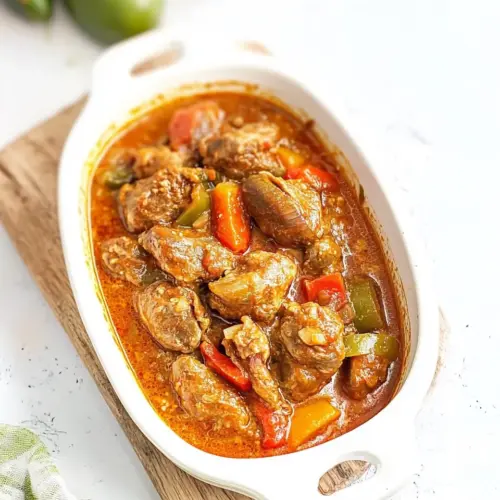
Stewed Chicken Gizzard Recipe
Stewed Chicken Gizzard Recipe is a savory, tender, and budget friendly dish that blends slow simmered chicken gizzards with a tangy tomato sauce, sweet peppers, and bright herbs. This easy weeknight dinner delivers rich, concentrated flavors and a satisfying texture that keeps you coming back for more, perfect for when you want an economical, soulful meal to share.
Equipment
- Large Pot
- Skillet
- Dutch Oven
Ingredients
- 1 pound chicken gizzards, [0.9 kg] (cleaned, see tips above the recipe) Provide tender, meaty texture and hearty flavor to the stew; requires thorough cleaning and trimming to remove grit and membrane, then simmering until soft to absorb surrounding flavors and become fork-tender. Use as the primary protein, contributing depth and a slightly gamey note that pairs well with tomatoes, herbs, and spices.
- 1 1/2 tablespoons salt, (or to taste, divided) Season the gizzards during cooking and finishing to enhance overall savory balance; divide the amount to lightly season while simmering and adjust to taste at the end to avoid over-salting. Dissolve into broths and sauces to bring out natural flavors and help mimic a well-rounded, seasoned dish.
- 1 1/2 teaspoon pepper, freshly-cracked (or to taste, divided) Add warm, piquant heat and aromatic bite when freshly cracked and used in both cooking and finishing; distribute half during simmering and adjust the remainder for final seasoning. Complement other spices and vegetables while lifting the savory profile without overpowering milder ingredients.
- 1 1/2 teaspoon oregano, dry, ground, plus a pinch for later Contribute earthy, slightly bitter herbal notes and Mediterranean character; add most during cooking to infuse the stew and reserve a pinch to garnish for a final aromatic lift. Blend well with bay leaf and parsley to create a cohesive herbaceous backbone for the tomato-based sauce.
- 1 bay leaf, optional Impart subtle aromatic depth and savory complexity when simmered with the stew; optional use provides a background layer of flavor without dominating the dish. Remove before serving to avoid overpowering individual bites while preserving the infused taste.
- 2 tablespoons vegetable oil Provide the cooking medium for sautéing vegetables and browning gizzards, delivering a neutral flavor and helping develop fond on the pan; use a high-heat tolerant oil to prevent burning and maintain clean taste. Carry fat-soluble flavors and aid in melding spices into the sauce.
- 2 bell peppers, or cubanela (cubanelle) peppers Offer sweet, crisp texture and fresh vegetal flavor when sautéed or stewed; choice of bell or cubanelle peppers affects sweetness and mildness, adding color and body to the sauce. Slice or dice evenly to ensure consistent cooking and to disperse pepper flavor throughout the dish.
- 1 small red onion, cut into slices Supply mild sweetness and savory depth when caramelized or softened; slicing into rings or strips releases juices and melds with tomatoes to create a layered aromatic base. Cook long enough to become tender and integrate into the sauce, balancing acidity from the tomatoes.
- 1/2 teaspoon mashed garlic Introduce gentle pungency and aromatic foundation when mashed and sautéed briefly to release oils; use sparingly to prevent overpowering other flavors and to create a rounded savory base. Stir into the oil before adding tomatoes to bloom its flavor into the stew.
- 4 plum tomatoes, cut into quarters Contribute bright acidity, natural sweetness, and body to the stew when quartered and stewed down; tomatoes help form the sauce and balance the richness of the gizzards. Break down during simmering to thicken and provide fresh tomato flavor in every spoonful.
- 1/4 cup pitted green olives, (optional) Add briny, slightly tangy bursts of flavor and textural contrast when included; optional use brightens and balances the richness of the gizzards and tomato sauce. Rinse if desired to control saltiness and scatter through the stew near the end of cooking to preserve texture.
- 1 cup tomato sauce Provide concentrated tomato flavor and a saucy base to unify ingredients; pour into the pan to create a cohesive, simmering liquid that carries seasonings and tenderizes the gizzards. Adjust quantity to reach desired sauce thickness and richness while simmering.
- 4 sprigs parsley, or cilantro, minced Finish with fresh herbal brightness and a hint of citrusy or peppery notes depending on choice; mince and scatter over the stew just before serving to lift flavors and add color. Use parsley or cilantro to complement spices and cut through the richness of the dish.
Instructions
- Add the gizzards to a large pot and 1 quart [1 liter] of water. Add a tablespoon of salt, 1 teaspoon of black pepper, 1 teaspoon of oregano, and the bay leaf. Boil until the gizzards become very tender, which can be 60 - 90 minutes, add water if it becomes necessary to prevent it from drying out. A pressure cooker or Instant pot speeds up this step to about 20 - 30 minutes.: You will notice a developing savory steam as the pot comes to a boil, and the scent becomes meaty and herbaceous, a clear sign that the long simmer is concentrating flavors. The bubbling sound should be steady and gentle, not a violent roar, which helps prevent toughening. The visual cue is the gizzards losing their pinkness and becoming plump and soft, sometimes with slightly ragged edges where connective tissue separates. This step matters because it transforms tough tissue into tender meat that will absorb sauce flavors later. A frequent pitfall is rushing the simmer, which leaves the gizzards chewy; if you have a pressure cooker, use it to reduce time while still achieving tenderness. Keep an eye on the water level and top up with hot water to maintain coverage, because exposing gizzards can dry them out and create uneven texture.
- Separate the gizzards from the water (set both aside). Discard the bay leaf.: When you drain, notice the rich, slightly gelatinous hue of the cooking liquid, which holds concentrated flavor and is worth saving for the sauce. The gizzards will feel firmer than when raw but yield slightly to pressure, indicating readiness. The liquid should be fragrant but not overly oily; skim if necessary. Removing the bay leaf prevents its bitter texture from creeping into the finished plate. A common mistake here is discarding the cooking liquid, which would lose valuable backbone for the sauce; instead reserve a cup or so for depth. Let the gizzards rest briefly so any excess liquid drains, making the next sauté step more effective.
- In a large skillet or Dutch oven (caldero), heat the oil over medium heat. Add the chicken gizzards and cook and stir until any liquid left has evaporated and there's only meat and oil left in the pan. Stir in bell pepper, onion, and garlic. Cook stirring until the onion becomes translucent. Stir in tomatoes, olives, and half a teaspoon of oregano. Add the tomato sauce and a cup of the liquid from boiling the gizzards.: The moment the gizzards hit the hot oil you should hear a steady sizzle and smell a roasting aroma as any residual broth reduces. As the liquid evaporates, the pan surface will start to show golden spots on the meat, signaling Maillard reactions that deepen flavor. When you add the peppers and onion , the sizzling will change to a sweeter, sharper aroma as sugars release. Cook until the onion softens and turns translucent, which mellows its bite. Introducing the fresh tomatoes and olives creates a bright, tangy steam that cuts through richness. Adding the reserved cooking liquid is key because it reincorporates the concentrated broth, lending body and umami. A typical error is crowding the pan, which causes steaming rather than browning, so if your pan is small work in batches or use a larger vessel to maintain surface contact for proper caramelization.
- Cover with the lid, and simmer until the liquid has reduced to half (about 7 minutes). The vegetables will be tender, and the sauce should be a bit thick.: Once covered, the bubbling quiets to a gentle murmur, and you should notice the sauce gradually tightening and clinging to the gizzards and vegetables. Steam escaping from the lid carries a concentrated tomato aroma, and the surface will show small, slow-moving bubbles when the heat is right. This reduction concentrates the flavors and improves mouthfeel, transforming a loose broth into a spoonable sauce. Stir once or twice to prevent hot spots and to check texture, because over reducing will dry the pan and risk sticking. If the sauce thickens too quickly, add a splash more reserved cooking liquid to soften it without diluting flavor. A common slip is leaving it unattended until it reduces completely, which can scorch the bottom and create bitter notes, so watch this phase closely.
- Season with salt and pepper to taste. Add fresh cilantro, and remove from the stove. See suggestions to serve above the recipe.: At this finishing moment you should rely on your palate; the aroma will be rounded, with tomato brightness and herb lift. Tasting will reveal whether the dish needs a final pinch of salt or a touch more black pepper to balance sweetness and acidity. Adding chopped parsley or cilantro introduces a fresh, grassy scent, and you will feel the contrast immediately against the warm, savory base. Removing the pot from heat preserves the herb aroma and prevents it from fading into the sauce. A mistake to avoid is over seasoning at the outset rather than adjusting at the end, which can lock in an overly salty profile. Plate promptly so the textures remain ideal, and enjoy the layered sensations you created from such simple beginnings.
Notes
- Use reserved cooking liquid: Instead of plain water for simmering later, the cup of reserved broth adds concentrated savory notes, so always save some after boiling the gizzards.
- Try cubanelle peppers: If you want a milder, sweeter pepper, cubanelle varieties soften quickly and blend well with the tomatoes without overpowering the palette.
- Control olive intensity: If the olives feel too salty, rinse them briefly under cold water to moderate the briny punch while preserving their flavor contribution.
- Finish with bright herbs: Parsley or cilantro added at the end preserves freshness and lifts the sauce, chop finely and sprinkle right before serving for maximum aroma.
- Adjust oregano placement: Use most of the dried oregano during the boil for depth, and reserve a pinch to add at the end to refresh the herbaceous character.
- Monitor liquid reduction: Reduce until the sauce clings to the spoon for a balanced texture, but keep some glossy sheen to avoid a dry mouthfeel.