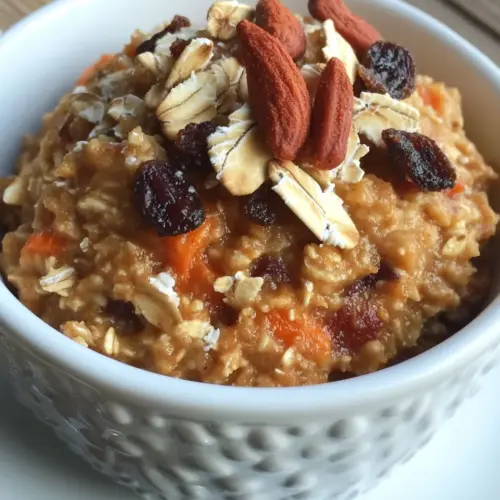
Steel Cut Carrot Cake Oatmeal
Steel Cut Carrot Cake Oatmeal is a creamy, spiced porridge that tastes like dessert for breakfast. Nutty steel cut oats, grated carrot, and warming spices create a comforting bowl that is hearty yet light enough for an easy weeknight or relaxed weekend morning. It reheats beautifully, making it ideal for meal prep and cozy mornings ahead.
Equipment
- Medium Saucepan
- Grater
- Wooden Spoon
Ingredients
- 1 cup steel-cut oats (not quick-cooking) Provide hearty, chewy texture and slow-release energy while acting as the base of the oatmeal; cook until tender and absorbent to create a creamy porridge-like consistency.
- 1 cup finely grated carrot Add natural sweetness, moisture, and fine texture; incorporate grated carrot while cooking so it softens and melds with the oats for a carrot cake flavor.
- 1/2 cup shredded coconut Contribute tropical aroma, chewy texture, and subtle sweetness; stir in during cooking or reserve some for topping to maintain a toasty contrast.
- 1 1/2 cups milk or coconut milk Provide creaminess and richness while thinning the porridge to a desired consistency; heat gently with oats to allow flavors to meld and prevent curdling.
- 1 1/2 cups water Supply necessary liquid volume for cooking the steel-cut oats and help achieve a tender, creamy texture; adjust total liquid for preferred thickness.
- 2 tablespoons maple syrup Impart natural sweetness and depth of flavor; stir in after cooking to sweeten without overpowering and to maintain the oatmeal’s silky texture.
- 1 teaspoon ground cinnamon Offer warm, aromatic spice and enhance overall sweetness perception; sprinkle into the cooking liquid to distribute flavor evenly throughout the oats.
- 1/4 teaspoon ground nutmeg Provide subtle warmth and complexity with a mellow nutmeg aroma; use sparingly to support the primary cinnamon flavor without becoming cloying.
- 1/4 teaspoon ground ginger Deliver bright, warming spice that rounds out the spice blend and complements the carrot; grate or measure precisely to avoid overpowering the dish.
- Pinch salt Enhance and balance flavors by amplifying sweetness and reducing bitterness; add a small pinch during cooking to bring out the other ingredients.
- 1 teaspoon vanilla extract Add floral, sweet depth and aromatic lift that rounds out the spice and sweet elements; stir in after cooking to preserve its fragrance.
- Shredded coconut (raisins, and chopped walnuts for topping) Provide optional crunchy and chewy toppings to add texture contrast and extra flavor; sprinkle shredded coconut, raisins, and chopped walnuts over serving bowls.
Instructions
- To a medium saucepan over medium heat, add the oats, carrot, coconut, milk, water, maple syrup, cinnamon, nutmeg, ginger, and salt. Bring to a boil then reduce heat. Simmer for about 20 – 25 minutes until the oatmeal is tender and creamy. Remove from heat and stir in the vanilla extract.: The moment you combine these ingredients a heady scent of spice and coconut begins to lift, and you will notice steam rising within minutes, signaling the pot is warming through. This initial mixing lets the steel cut oats hydrate evenly while the carrot begins to soften and release sweetness. Use a saucepan with a heavy bottom so heat distributes steadily, preventing localized scorching. A common mistake here is turning the heat too high to speed things up, which can make the bottom stick and create an uneven texture; instead, keep the heat moderate and stir a few times in the early minutes to prevent sticking and to help flavors mingle.
- Serve with a splash of half-and-half or coconut cream along with shredded coconut, raisins, and walnuts sprinkled over the top if desired.: As the liquid nears a boil you will see bubbles forming and the surface will tremble, and that is the cue to lower the flame to maintain a gentle simmer. The audible soft bubbling will subside to a quieter simmer, which is perfect because it allows the steel cut oats to tenderize slowly without breaking apart. This step matters because a hard boil will evaporate liquid too quickly and can leave the oats undercooked, while too low of a heat can keep them gummy. If you notice rapid bubbling or a film forming on top, reduce heat further and stir to redistribute heat and stop sticking.
- Simmer for about 20 to 25 minutes until the oatmeal is tender and creamy: During this long phase the pot emits warming, toasted notes and the oats swell, becoming plump and slightly translucent around the edges. Stir occasionally, listening for a gentle hiss rather than an aggressive roar, and watching for a glossy, creamy consistency that still holds individual oat kernels. The carrot should be soft and integrated, not fibrous. People often think more time equals creamier oats, but over simmering can dry the mix out; if the porridge thickens too fast, add a splash of milk or water to loosen it. Also avoid constant vigorous stirring which can make the texture gluey; gentle, confident stirs are best.
- Remove from heat and stir in the vanilla extract: Once you pull the saucepan off the burner you will notice the aromas intensify, and stirring in the vanilla extract now preserves its fragrant top notes that heat can dull. This finishing step gives the bowl that bakery like roundness without adding extra sweetness. Be mindful not to leave it sitting too long unagitated, because the oats will continue to thicken as they cool; if needed, loosen with a small splash of warm milk . The common pitfall is adding delicate flavors too early into boiling heat, which dissipates them, so timing here is key.
- Serve with a splash of half and half or coconut cream along with shredded coconut, raisins, and walnuts sprinkled over the top if desired: The final plating moment is sensory rich, with warm steam, a glossy surface, and the scent of spices. A spoonful of coconut cream or half and half adds a silky sheen and extra creaminess, while toasted walnuts provide a toasty crunch and raisins offer sweet pops. I like to arrange toppings so each bite varies between creamy and crunchy. One trap is piling on too many toppings which can overwhelm the porridge base, so use them thoughtfully to complement rather than mask the core flavors.
Notes
- Adjust liquid ratio to reach your preferred consistency by adding more milk for creaminess or more water to keep it lighter; add in small increments to avoid thinning the flavor.
- Use coconut milk for a richer, slightly tropical flavor that complements the shredded coconut, especially if you like a creamier mouthfeel.
- Sweeten gently with maple syrup and taste near the end, because sweetness concentrates as the porridge cools and you can always add more.
- Make ahead by cooking double and refrigerating, then reheat with a splash of warm milk to refresh the texture and loosen the oats.
- Toast nuts like chopped walnuts before topping to intensify their flavor and add satisfying crunch against the creamy porridge.
- Mix up toppings by swapping in raisins or extra shredded coconut, keeping one crunchy and one chewy element for the best mouthfeel.