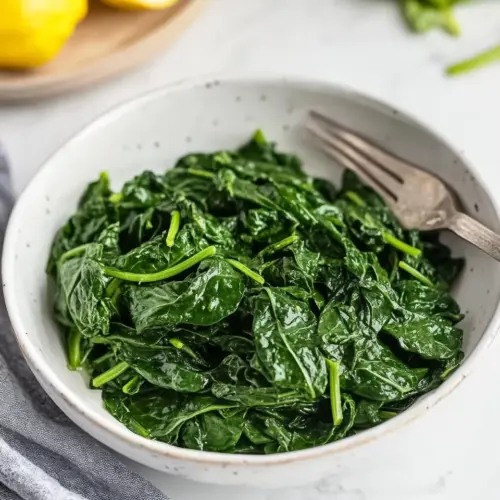
Steamed Spinach
Steamed Spinach is a quick, silky side that highlights fresh leafy greens with a touch of creamy butter and bright lemon. This easy weeknight dish is tender, lightly seasoned, and feeds a crowd of four with minimal fuss, making it a perfect effortless vegetable to add to any meal.
Equipment
- Steaming basket
- Pot with lid
- Mixing Bowl
- Tongs
Ingredients
- 1 pound fresh spinach, thoroughly washed Provide leafy body and mild earthy flavor while wilting quickly when steamed; contributes bulk, color, and nutrients like iron and vitamins A and K. Thorough washing removes grit and potential contaminants, ensuring a clean final texture and taste.
- 1/4 teaspoon kosher salt Add subtle salinity to enhance the natural flavors of the spinach and other seasonings; helps balance bitterness and draws out moisture during steaming. Use sparingly to avoid oversalting the delicate greens.
- 1/4 teaspoon ground black pepper Contribute gentle heat and depth without overpowering the lemon and butter; ground black pepper brightens the overall flavor profile and complements savory seasonings. Sprinkle evenly to distribute its warming bite throughout the dish.
- 1/4 teaspoon garlic powder Provide aromatic savory note and subtle garlic flavor that melds with butter and lemon; garlic powder offers concentrated umami without adding moisture. Use lightly to avoid dominating the fresh spinach's delicate taste.
- 2 tablespoons unsalted butter melted Deliver rich, silky mouthfeel and carry flavors across the leaves; melted unsalted butter adds creaminess and helps coat the wilted spinach. Using unsalted butter allows precise control over seasoning when combined with kosher salt.
- 1 tablespoon fresh lemon juice Impart bright acidity and fresh citrus lift to cut through the richness of butter and the earthiness of spinach. Fresh lemon juice adds vibrant flavor and enhances overall balance when added just before serving.
Instructions
- Place the cleaned spinach leaves in a steaming basket over a pot of boiling water.: The air above the simmering water should do the cooking, producing a soft, fragrant steam that quickly wilts the leaves. As the steam rises you will notice a fresh, green aroma that signals the chlorophyll is warming and releasing flavorful volatile oils. Use a pot with a snug fitting lid to trap steam, and make sure the water does not touch the basket, so the leaves are not boiled. A common error here is using too much water, which can splash and dilute flavor, so keep the water level low enough to touch the bottom of the pot but not the basket. Visually, the leaves will begin to darken and fold within moments, showing that the process is underway. If you hear a vigorous boil, lower the heat to maintain steady steam, preventing harsh overcooking.
- Cover the pot with a lid and steam the spinach for about 5 minutes until just wilted.: You will hear a soft hiss as the steam circulates, and the sound will calm as the leaves collapse. The texture should become tender and silky, not mushy, and the color will be a deep, vivid green. Use a timer to aim for about five minutes, adjusting slightly based on leaf thickness. Oversteaming results in limp, watery spinach, which loses its bright flavor, so check at the three to four minute mark if your leaves are especially tender. When done correctly the spinach keeps a slight tooth and a glossy finish. If you notice excess water pooling, lift the lid briefly to let it evaporate, then reseal to finish.
- Transfer the steamed spinach to a bowl. Press to remove excess water, then season with salt, pepper, and garlic powder. Drizzle with melted butter and lemon juice before serving.: Moving the spinach out of the steam quickly stops the cooking process and preserves texture. You will feel the warmth as you use tongs or a spatula, and the steam will create a faint citrus like scent if the pot was clean and fresh. Transferring promptly prevents carryover cooking that can make the leaves overly soft. Avoid leaving the spinach in the basket or pot, where residual heat continues to break down the leaves. If you find excess water clinging to the pile, let it sit briefly uncovered so the surface cools enough to handle when you are ready to press.
- Press to remove excess water: Using the back of a spoon, the bottom of a bowl, or clean hands, press the warm spinach to expel trapped liquid. You will see a darker, concentrated green as the water releases, and the texture becomes more compact and cohesive. Removing moisture prevents a soggy mouthfeel and concentrates the flavors. A potholder or cheesecloth helps if you want to squeeze more vigorously without scalding your hands. One mistake I often see is skipping this step, which leads to watery plating and diluted seasonings, so take a moment to press gently but thoroughly.
- Season with salt, pepper, and garlic powder: With the water removed, the seasonings adhere better and the surface area of the leaves holds flavor. The scent of black pepper will become more pronounced, and the garlic powder will meld into the warm green, creating a savory backdrop. Sprinkle evenly and toss gently so that each bite carries seasoning without pockets of intensity. Too much salt at this stage can overwhelm the natural spinach, so measure carefully. If the flavors seem flat, let the spinach rest a minute, then taste and adjust cautiously.
- Drizzle with melted butter and lemon juice before serving: The warm butter will coat the leaves, giving them a satiny sheen and a richer mouthfeel, while the lemon juice adds a bright counterpoint that wakes up the palate. As the butter melts onto the warm spinach you will notice a comforting, slightly nutty aroma. Add the lemon juice last to preserve its zesty fragrance. Toss gently so the juices distribute, and plate immediately to enjoy the contrast of warm greens and fresh acidity. A common slip is adding citrus too early, which can make the leaves soggy; hold the lemon until just before serving.
Notes
- Make it garlicky Add a small pinch more garlic powder or use two light grates of fresh garlic for a stronger aromatic punch, but be cautious to avoid overpowering the spinach.
- Lighten the fat Replace the butter with a drizzle of extra virgin olive oil if you prefer a dairy free or lighter finish, which still brings sheen and flavor.
- Add citrus zest Grate a little lemon zest on top along with the lemon juice to amplify brightness without adding more acid.
- Serve warm or room temperature The spinach holds up well at room temperature, making it perfect for make ahead meals or picnic style dishes.
- Scale easily Double or halve the recipe without changing steaming time dramatically, but maintain space in the basket so steam circulates evenly.