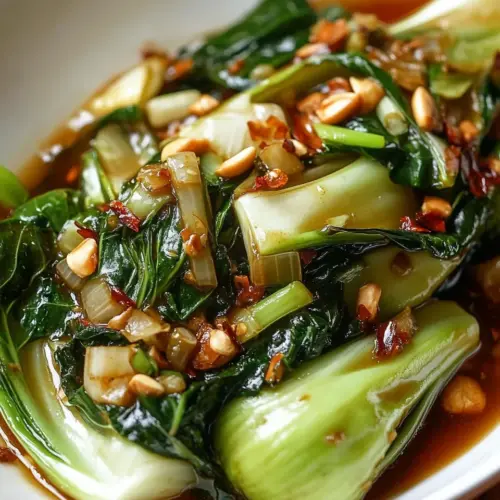
Steamed Bok Choy
Steamed Bok Choy is an easy vibrant side that combines crisp stems and tender leaves with savory dark soy and hoisin glaze. The toasted almonds add a crunchy contrast while garlic and fresh ginger enliven each bite. Perfect for an easy weeknight dinner or a festive spread, this simple vegetable recipe is quick, flavorful, and worth making again.
Equipment
- Wok
- Large Skillet
Ingredients
- 2 tablespoons olive oil Heat and flavor the pan while providing a light, fruity base for sautéing other aromatics; helps prevent sticking and contributes a smooth mouthfeel to the finished dish.
- 1/2 cup almonds, chopped Add a toasty crunch and nutty richness when sprinkled or cooked briefly; offers textural contrast and a mild, buttery flavor that complements greens.
- 1 bok choy bunch, such as Shanghai bok choy Provide the main vegetable component with crisp stalks and tender leaves; offers a mild, slightly sweet cabbage-like flavor and absorbs sauces well when steamed.
- 1 garlic clove, minced Contribute a sharp, pungent aromatics punch when minced and sautéed; enhances savory depth and pairs well with ginger and soy-based seasonings.
- 1 tablespoon fresh ginger, grated Impart a warm, bright spiciness and aromatic lift when grated; balances richness and adds complexity that brightens the overall flavor profile.
- 2 tablespoons water Create a small amount of steam and prevent sticking while gently loosening sauce components; helps vegetables soften without diluting flavors.
- 2 tablespoons dark soy sauce Supply salty, umami depth and a dark soy flavor that deepens color and intensifies savory notes; helps season and finish the steamed greens.
- fresh ground pepper Add subtle heat and aromatic lift when freshly ground over the dish; enhances flavors without introducing additional ingredients.
- 2 tablespoons hoisin sauce Introduce sweet-salty complexity and a sticky glaze when tossed with the vegetables; provides a rich, slightly tangy-sweet finish that complements soy.
Instructions
- Cut off the bottom of the bok choy and cut in the middle lengthwise. Cut the stems into 1-inch wide strips.: You will notice a clean vegetal scent as you work, and the visual contrast between white stems and green leaves should be distinct. This cutting technique ensures the thicker stems cook at the same rate as the leaves, because the 1 inch width keeps pieces substantial yet quick to soften. The white stems will make a crisp snapping sound when fresh, and if they bend or feel soft, the vegetable may be past prime. A common mistake is cutting pieces inconsistently, which leads to some bits overcooked while others remain tough. Take a moment to line up similar thicknesses, and keep the leaves attached near the crown until later to preserve moisture.
- In a wok or large skillet, sauté the garlic and ginger in the olive oil about 1 minute over medium heat. Add the bok choy and sauté over high heat for about 3 minutes. Add water and continue to cook for another 4-5 minutes stirring occasionally. Season with soy sauce, hoisin sauce, a handful of chopped almonds and pepper and give it a last stir.: As the olive oil warms, you will smell the perfume of the garlic and ginger blooming, a bright, spicy aroma that signals the foundation of the dish. Use medium heat to coax oils from the aromatics without browning them, which would introduce bitterness. You should hear a gentle sizzle when the aromatics touch the pan, and the surface should shimmer slightly. One pitfall is leaving them unattended, which can turn them brown quickly; keep the pan moving and be ready to add the next component when the fragrance lifts. This step builds the savory base that flavors the entire dish.
- Add the bok choy and sauté over high heat for about 3 minutes.: When the bok choy hits the hot pan, expect a louder sizzle and a burst of steam, signaling good contact and rapid heat transfer. Toss or stir so all stems meet the pan briefly, letting the edges caramelize slightly while the leaves begin to wilt. The stems should start to turn translucent at the edges; that visual cue means they are progressing toward tenderness. Avoid crowding the pan, which traps steam and leads to limp results—work in batches if needed. The quick high heat preserves texture and bright color, creating a lively contrast between charred notes and vegetal freshness.
- Add water and continue to cook for another 4 5 minutes stirring occasionally.: Introducing the water creates a flash of steam that finishes cooking the stems while softening the leaves. You will notice the volume of the greens reduce as they wilt, and the kitchen will fill with an herbaceous, slightly sweet scent. Stirring intermittently ensures even heat distribution and prevents sticking. Overdoing the steam time will collapse the leaves and make the stems mushy, so aim for tenderness with a slight bite. This gentle steaming step is why the dish retains both contrast and a clean mouthfeel.
- Season with soy sauce hoisin sauce a handful of chopped almonds and pepper and give it a last stir.: At this finishing stage the dark soy sauce and hoisin sauce should coat the vegetables with a glossy sheen, deepening the color and enriching the aroma. The sauce should cling to the stems, releasing savory and sweet notes that marry with the toasted crunch of the almonds . Fresh ground pepper added at the end will give an immediate aromatic lift. Listen for a final gentle sizzle as the moisture reduces and the sauce concentrates. A common error is adding the nuts too early, which softens them; add them at the end to preserve crunch. Give one last toss to distribute the glaze before plating.
Notes
- Toast the almonds first to heighten their nuttiness, but add them at the very end so they stay crisp against tender stems.
- Control sodium by starting with less dark soy sauce and adding more after tasting, the sauces concentrate quickly during the final toss.
- Maintain texture by separating stems and leaves during cooking, adding stems first and leaves last so everything finishes together.
- Ginger intensity can be dialed up or down, grate fresh ginger finely if you want the flavor to permeate without fibrous bits.
- Keep aromatics bright by cooking garlic and ginger just until fragrant, they will continue to flavor the dish without additional browning.
- Quick cleanup tip use a wok or large skillet with a wide surface to minimize steaming time and make rinsing easier.