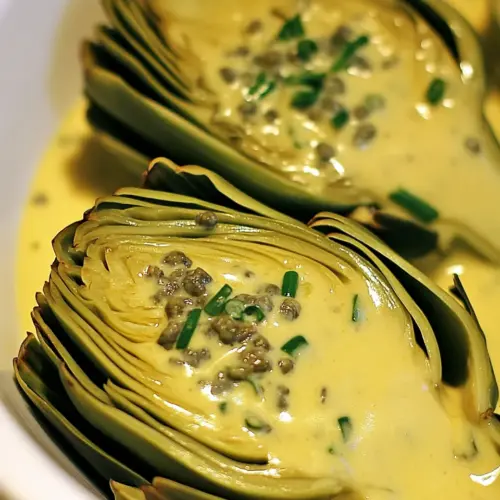
Steamed Artichokes with Caper Scallion Mayonnaise
Steamed Artichokes with Caper Scallion Mayonnaise are tender, flavorful, and wonderfully tactile. The creamy, tangy mayonnaise studded with briny capers and bright scallion lifts each leaf, making this an easy weeknight starter or impressive party dish. Expect silky texture, bright acidity, and satisfying hands on eating that invites sharing and conversation, a perfect reason to make it tonight.
Equipment
- Pot
- Dutch Oven
- Whisk
- Bowl
Ingredients
- 2 artichokes Trimmed and halved, provide a tender, meaty base for steaming; remove fibrous choke and rough outer leaves to reveal edible hearts that absorb steam and accompaniments. Serve hot with dipping sauce to showcase their mild, slightly nutty flavor and firm texture.
- 1 large egg yolk Rich and emulsifying, create a creamy, stable base for mayonnaise when whisked with mustard and oil; the yolk leans into the emulsion and gives silkiness and body. Use at room temperature to ensure a smooth, cohesive sauce.
- 1 teaspoon Dijon mustard Tangy and emulsifying, add sharp acidity and a subtle piquancy to help stabilize the mayo while cutting richness from the egg yolk and oil. Whisk in gradually to distribute flavor evenly throughout the emulsion.
- 1 cup vegetable oil Neutral and fatty, enable a smooth, stable emulsion when added slowly to the egg yolk and mustard; choose a light vegetable oil to let other flavors shine. Pour in a slow steady stream while whisking to prevent separation and achieve creamy texture.
- 1/2 lemon juiced Bright and acidic, balance the rich mayonnaise by adding fresh citrus juice for brightness and a clean finish; juice quantity can be adjusted to taste and to help loosen thick mayo. Use immediately to preserve fresh, zesty aroma and prevent bitterness.
- 2 scallions green parts only, thinly sliced Fresh and oniony, contribute mild sharpness and green color while adding delicate crunch; use only the green parts thinly sliced to avoid overpowering raw onion bite. Fold into mayonnaise near the end to retain texture and appearance.
- 1 tablespoon small black capers Salty and briny, lend bursts of savory, slightly tangy flavor that contrast the creamy mayo and complement the mild artichokes; small black capers add texture and umami. Rinse if desired to reduce brininess and chop lightly for even distribution.
- salt to taste Adjustable seasoning, enhance and balance overall dish flavor by seasoning the mayo and cooked artichokes to personal taste; add sparingly and taste as you go to avoid oversalting. Use fine-grained salt for easier control and better dissolution.
Instructions
- Trim the stems of the artichokes so there is just a half inch of stalk left at the base. In a medium pot or Dutch oven, place the artichokes side by side so they are standing upright. Fill the pot with water until it covers just the base of the artichokes, about 1 inch. Cover the pot and bring the water to a boil. Turn the heat back down and simmer until the artichoke leaves are tender (I just pluck one and try it), about 40 – 50 minutes. Remove from the pot and allow to cool slightly before serving.: Steam releases a warm, vegetal aroma that tells you the artichoke is cooking through; keep the base intact to help the vegetable stand upright in the pot. You should notice a faint anise like fragrance as the water simmers, and the leaves will begin to part slightly at the tips. The reason we leave a short stalk is to preserve structure and prevent the base from becoming waterlogged. Common mistake to avoid, do not cut the stem too short or you could compromise the stability and let water seep into the heart causing it to become soggy.
- While the artichokes cook, whisk (you can use a fork) an egg yolk in a bowl with the Dijon mustard and a tablespoon of lemon juice. Slowly and steadily pour in the oil, whisking constantly. The mixture should thicken up quickly. When you’ve finished pouring in the oil, add the additional lemon juice, scallions, and capers. Taste for salt, and serve alongside the artichokes.: When you stand each artichoke upright you encourage even steam circulation around the heart, and visually you can tell which are closely packed and which have room to cook. Listen for a gentle simmer, not a roiling boil, as vigorous bubbling can batter the outer leaves. The pot should feel loosely filled, and the tops of the artichokes may steam and darken slightly. A frequent slip up is overcrowding the pot which can lead to uneven cooking and some artichokes remaining tough inside.
- Fill the pot with water until it covers just the base of the artichokes, about 1 inch: This method traps steam and concentrates heat, producing tender leaves without turning the whole vegetable soggy. You will see faint wisps of steam escaping from between the leaves, and the water will barely kiss the artichoke base. Keeping the water level low is intentional, it ensures steaming rather than boiling. Do not flood the pot, otherwise the leaves will soak and you lose the delicate texture at the base.
- Cover the pot and bring the water to a boil: As the pot warms you will hear the water begin to bubble, and small clouds of steam will gather under the lid. This initial high heat jump starts the steaming process, and you should lower the heat once boiling to maintain a steady simmer. The purpose of this step is to build steam quickly so the interior cooks gently. A typical error is leaving the lid tilted, which lets steam escape and stretches cooking time unnecessarily.
- Turn the heat back down and simmer until the artichoke leaves are tender, about 40 to 50 minutes: Tenderness is the key signal here, and you can test by prying a leaf near the base; it should pull away easily and the inner flesh should be soft and slightly sweet. As they cook the kitchen will develop a warm, green aroma and the leaves will darken a touch. This slow approach preserves the heart texture while coaxing out flavor. Avoid checking too frequently because losing steam prolongs cooking, but do resist the urge to rush the process with higher heat which can make leaves rubbery.
- Remove from the pot and allow to cool slightly before serving: Resting lets the steam settle and the remaining internal heat finishes the heart. You will notice residual steam escaping as you uncover the pot, and cooling a bit makes holding and pulling leaves more comfortable. Serving warm rather than piping hot preserves the texture of the mayonnaise when dipped. Watch out for impatience, as serving too hot can scald the mouth and make the sauce runny on contact.
- While the artichokes cook, whisk an egg yolk in a bowl with the Dijon mustard and a tablespoon of lemon juice: The initial whisking produces a glossy base that will accept the oil, and you should see the mixture lighten slightly in color as it becomes cohesive; the aroma will be tangy and inviting. This step is critical because a well combined start prevents later separation when the oil is added. A common pitfall is starting with cold ingredients which can hinder emulsification, so aim for room temperature where possible.
- Slowly and steadily pour in the oil, whisking constantly: As the oil integrates you will feel the sauce thicken and gain body, forming a smooth, creamy texture that clings to a whisk. The sound is a gentle swish as the oil disappears into the mixture, and visually the mayo will become glossy and slightly heavier. Slow addition is the secret to a stable emulsion, and rushing this can cause the sauce to break. If it does split, rescue it by whisking in a teaspoon of warm water or starting a new yolk and gradually incorporating the broken mayo.
- When you have finished pouring in the oil, add the additional lemon juice, scallions, and capers: Adding acid at the end brightens the flavor and the chopped scallions and capers provide fresh and salty contrasts; you will notice the aroma lift immediately, and little pockets of brine from the capers punctuate each bite. The reason for finishing with these components is to keep their textures lively and not lose their brightness in the fat. Common oversight, do not overmix the scallions or capers into the sauce until just before serving or their color and crunch may mellow too much.
- Taste for salt, and serve alongside the artichokes: A final seasoning check ensures the mayonnaise complements rather than overwhelms the artichoke ; you should aim for a balance of creamy, tangy, and salty. When plated, each leaf dipped will carry a glossy coat of sauce, and the heart will provide the richest single bite. Avoid oversalting, especially because the capers already add salt, and remember you can always adjust at the table.
Notes
- Emulsion safety: If you are nervous about making mayonnaise by hand, consider using a small blender or immersion blender for a more hands off and forgiving emulsion process.
- Capers salt level: Rinse the capers briefly if they taste too salty, then taste the sauce before adding extra salt, because their brine contributes significant seasoning.
- Lemon distribution: Add the remaining lemon juice gradually and taste often to avoid over brightening the mayonnaise which can make it too sharp for the delicate artichoke.
- Scallion texture: Slice the green parts of the scallions as thinly as possible so their flavor disperses without adding tough bits to the creamy sauce.
- Make ahead note: You can prepare the mayonnaise up to a day in advance and keep it chilled in an airtight container, stirring gently before serving to refresh the texture.
- Serving temperature: Bring the mayonnaise to just below room temperature before serving if it has been refrigerated, to maximize flavor release and mouthfeel.