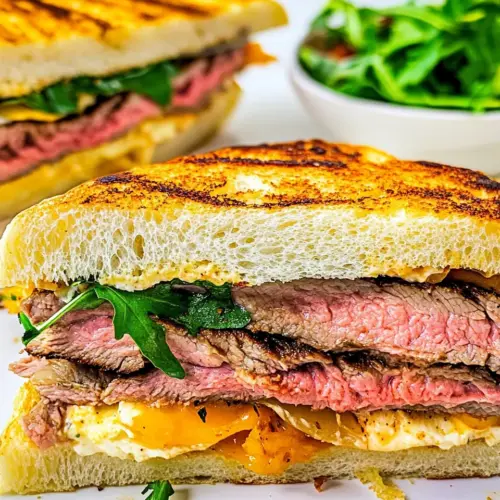
Steak Sandwich
Steak Sandwich is a savory, juicy sandwich with tender flank steak, sweet caramelized onions, and peppery arugula on toasted ciabatta. This easy weeknight dinner brings bold textures, bright pesto notes, and creamy condiments, making every bite satisfying. Make it anytime you want a quick, comforting meal that feels a little special and worth sharing.
Equipment
- Large Skillet
- Grill or skillet for steak
- Paper towels
- Knife
Ingredients
- 2 pounds flank steak Season and tenderize the steak before cooking, helping to enhance flavor and texture; allow to rest after cooking to retain juices. Slice thinly against the grain for tender bites ideal for sandwich assembly.
- 1/2 teaspoons salt (or to taste) Season sparingly to bring out natural beef flavors without overpowering other components; adjust to taste during prep and after cooking if needed. Dissolve slightly into marinades or rubs to evenly distribute seasoning.
- 1/2 teaspoon black pepper (or to taste) Season with ground black pepper to add warmth and a subtle bite; apply before or after cooking depending on desired crust. Complements salt to create a balanced savory profile on the steak.
- 4 ciabatta buns Provide a sturdy, crusty base for the filling while absorbing juices without becoming soggy; split and toast for added texture. Size and shape make it ideal for handheld presentation and portion control.
- 2 cups baby arugula Add a peppery, fresh green note that brightens the sandwich and balances rich steak and condiments; use whole leaves for texture. Layer lightly to prevent wilting from hot meat, preserving crispness.
- 4 tablespoons pesto Contribute herbaceous, garlicky richness that melds with steak flavors and adds moistness; spread on the bun interiors for concentrated taste. Works as an aromatic alternative to plain butter, enhancing overall depth.
- 4 tablespoons mayonnaise Provide creamy richness and a silky mouthfeel that tames acidity and adds moisture; spread thinly to prevent overpowering other flavors. Can be combined with mustard or pesto for customized sauce blends.
- 4 tablespoons mustard Add tangy, piquant sharpness that cuts through fattiness and enhances overall balance; apply to one side of the bun for even distribution. Pairs well with mayonnaise and pesto for layered condiment complexity.
- 2 tomatoes (sliced, optional) Introduce juicy acidity and fresh texture when included, brightening the sandwich and adding color; slice thinly for even coverage. Use sparingly if avoiding excess moisture that could soften the bread.
- 3 tablespoons butter Help lightly toast and flavor the bread when melted, adding a golden finish and subtle richness; use to sauté onions or to butter bun interiors. Adds a slightly sweet dairy note that complements savory ingredients.
- 2 large onions (sliced) Caramelize slowly to develop deep sweet-savory flavor that pairs beautifully with steak and provides textural contrast; slice uniformly for even cooking. Cook over medium-low heat until translucent and golden for best results.
- 1 teaspoon sugar Speed up caramelization and enhance sweetness when sprinkled during onion cooking; dissolve to help achieve a rich brown color and intensified flavor. Use modest amounts to avoid making the onions overly sweet.
- 1/2 teaspoons salt (or to taste) Season the onions to heighten flavor and balance sweetness during cooking; add gradually and taste to avoid over-salting. Works together with other seasonings to create a well-rounded caramelized onion profile.
- 1/2 teaspoon pepper Season the onions or other elements to introduce a subtle peppery warmth; add during cooking or at the end to taste. Helps complete the savory seasoning profile without overwhelming delicate flavors.
Instructions
- Melt the butter in a large skillet over medium-low heat. Add the sliced onion and stir. Cover with a lid and cook for 20 minutes, stirring occasionally. Remove the lid and stir in the sugar, salt and pepper. Cook for a further 10 minutes, until brown a bit and caramelize.: The kitchen should begin to smell sweet and savory as the onions soften and release moisture, a gentle hiss and soft bubbling replacing any sharp raw onion scent. You will notice the onions become translucent before they start to turn a deep amber, which is the cue to remove the lid and add the seasoning. This slower, lower heat coaxing creates maximum sweetness and prevents bitter, burnt edges, and it is why patience matters here. A common mistake is cranking the heat to hurry the process, which gives you browned, fried pieces rather than evenly caramelized ribbons. Stir every few minutes to prevent sticking, and if the pan dries out, add a splash of water to deglaze and lift the fond, which enhances flavor.
- Pat the steak dry with paper towels. Generously season it on both sides with salt and pepper. Using a grill or a skillet, cook the steaks to your preferred temperature and let them rest for 10 minutes.: When you pat the steak dry, you eliminate surface moisture so a rich crust can form, and you will hear a pronounced sear if the surface is dry enough. Searing produces an audible sizzle and a deep brown color with caramelized bits, which add savory complexity. Resting is crucial because it lets the juices redistribute, so when you slice it, the meat stays juicy instead of bleeding out onto the cutting board. A common oversight is slicing immediately, which causes the juices to run out and leaves the steak dryer. Use a reliable internal thermometer if you want precise doneness, and remember the steak will rise a few degrees during the rest.
- Slice the steak into thin strips against the grain. Cut the ciabatta buns in half horizontally.: Cut across the muscle fibers to shorten them, giving your slices tenderness even from a lean cut like flank steak . Thin slices will look glossy with retained juices, and you should see clean, even lines rather than ragged tears. Halving the ciabatta buns exposes the interior crumb, which is when to check for any big air pockets and press them slightly to create a stable base. The main pitfall here is slicing with a dull knife, which crushes the meat and ruins the texture. Keep a sharp blade and steady hands for clean slices and enjoyable mouthfeel.
- Spread a tablespoon of pesto on each bottom half of the buns, then top with 1/2 cup each of baby arugula, followed by steak slices, caramelized onions and tomatoes. Spread mustard and mayo on the top bun then place on top.: The first scent you get when assembling is the herbaceous top note from the pesto , followed by the warm meat aroma. Layering matters, the pesto anchors moisture to the bread while the arugula sits between the sauce and steak to keep leaves crisp. When you place the hot slices onto the bread, you may hear a soft hiss as residual heat meets the spread, which can slightly wilt the greens, adding pleasant texture. Watch for overstuffing, which can make the sandwich hard to bite into and cause ingredients to spill; build modestly so each bite contains a balanced portion of everything.
- Spread mustard and mayo on the top bun then place on top: The last touch is the tangy lift from mustard and the creamy glue of mayonnaise , which smooths transitions between textures and flavors. When you press the top bun down gently, you may feel a slight yield as components settle, which signals the sandwich is ready to be sliced or served whole. Avoid piling too much condiment on the top, which can cause sliding and soggy bread. If reheating later, consider removing the top bun and warming the filling separately for best texture.
Notes
- Caramelize patiently — Take your time with the onions. Low and slow cooking brings out deep, sweet flavors that pair perfectly with beef. Stir every few minutes and add a splash of water if they stick, scraping up the browned bits to fold back into the onions for extra depth.
- Dry and season the steak — Pat the steak dry before seasoning to get a superior sear. Salt right before cooking to draw out juices just enough to form a crust, and use freshly ground black pepper for bright aromatics.
- Rest the meat — Let the steak rest for about 10 minutes after cooking so juices redistribute. This guarantees juicier slices, and it makes slicing against the grain easier and neater.
- Slice thinly against the grain — This is the secret to tenderness with flank; thin slices look glossy and chew easily. Use a sharp knife and steady strokes to avoid tearing the meat.
- Layer for texture — Put a smear of pesto on the bottom bun and condiments on the top to control moisture. Place arugula between sauces and hot meat to preserve its crunch and peppery bite.
- Toast the bread lightly — Browning the ciabatta buns in butter adds flavor and structure. Toast just until golden to avoid an overly hard exterior that competes with tender fillings.