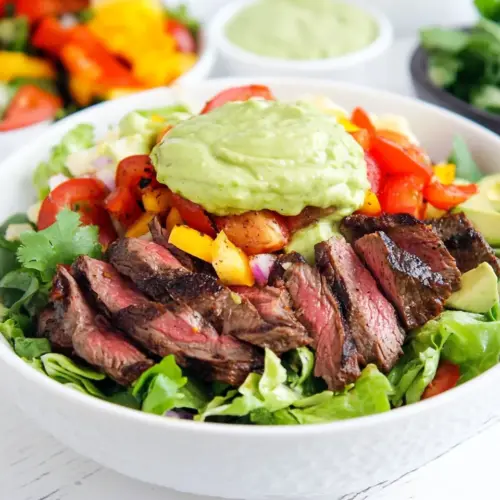
Steak Fajita Salad with Avocado Dressing
Steak Fajita Salad with Avocado Dressing is a creamy, smoky, and satisfying bowl with tender grilled steak, crisp lettuce, and a silky avocado lemon dressing. This easy weeknight dinner brings bold fajita flavors together with fresh textures for a crowd pleasing meal. It is quick to assemble and perfect when you want bright, hearty food without a long cook time.
Equipment
- Grill
- Skillet
- Blender
- Knife
Ingredients
- 2 -3 pounds flank steak Season and sear to provide the dish's hearty protein; slice thinly against the grain after resting for tender, flavorful bites that anchor the salad.
- 1 1/2 cups cooked rice (we add a little fajita seasoning in while it's warm for more flavor) Add warmed and slightly seasoned rice to introduce a comforting, starchy base that soaks up fajita juices and balances the plate's textures.
- lettuce, chopped Chop into a crisp, refreshing bed that lightens the dish and offers a cool contrast to the warm steak and sautéed vegetables.
- corn Fold in sweet, juicy kernels to contribute pops of natural sweetness and pleasant texture that complement the savory components.
- peppers and onions, sliced and sauteed Sauté until tender and slightly caramelized to bring smoky, savory depth and colorful crunch that deliver classic fajita flavor.
- tortillas Warm, crisp or torn into strips to provide a handheld option or crunchy garnish that echoes the fajita theme and adds texture.
- shredded cheddar cheese Sprinkle shredded for creamy, melty richness that adds savory tang and helps bind components when slightly warmed into the salad.
- 1/2 medium avocado Mash into the dressing to create creamy body and subtle buttery flavor while contributing healthy fats and smooth texture.
- 1 lemon, juiced Squeeze fresh to inject bright acidity that balances the richness of avocado and mayonnaise while enhancing overall freshness.
- 1 teaspoon minced garlic Mince and incorporate to provide pungent, aromatic bite that lifts flavors and adds depth to the dressing and salad elements.
- 2 tablespoons mayonnaise Whisk in to supply emulsifying creaminess and a subtle tang that helps bind the dressing ingredients into a smooth sauce.
- 2 tablespoons honey Blend in to lend floral sweetness and a gentle counterpoint to savory and acidic components, rounding the dressing's flavor.
- 1/4 teaspoon cumin Sprinkle into the dressing for warm, earthy notes that complement the fajita seasoning and tie the overall profile together.
Instructions
- Heat a grill to medium-high heat and sprinkle the steak with salt and pepper on each side.: You will notice the grill radiating steady heat and a faint pre char aroma, which primes the surface for a meaningful sear. Getting the grill to a true medium-high ensures the flank steak forms a flavorful crust quickly, locking in juices, and the salt helps draw out surface moisture for better browning. A common mistake is grilling over too low heat, which causes the meat to steam and not develop that desirable char; conversely, excessive heat can blacken the outside before the interior cooks. Listen for the initial sizzle when the steak hits the grates, and watch for a change in color along the sides as an indicator to rotate or flip. If using a marinade or seasoning, pat the steak dry so it sears rather than steams, and give the steak a few minutes at room temperature so it cooks more evenly.
- Cook for 6 to 8 minutes on each side. Remove the steak from the grill and allow it to rest for 2-3 minutes before slicing thin on the diagonal.: As the steaks sear, you will hear a satisfying, continuous sizzle and see juices bead at the surface, a sign the Maillard reaction is working to create deep flavor and color. The specified cook window typically yields a medium to medium rare finish for flank steak thicknesses, but thickness and grill intensity affect timing, so rely on visual cues and a meat thermometer if you prefer precision. After flipping, the second side will often brown faster; that is normal because the grill was already heated by the first sear. A frequent error is flipping too often, which prevents a stable crust from forming; let the steak sit until it releases easily from the grate before turning. If flare ups occur, move the steak briefly to a cooler zone to avoid hard charring.
- To make the dressing, add the dressing ingredients to a blender and blend until smooth. Set aside.: The aroma immediately after removing the steak will be rich and toasty, with a slight smokiness, and letting it rest redistributes juices so the meat stays tender when sliced. Resting is essential because cutting hot meat right away causes valuable juices to run out, leaving the slices dry. A common oversight is skipping rest due to eagerness to serve, which compromises texture; resist the urge and tent the steak loosely with foil. When slicing, cut against the grain at a sharp angle to shorten muscle fibers, producing more tender bites that integrate better into the salad.
- Sprinkle a little cheese on a tortilla then place it on a skillet over medium heat to melt the cheese. Place the cheese tortilla in a shallow bowl. Top with rice, steak, corn, peppers and onions, and chopped lettuce. Drizzle with the dressing and enjoy!: When you blend the avocado , lemon , minced garlic , mayonnaise , honey , and cumin , you will smell bright citrus and fragrant savory notes, and the texture will transform from chunky to luxuriously silky. Blending emulsifies the ingredients so the dressing clings to leaves and proteins rather than sliding off, creating a creamy coating that enhances every bite. Avoid over thinning by adding only a tablespoon of water or reserved liquid at a time, because too much liquid will make the dressing loose and less clingy. If the dressing tastes overly sharp from the lemon or garlic, a touch more honey or a bit more avocado will round it out.
- Sprinkle a little cheese on a tortilla then place it on a skillet over medium heat to melt the cheese: As the cheese melts, you will hear a gentle hiss and see the edges of the tortilla warm and the cheese begin to bubble and spread, creating a bond between the tortilla and molten shredded cheddar cheese . This step yields a crisp, cheesy shell that provides textural contrast to the salad components and makes serving playful. Be careful not to let the tortilla burn, flip it if the underside browns too quickly, and press gently so the cheese adheres evenly. A common mistake is using excessively high heat, which melts the cheese too fast and scorches the tortilla; medium heat gives time for controlled crisping.
- Place the cheese tortilla in a shallow bowl: Set the warm, crisped tortilla into a bowl while it cools just slightly so it holds shape as a vessel. The aroma of toasted tortilla and melted cheddar is inviting, and the bowl form captures rice and topping juices rather than letting them run. If you let it cool too long, it will lose pliability, and if you handle it while excessively hot you risk breaking the shell; transfer with a spatula and shape it gently into the bowl. This vessel creates a satisfying contrast, giving every forkful a combination of crunchy, cheesy, and tender elements.
- Top with rice, steak, corn, peppers and onions, and chopped lettuce: Layering warm rice first helps absorb juices, then add sliced steak , sweet corn , sautéed peppers and onions , and crisp lettuce to maintain temperature contrast. The steam from the rice and steak softens the edges of the lettuce just enough to meld flavors without making it wilt. A frequent misstep is assembling everything too far in advance, which leads to soggy greens; assemble just before serving to preserve texture. Taste as you layer so seasonings are balanced and make small adjustments with salt or a squeeze of extra lemon if needed.
- Drizzle with the dressing and enjoy: The final drizzle should be even and measured, allowing the creamy avocado dressing to coat components and bring harmony. You will sense a bright acidic lift from the lemon against the savory steak and a gentle sweetness from the honey , and the dressing should tie these notes together without overpowering them. Avoid dousing everything at once, which can overwhelm delicate greens; instead, start with a small amount, toss gently, and add more if you want heightened creaminess. Serve promptly so warm and cool elements remain distinct and texturally interesting.
Notes
- Room temperature steak: Allowing the flank steak to sit at room temperature for 20 minutes before grilling promotes even cooking and reduces the chance of an overdone exterior with an undercooked center.
- Control the heat: Use medium-high heat for searing so the steak develops a deep brown crust without burning; if flare ups occur, shift the steak to a cooler zone briefly.
- Season the rice: Toss warm rice with a pinch of fajita seasoning as suggested, this adds a subtle background layer that harmonizes with the steak and vegetables.
- Adjust dressing thickness: If the avocado dressing is too thick, thin with a teaspoon of water at a time; if too thin, add a little more avocado or a touch of mayonnaise to restore body.
- Cheese choice matters: Freshly shredded cheddar cheese melts better and forms a crisper edge on the tortilla than pre shredded mixes that include anti caking agents.
- Prep components ahead: You can cook the steak and sauté the peppers and onions earlier in the day and refrigerate, then rewarm briefly before assembly to save time while preserving texture.