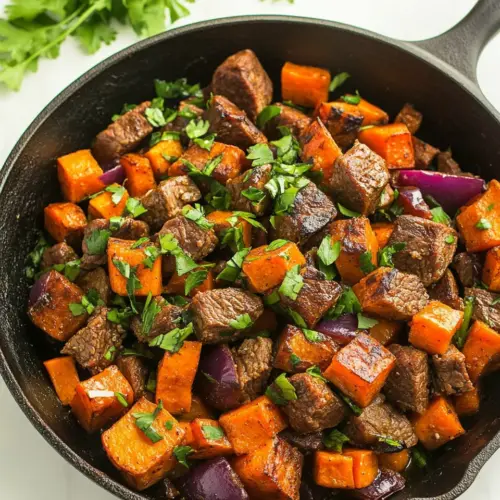
Steak and Sweet Potato Skillet with Peppers
Steak and Sweet Potato Skillet with Peppers is a savory, easy weeknight dinner that balances caramelized sweet potato and seared steak with bright red bell pepper and aromatic garlic. This skillet is flavorful and quick to make, delivering crispy edges and tender interior in about 30 minutes, perfect for busy nights when you want comfort without the fuss.
Equipment
- Large Skillet
- Knife
- Cutting Board
- Spatula
Ingredients
- 2 tbsp avocado oil Heat and flavor the skillet while providing a high smoke point for searing the steak; helps prevent sticking and promotes even browning. Adds a neutral base that carries other flavors without overpowering them and contributes a subtle richness to the finished dish.
- 1 medium-sized sweet potato chopped (3 cups) Add sweetness, body, and a tender texture when cooked; provides natural sugars that caramelize against the hot pan for depth of flavor. Supplies bulk and a starchy contrast to the steak, making the dish more filling and balancing the savory components.
- 1/2 red onion sliced Lend sharpness and aromatic complexity when softened in the pan; mellows as it cooks and contributes a subtle sweetness. Add color contrast and enhance savory flavors by releasing aromatic compounds that marry well with garlic and peppers.
- 1 red bell pepper chopped Provide bright, sweet, and slightly tangy notes while adding vibrant color and texture; soften when sautéed to blend with the potato and steak. Contribute moisture and a crisp-tender bite if cooked briefly, enhancing the dish’s overall balance.
- 5 cloves garlic minced Introduce pungent, aromatic depth and savory umami when minced and added toward the end of sautéing; infuse the oil and other ingredients with flavor. Help brighten and unify the dish’s components while offering a recognizable garlicky finish.
- 1 pound steak chopped into bite sizes Supply the primary protein and savory, meaty flavor; sear to develop a browned crust that adds texture and depth. Cut into bite-sized pieces to ensure even cooking and easy eating, and allow the meat juices to mingle with the vegetables for a cohesive skillet meal.
- 2 to 3 tbsp liquid aminos or coconut aminos Impart savory, umami-rich seasoning and a salty depth without overpowering; use to adjust flavor during or after cooking. Offer a gluten-free alternative to soy sauce that enhances the overall savoriness and helps glaze the steak and vegetables when reduced.
- Sea salt to taste Enhance and balance all flavors by seasoning to personal preference; bring out the natural sweetness of the potato and the savory quality of the steak. Use sparingly and taste as you go to avoid oversalting, allowing the other ingredients to shine.
Instructions
- Chop the steak into 2-inch chunks.: The pan will smell meaty and toasty as the fibers are exposed, and those chunk sizes help the steak develop a deep browned crust while staying juicy inside. You should notice the raw beef has a clean, iron like scent before cooking, and the surface will brown quickly when it hits a hot skillet. A key reason to cut into even 2 inch pieces is to ensure uniform doneness across the batch. Avoid slicing pieces too thin, because they can overcook in seconds and become tough, which is a frequent mistake at this step.
- Heat the avocado oil in a large (12-inch) skillet over medium-high heat. Add the sweet potato and red onion. Stir well, then cover the skillet and cook for 4 minutes, stirring occasionally, until the veggies begin to soften.: Right away you will hear energetic sizzling as the avocado oil hits the pan, and the aroma of warm onion will bloom. Covering the skillet traps steam and helps the denser sweet potato start to soften without burning, while occasional stirring prevents sticking. This technique speeds cooking and encourages the edges to start caramelizing. A common issue is leaving the pan uncovered too long, which can char the outsides before the centers soften, so keep an eye and stir periodically.
- Stir in the remaining ingredients (bell pepper, garlic, steak, and liquid aminos), arranging everything in a single layer if possible and cover again. Cook for 7 to 8 minutes, stirring occasionally, until much liquid is seeping out of the ingredients.: When you add the red bell pepper , minced garlic , chopped steak , and liquid aminos , you may smell a burst of savory steam as flavors mingle. Spreading ingredients into a single layer encourages individual pieces to contact the hot surface, resulting in caramelized edges and a pleasing sear. Covering briefly helps the red bell pepper soften without losing too much color. One pitfall is crowding the pan, which traps moisture and leads to steaming instead of browning. If your skillet seems full, work in two batches for best results.
- Remove the cover and continue cooking until much of the liquid has evaporated and there’s a sear on the steak, about another 5 minutes.: During this period you will notice juices collecting and then beginning to reduce, which intensifies flavor as sugars caramelize. The sound shifts from sharp sizzles to a softer spit as moisture releases and evaporates. This wait lets the sweet potato and red onion continue to soften while the steak cooks through. Avoid constant stirring, which prevents browning, and also watch for excessive moisture that signals the pan is too crowded or the heat is too low.
- Serve in bowls with fresh chopped green onion and enjoy!: Once uncovered the pan intensifies browning, and you should hear renewed sizzling as the remaining liquid evaporates and the surface begins to char slightly. The visual cue is golden to deep brown edges on both vegetables and meat, and you can often smell a nutty, toasted note from the caramelization. This step matters because that fond, the browned bits on the skillet, holds concentrated flavor essential to the dish. A common mistake is not giving the meat time to rest between stirs, which prevents a proper sear, so resist the temptation to constantly move the pieces.
- Serve in bowls with fresh chopped green onion and enjoy!: When you plate, the skillet should still be warm and fragrant, and the contrast between tender sweet potato and seared steak will be clear. Serving in bowls captures juices and makes it easy to tuck in with a fork. One reason final plating matters is that hot food will continue to settle and develop flavor for a few minutes after leaving the heat. Avoid letting the dish sit too long in the pan off heat, as carryover steam can soften the crusts you worked to create.
Notes
- Choose a different steak cut — If you prefer a leaner option, select sirloin or flank, but be mindful of cook time since thinner or leaner cuts can overcook quickly.
- Adjust the aminos — Start with less liquid aminos and taste, as brands vary in saltiness; use coconut aminos for a milder, slightly sweeter note.
- Change the oil — If you do not have avocado oil, use another neutral oil with a high smoke point, ensuring you can get the pan hot enough to sear the steak.
- Make it spicier — Add a pinch of red pepper flakes when you stir in the garlic to introduce heat; add gradually to control the spice level.
- Give it herb brightness — Finish with chopped fresh herbs at the end of cooking to add a fresh contrast to the caramelized flavors.
- Cook in batches — If your skillet is small, sear the steak in batches and combine with the vegetables at the end to preserve browning.