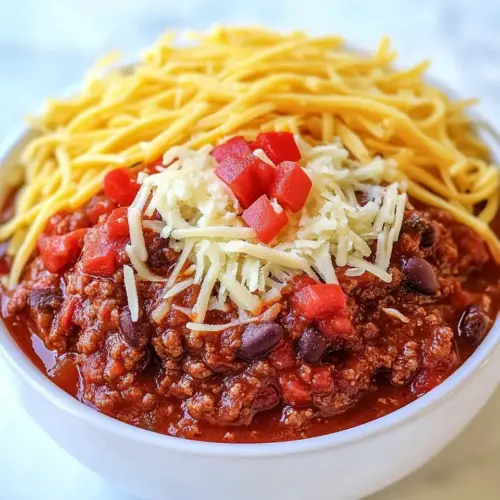
Steak and Shake 5 Way Chili
Steak and Shake 5 Way Chili is a hearty, classic diner style bowl with rich ground chuck, tangy tomato sauce, creamy kidney beans, and melty Monterey Jack – Colby cheese blend. This easy weeknight dinner offers comforting, layered flavors and customizable toppings, making it ideal for family meals and casual gatherings. Make it for a crowd and enjoy leftovers that taste even better the next day.
Equipment
- Skillet
- Medium large saucepan
- Ladle
- Pot for spaghetti
Ingredients
- 2 pounds ground chuck coarsely ground Brown and crumble to render fat and develop a deep, savory base for the chili; cook until no longer pink and slightly caramelized to build rich umami flavors that coat the sauce.
- 1 1/2 cups onion diced Sauté until translucent to add sweet, aromatic depth and a delicate texture contrast; dice finely so pieces meld throughout the chili without overpowering the other components.
- 1 teaspoon celery salt Season early in cooking to infuse savory, slightly salty celery and herb notes throughout the meat and sauce; sprinkle while sautéing onions to bloom its flavor.
- 32 ounces tomato sauce Simmer to create a thick, tomato-forward base that binds spices, meat, and beans; pour in and allow to reduce slightly so flavors concentrate and coat the chili evenly.
- 1 cup water Add to adjust consistency and help simmer and meld flavors while preventing the sauce from becoming too thick; stir in gradually and taste for desired thickness.
- 28 ounces light kidney beans Stir in to provide creamy texture and mild bean sweetness that balances the tomato acidity; drain and rinse if needed before adding to avoid excess liquid from the can.
- 2 teaspoons garlic powder Sprinkle to enhance the overall savory profile with a mellow garlic punch; add during cooking so the powder releases its aroma without becoming bitter.
- 1 1/2 teaspoons garlic salt Use alongside other seasonings to deepen garlic flavor with a slightly salty finish; incorporate early to distribute its flavor throughout the chili.
- 2 tablespoons chili powder plus 1 teaspoon chili powder Combine the larger amount during cooking and reserve a small teaspoon for adjustment; contribute warm, earthy heat and classic chili character to the dish.
- 1/2 teaspoon salt Season lightly to control overall saltiness and enhance other flavors; add incrementally and taste as the chili reduces to avoid over-salting.
- 1/2 teaspoon pepper Apply ground to balance flavors and bring out savory notes; add toward the end of cooking and adjust to personal preference for mild heat.
- 16 ounces tomato paste Whisk in to intensify tomato richness and thicken the sauce for a robust, clingy texture; dissolve evenly to prevent pasty pockets and help the chili adhere to pasta if serving over spaghetti.
- 1 pound spaghetti Cook and serve as a starch component to create the iconic chili-spaghetti combination; boil until al dente so it holds up under the hearty chili topping.
- 1 onion diced Sauté or caramelize to add layered sweetness and a pleasant texture contrast when combined with the diced onion listed earlier; use as needed for garnish or mixing.
- 12 ounces Monterey Jack – Colby cheese blend Shred and sprinkle as a creamy, melty finishing touch that adds richness and mild tang; allow cheese to melt over hot chili for a smooth, indulgent topping.
- 2 tablespoons Heinz Chili Sauce Stir in to introduce a tangy-sweet, slightly spicy tomato flavor that complements the chili seasoning; add toward the end to brighten and finish the sauce.
Instructions
- Please note the onions that are cooked in the chili are optional. You can leave them out. I personally love onions when cooked in the chili. Steak N Shake does not add onions to cooked chili. Chopped onions are served on top of the chili.: The aroma of sizzling onion and ground chuck is the first signal that flavors are building, filling the kitchen with a sweet and savory smell that tells you the Maillard reaction is happening. As these ingredients cook, you will notice a change from raw sharpness to mellowed sweetness, and bits of browned meat will darken, offering nutty, roasted notes that deepen the final pot. A common mistake is rushing this step by using high heat, which can burn the exterior while leaving the inside undercooked, creating bitter flavors. Keep the heat at medium low and stir occasionally so the meat browns evenly and the onion softens without browning too quickly.
- In a skillet on medium-low heat saute ground beef and onions. When the beef has been cooked, drain all grease and place in a medium-large saucepan. Add celery salt, tomato sauce, kidney beans, garlic powder, garlic salt, chili powder, pepper, water, and salt, mix all ingredients.: As you sauté, listen for a steady gentle sizzle, not a frantic roar, and watch the meat change color from pink to brown and the onion go translucent. Proper browning seals in juices and creates fond on the pan, which contributes deep flavor when deglazed or transferred to the saucepan. Take care to break the meat into chunks that are uniform, so texture is consistent. Avoid overcrowding the skillet, because crowded meat will steam rather than brown, resulting in less flavorful fond.
- On low heat place a lid on the saucepan and simmer for one hour, stirring frequently. After the chili has been cooking for an hour add tomato paste and stir well. Place lid on the pan and simmer an additional half-hour. Prepare spaghetti as directed and drain.: After draining, the pan you used will still have browned bits and a concentrated aroma; transferring the meat to a clean saucepan lets you control the cooking liquid and reduce greasiness. The cooled, rendered fat can be discarded or reserved for another use, but leaving too much in the chili makes it heavy. A common oversight is skipping the draining step, which leaves a slick finish and dulls the other flavors, so be thorough.
- To assemble: For individual serving: In a shallow bowl or plate place: Generous helpings of spaghetti 3/4 cup chili 2 tablespoons Chili Sauce Chopped onions (to taste) 1/2 cup shredded Monterey Jack and Colby cheese mix Top with additional onions to your taste.: As you stir these components together, the mixture will look glossy and become fragrant with tomato and spices, and you will notice steam rising with bright tomato notes. Mixing thoroughly early ensures the flavors marry and the kidney beans warm gently into the sauce. Avoid dumping everything in at once without stirring, which can create pockets of concentrated seasoning; instead, incorporate slowly so each spoonful tastes balanced.
- On low heat place a lid on the saucepan and simmer for one hour, stirring frequently: During this hour you should see the sauce reduce slightly, and smell the spices mellow and knit together, while tiny bubbles move slowly along the edges. Stirring frequently prevents sticking and helps distribute heat evenly so the flavors meld. A typical mistake is leaving the lid off, which can over reduce and dry the chili, or leaving it on too tight which can limit reduction; keep a gentle simmer and monitor every ten to fifteen minutes.
- After the chili has been cooking for an hour add tomato paste and stir well: When you stir in the tomato paste , you will see the sauce thicken and deepen in color, and the tomato flavor will sharpen then integrate as it simmers further. The paste adds body and concentrates the tomato brightness so the chili does not taste flat. A pitfall here is adding the paste too early where it could scorch, or not stirring it in thoroughly which leaves streaks, so fold it in until homogenous.
- Place lid on the pan and simmer an additional half hour: In this final simmer, aromas will become rounded and the sauce will take on a slightly glossy sheen. The heat coaxing everything together will make the texture cohesive, and reduced liquid will cling nicely to the kidney beans and meat. Avoid leaving it unattended at high heat, which risks sticking and burning, and check periodically to maintain a low steady simmer.
- Prepare spaghetti as directed and drain: The smell of boiling spaghetti is a clean wheat note that pairs with savory chili, and you should cook the pasta until tender with a little bite, then drain well so it does not water down the chili when assembled. A common mistake is overcooking to softness, which leads to mushy texture under the chili; test a strand for firmness before draining.
- To assemble: When assembling, the warmth of the spaghetti will create steam that slightly softens the cheese as you add it, and the bowl should show layers, with the sauce pooling around the noodles. Visually, aim for melted cheese pooling at the edges and a glossy chili surface. Avoid piling everything and mixing vigorously, because the presentation of five way chili is part of the experience, so build deliberately and let each element be seen.
- For individual serving: As you plate, notice the contrast between the tender pasta and the spoonable chili; the final drizzle of Heinz Chili Sauce adds a subtle sweet tang that brightens each bite. Consider offering extra chopped raw onion so diners can add freshness and crunch. A frequent mistake is serving the bowl too cold, which mutes flavors, so ensure components are hot at assembly for optimal melding.
- Place generous helpings of spaghetti: The base should feel substantial but not overwhelmed by pasta, with the hot spaghetti acting as a neutral stage that soaks up sauce. If the pasta sits too long before serving it can absorb too much sauce, so assemble promptly. A simple oversight is using sauced pasta that was prepared far in advance and has already soaked up moisture.
- Add three quarters cup chili: Aim for a ladle that yields about three quarters cup so each portion has enough chili to coat the spaghetti and provide flavor without drowning it, allowing the texture of the noodle to remain visible. If you add too much chili, the bowl becomes heavy and loses balance, so measure when possible.
- Add two tablespoons Chili Sauce: The spoonful of Heinz Chili Sauce should sit on top to give an immediate bright note when the first bite hits, and the sweetness contrasts with the savory chili. Avoid stirring it in before serving if you want that classic tangy highlight, and add more sparingly than you think because the bottled sauce is concentrated.
- Add chopped onions to taste: Fresh chopped onion provides a crisp, sharp counterpoint to the warm, soft chili, and the bright bite refreshes the palate between spoonfuls. Dice fine so it disperses across bites, and be mindful that too much raw onion can dominate the bowl, so let diners add as they prefer.
- Add half cup shredded Monterey Jack and Colby cheese mix: As the cheese melts into the hot chili and spaghetti, it creates ribbons of creaminess that bind everything together visually and texturally. Make sure the cheese is evenly distributed so each spoonful gets some melted strands. A common error is using cold cheese straight from the fridge which takes longer to melt, so bring it out a few minutes before serving if possible.
- Top with additional onions to your taste: The final flourish of extra chopped onion on top adds crispness and a fresh aroma, and it creates a layered flavor profile where each bite can be adjusted by the eater. Be careful not to overload, as the raw onion is intentionally bright and should serve as a contrast, not an overpowering note.
Notes
- Use well drained beans — If your kidney beans are too wet they can thin the chili, so drain and rinse to keep the sauce robust and prevent dilution.
- Control salt carefully — Because canned tomato products and seasonings contain sodium, add the measured 1/2 teaspoon salt gradually and taste before adding more, to avoid over salting.
- Protect texture when cooking spaghetti — Cook the spaghetti until al dente and drain promptly to avoid it absorbing too much sauce during assembly.
- Reserve some raw onion — Keep an extra diced onion for topping, it provides a crisp contrast that brightens the finished bowl.
- Add tomato paste late — Stir in the tomato paste after the first hour of simmering to thicken and concentrate tomato flavor without scorching it.
- Melt cheese gently — Add the shredded Monterey Jack – Colby cheese blend to hot chili so it melts into creamy ribbons, and avoid preheating cheese or it can clump.