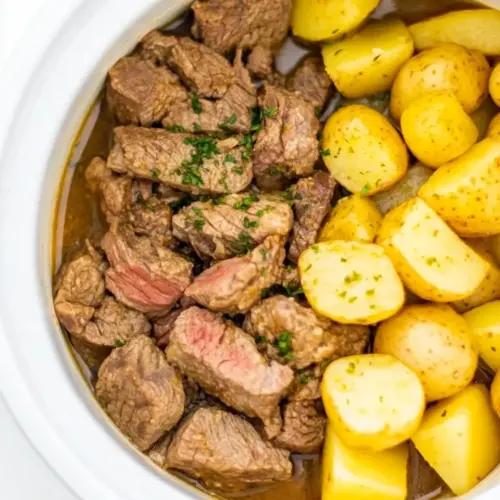
Steak And Potatoes
Steak And Potatoes is a comforting, easy weeknight dinner that pairs seared sirloin steak with tender potatoes and sweet corn slow cooked to fork tender perfection, finished with melting butter and warm spices. This hearty, savory meal delivers rich flavors with minimal hands on time, making it perfect for busy families or casual gatherings who want a satisfying, no fuss dinner.
Equipment
- Large Skillet
- Slow Cooker
Ingredients
- 1 1/2 pounds sirloin steak cut into cubes Cut into cubes to provide hearty, meaty bites that sear well and deliver rich flavor throughout the dish; browning develops a savory crust and locks in juices while the interior stays tender, creating satisfying texture contrast with potatoes and corn.
- 1/2 teaspoons salt Season sparingly to enhance the natural flavors and balance richness; dissolves into meat juices to elevate overall savory profile without overpowering other spices.
- 1/2 teaspoon pepper Add sparingly to contribute subtle heat and depth; ground pepper brightens flavors and complements savory seasonings when applied before searing.
- 2 tablespoons olive oil Use to coat the pan and facilitate even searing while preventing sticking; contributes a light fruity note and carries fat-soluble flavors from spices across the steak and vegetables.
- 1 medium white onion sliced thin Slice thin to soften quickly and release sweet, aromatic compounds during cooking; caramelizes at the edges to add complexity and pairs well with savory steak and buttered corn.
- 1 teaspoons smoked paprika Sprinkle to introduce a smoky, slightly sweet warmth that enhances grilled or pan-seared flavors; blends well with steak seasoning to deepen the overall spice profile without overwhelming.
- 1 teaspoons steak seasoning Apply to build a robust, savory crust and introduce balanced seasoning; typically contains salt and herbs that deepen umami and complement the steak and roasted potatoes.
- 1 teaspoon minced garlic Mince finely to disperse pungent garlic aroma and flavor evenly; browns quickly to add a savory, slightly sweet backbone that melds with butter and olive oil for a rich sauce.
- 1 1/2 pounds small yellow potatoes Use whole or halved to provide starchy, creamy texture that soaks up flavors; cook until tender to contrast the meat’s texture and pair well with butter and seasonings.
- 3 ears corn about 6-8 pieces, 3-4 ears of corn with each ear broke in half Break into pieces to provide sweet, crisp kernels that add color and crunch; grill or boil to bring out natural sweetness and complement the savory components of the plate.
- 1/2 cup butter or 8 tablespoons, usually 1 stick, sliced into thin pieces Slice thin to melt quickly and create a rich, glossy coating over steak, potatoes, and corn; provides creamy mouthfeel, carries aromatics, and helps form a flavorful pan sauce.
Instructions
- Place a large skillet over medium high heat with the olive oil. Season the steak with salt and pepper, then add it to the pan. Sear the steak bites quickly to get a little color on all sides of the steak, about 2-3 minutes. We don’t need to cook it through; you just want a quick sear (a little brown color) on the outside.: You will notice the oil start to shimmer and spread easily across the pan before you add anything, that is your cue that the skillet is hot enough. The sound here should be a light ripple in the oil, not smoking loudly; if it smokes, the pan is too hot. This step matters because proper pan temperature is what creates a flavorful brown crust on the sirloin steak , the chemical Maillard reaction that tastes rich and complex. If you rush and add meat to a cold pan, the steak will stew rather than sear and you will lose that toasty depth. A common mistake here is overcrowding the pan which cools the surface and prevents browning, so sear in batches if needed.
- Place the sliced onion on the bottom of the slow cooker. Add the steak on top of the onion. Sprinkle the paprika and steak seasoning over the steak. Sprinkle the minced garlic over the steak.: As the steak hits the oil you should hear an immediate sizzle, a bright, energetic sound that indicates the surface is searing correctly. The edges will begin to brown, and those little browned bits will be packed with flavor. Seasoning right before searing prevents pulling too much moisture out of the meat. If the steak does not sizzle, the pan is not hot enough and the meat may stick and not develop color. Avoid moving the pieces constantly; let them sit briefly to form a crust, then turn for an even sear.
- Add the potatoes and the corn to the slow cooker. Place butter slices all around the potatoes and corn.: Watch for a golden brown exterior, not black char, that gives a slightly crisp texture while keeping the interior juicy. Searing only briefly preserves tenderness, because the slow cooker will finish the cooking gently. The aroma at this stage becomes robust and savory, and you might smell a hint of caramelized meat. Overcooking in the pan is a common error, which leads to dry, chewy cubes after the slow cook, so aim for just enough color.
- Cover and cook in the slow cooker on low for 6 hours. Both the steak bites and potatoes should be fork tender. Add additional salt and pepper if desired, then enjoy!: When you lift a piece you should see an even caramelized surface while the center remains relatively raw, because the subsequent slow cooking will finish the steak. This technique gives you the best of both worlds, seared flavor and tender texture. If you cook the steak fully in the pan you risk it becoming tough after hours in the slow cooker. A troubleshooting tip is to leave slightly larger cubes if you want even juicier centers after the long cook.
- Place the sliced onion on the bottom of the slow cooker: As you layer the onion it will start to sweat and later lightly caramelize under the meat, releasing sweet, savory moisture that flavors the whole pot. The visual cue is onion slices turning translucent and fragrant as they cook. This layer also keeps the steak elevated so it does not sit in one spot and overcook in a hot spot. A mistake is skipping this base, which can result in a thinner sauce and potential sticking to the crock surface.
- Add the steak on top of the onion: When the browned meat meets the softened onion , the juices combine and begin to mingle aromas, creating complexity as they slow cook together. You should notice a hearty, savory scent right away. Placing meat on top allows its juices to drip down and flavor the vegetables. Avoid flattening the meat into a single thin layer, which can compress juices and change texture.
- Sprinkle the paprika and steak seasoning over the steak: The powdery spices will sit on the seared surface and slowly dissolve into the meat juices, releasing warm, smoky, and herby notes. Visually you will see a light dusting of warm color across the top, and the aroma will gain a smoky sweetness. Seasoning here ensures flavors penetrate during the long cook. A common mistake is uneven seasoning, which can leave pockets of blandness, so shake evenly.
- Sprinkle the minced garlic over the steak: As the garlic heats in the slow cooker it softens and infuses the cooking liquid with its savory aroma, creating depth. You should be able to smell a mellow garlic fragrance once things warm up. Avoid using too much finely minced garlic up front because it can become muted or take on a slightly bitter note if it dries out; this recipe’s amount balances the profile well.
- Add the potatoes and the corn to the slow cooker: Layer the small yellow potatoes and broken corn pieces around and on top of the meat so they can steam in the flavorful juices. The potatoes will absorb the beefy broth and butter for creamy interiors, while the corn keeps a bright, sweet bite. Watch for uniform placement so everything cooks evenly, and avoid stacking enormous mounds that block heat circulation which can lead to uneven doneness.
- Place butter slices all around the potatoes and corn: As the butter melts it will collect in the bottom and mingle with meat juices to form a glossy, rich sauce that coats the vegetables. You will see the butter soften, then melt into thin ribbons before pooling. This fats integration creates a silky mouthfeel and carries the flavors. A mistake is adding melted butter which disperses too quickly, whereas sliced cold butter melts slowly and finishes the dish more evenly.
- Cover and cook in the slow cooker on low for 6 hours: During this long gentle cook you will smell the aroma deepen into a concentrated, homey fragrance and notice the vegetables become fork tender while the steak turns melt in your mouth. The slow, steady heat breaks down connective tissues in the sirloin steak and turns the potatoes tender without falling apart. Resist the urge to lift the lid frequently which loses heat and prolongs cooking time. A common pitfall is switching to high to hurry the process; that often yields unevenly cooked potatoes and tougher meat.
- Both the steak bites and potatoes should be fork tender: Test a potato and a piece of steak with a fork; they should yield easily and the meat should feel soft rather than rubbery. The visual cue is the potatoes appearing plump and the steak slightly shredded but still in bite sized pieces. If they are not tender, give them additional time, checking every 30 minutes. Overcooking past tenderness can make the potatoes mushy, so watch the texture carefully.
- Add additional salt and pepper if desired then enjoy: After cooking tastes concentrate, so final adjustments let you balance the dish. Sprinkle a little extra salt or pepper to lift flavors, then serve straight from the pot while the sauce is warm and glossy. If the dish tastes flat, a small pinch of salt will usually correct it. Avoid adding too much at once, season gradually and taste as you go.
Notes
- Adjust sear time When your pan is hot and the oil shimmers, sear the sirloin steak only until a golden crust forms, about two to three minutes, to preserve internal juiciness. If you prefer deeper color, do quick 30 second additional turns rather than leaving pieces too long which risks a dry interior.
- Potato size considerations Choose small uniform yellow potatoes so they cook through in the same time as the meat, or halve larger ones to match. Uneven sizes are the main reason for inconsistent tenderness.
- Butter placement Dot thin slices of cold butter around the potatoes and corn instead of stirring, this lets it melt slowly and finish the sauce with a glossy texture. Large chunks can take much longer to incorporate evenly.
- Low versus high slow cooker setting Cook on low for six hours for the most consistent texture, especially to fully tenderize potatoes without toughening the sirloin steak. I avoid high because it often leaves potatoes underdone or makes meat chewy if extended.
- Seasoning at the end Taste and add extra salt and pepper after cooking, because flavors concentrate and you may need a small lift. Add gradually, tasting between additions to avoid oversalting.