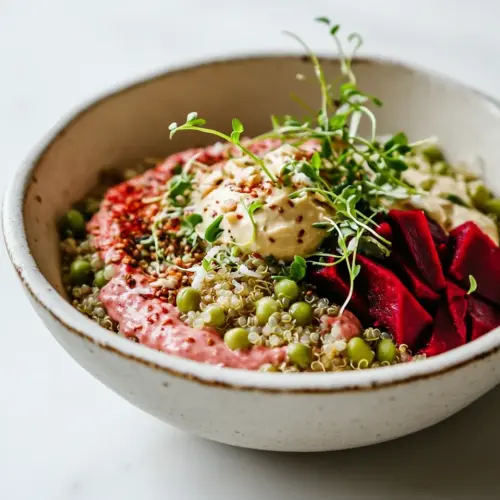
Sprouted Mung Bowl with Coconut Quinoa Beet Tahini
Sprouted Mung Bowl with Coconut Quinoa Beet Tahini is a creamy, colorful bowl that pairs fluffy coconut quinoa with a silky beet tahini and crisp mung sprouts. It feels both light and satisfying, perfect as an easy weeknight dinner or a bright lunch. The nutty tahini and coconut milk create a luscious mouthfeel, making it a simple recipe worth trying for flavorful, nourishing bowls.
Equipment
- Medium Saucepan
- Blender
- Cutting Board
- Knife
- Fine-mesh strainer
Ingredients
- 1 small-medium beet, scrubbed Roasted and tenderize root to add earthy sweetness and vibrant color; scrub well and roast or boil until fork-tender for salads or bowls. Thinly slice or dice to integrate with dressings and to balance richer components like tahini and coconut quinoa.
- 1 small garlic clove, chopped Crush and mellow pungency by chopping finely to infuse dressings and warm sautés; gentle chopping releases aromatic oils that enhance savory depth. Sauté briefly or blend into dressings to provide subtle garlic warmth without overpowering delicate herbs and vegetables.
- 1/4 cup tahini Emulsify and add rich, nutty creaminess to dressings and sauces; whisk with acid and water to create a smooth tahini dressing. Use sparingly to provide silky texture and a toasted sesame flavor that complements beets and coconut.
- 1/4 cup water Thin and loosen thick pastes or dressings to reach desired consistency; add gradually while whisking tahini to form a smooth emulsion. Adjust amount to balance creaminess and pourability for bowls and salads.
- 2 tablespoons balsamic vinegar Brighten and balance sweet and savory elements by providing acidic depth and a subtle sweetness; whisk into dressings to lift earthy beets and rich tahini. Marinate or drizzle to add a tangy complexity that harmonizes coconut and quinoa.
- 1 tablespoon olive oil Enrich cooking with a fruity, savory fat that carries aromatics and helps cook shallots and garlic; warm gently to release flavors without burning. Drizzle over finished bowls to add gloss and a rounded mouthfeel.
- 1/2 teaspoon pure maple syrup Add a touch of natural sweetness to balance acidity and bitterness; incorporate into dressings to enhance flavor layers without making the dish syrupy. Use sparingly to complement beets and mellow spicy or salty components.
- 1/4 teaspoon Tamari soy sauce Introduce umami and salty depth with a gluten-free soy seasoning; a small amount intensifies savory notes in dressings and marinades. Stir into tahini or vinaigrette to deepen flavor without overwhelming delicate herbs.
- sea salt and ground pepper, to taste Season and enhance all components to taste, using salt and pepper to sharpen flavors and balance sweetness and fat. Add gradually and taste frequently to maintain harmony among tahini, beet, coconut, and quinoa.
- 2 teaspoons olive oil Heat oil to sautée aromatics and toast coconut gently; use at medium heat to avoid burning while extracting flavor from shallots and spices. Allow the oil to become fragrant before adding other solids to build a flavorful base for quinoa.
- 1/2 cup finely diced shallots (1 large shallot) Sweat and soften aromatic to develop a sweet, savory foundation for the quinoa; finely dice to ensure even cooking and gentle distribution of flavor. Cook in oil until translucent to release sugars that will complement coconut and coriander.
- 1/4 cup finely shredded unsweetened coconut Toast lightly to add crunchy texture and tropical aroma, using unsweetened coconut to avoid extra sweetness. Add near the end of toasting or to the quinoa to preserve flavor and provide a nutty counterpoint to creamy tahini.
- 1 teaspoon ground coriander Infuse spice with warm, citrusy notes that pair well with coconut and beets; add ground coriander to the cooking quinoa or to the sautéed aromatics. Use modestly to contribute complexity without dominating the dish.
- pinch chili flakes Provide gentle heat and a subtle smoky kick with a pinch of chili flakes; sprinkle into dressings, sautés, or over the finished bowl for brightness. Adjust quantity to taste to complement rather than overpower the bowl’s other flavors.
- 1 cup quinoa, rinsed Rinse and cook to create a fluffy, protein-rich base; quinoa absorbs flavors and provides structure for the bowl. Combine with coconut milk and stock for a creamy grain that pairs well with tahini and beets.
- 1 cup full fat coconut milk (from a can) Enrich cooking liquid with creamy coconut flavor and fat; full-fat coconut milk adds richness to quinoa and ties in with shredded coconut and tahini. Use in balance with stock to create a luscious, slightly tropical base.
- 1 cup vegetable stock Provide savory liquid and depth to the quinoa cooking liquid; vegetable stock contributes umami and body without meat-based flavors. Combine with coconut milk for a balanced, flavorful poaching liquid for the grains.
- sea salt, to taste Season the cooking liquid to adjust final flavor; add sea salt to the quinoa and adjust at the end to ensure proper seasoning. Taste before serving to fine-tune salt levels against tahini, tamari, and vinegar.
- scant cup mung bean sprouts Add fresh crunch and vegetal sweetness with delicate mung bean sprouts; toss into the bowl raw to preserve crisp texture and subtle earthiness. Use as a light, protein-rich garnish that contrasts creamy quinoa and tahini.
- 1 English cucumber, peeled into ribbons Create cool, crisp ribbons to provide refreshing contrast and texture; peel cucumber into thin strips to fold into the bowl for lightness. Use peeled ribbons to add juiciness and a clean mouthfeel that balances richer elements.
- 1/4 cup chopped fresh dill Brighten the dish with fresh herbal brightness and anise-like notes; chop dill and sprinkle over the finished bowl to add lift. Use as a finishing herb to provide aromatic contrast to coconut, tahini, and beets.
Instructions
- Place the beet in a medium saucepan and cover it with water. Bring the pot to a boil and then simmer until the beet is soft when pierced with a paring knife, about 30-40 minutes. Remove the beet and let it cool slightly. The rough outer skin of the beet should slip off with ease at this point. Peel the beet and chop it roughly.: When you first set the pan on the stove, you will notice the metallic sound of the pot settling, and soon the water will move from still to a gentle roll, then to a full simmer. This step is all about extracting tender sweetness from the beet . Use a pot that allows the beet to be fully submerged so it cooks evenly. A common mistake is overcrowding the pan, which leads to uneven cooking and a firmer center. While it simmers, check occasionally, gently turning the beet so the heat distributes evenly, and listen for the subtle change in water sound that indicates a steady simmer.
- Place the chopped beet in an upright blender along with the garlic, tahini, water, balsamic vinegar, olive oil, maple syrup, tamari, salt, and pepper. Blend the mixture on high until completely smooth. Set aside.: As the water heats, tiny rising bubbles will signal the transition from simmer to boil, and then lower the heat to maintain a gentle simmer. You want the beet to feel tender through the knife without being mushy. The aroma will grow sweeter and earthier as it cooks, and the liquid may stain slightly. Avoid overcooking to a papery texture; it should be firm enough to handle but soft enough to blend smoothly into the tahini. Use a paring knife to test the center in a few spots for consistent tenderness.
- Rinse out and towel off the medium saucepan you used for the beet. Set it over medium heat and pour the oil in. Add the shallots to the pan and stir. Sauté until translucent, about 3 minutes. Add the coconut, coriander and chili flakes, and sauté until very fragrant, about 30 seconds. Add the quinoa and stir to coat in the oil and spices. Add the coconut milk, vegetable stock, and sea salt to the pan and stir. Bring the quinoa to a boil and then simmer until almost all of the liquid is absorbed, about 15 minutes.: After lifting the warm beet from the pot, place it on a cutting board and give it a few minutes to cool. The surface will steam gently, and the residual heat makes peeling easier. This pause also lets the beet's juices settle, preventing them from running all over your board. A slip of the skin should come off with minimal pressure; if it sticks, give it a couple more minutes. Rushing to peel while too hot increases the risk of burns and splattering, so patience pays off here.
- Spread a couple tablespoons of the beet tahini across 4 shallow bowls. Portion the quinoa among the bowls. Top each bowl with a portion of sprouted mung beans, cucumber ribbons and fresh dill. Serve immediately.: You may find the skin loosens when you rub it with a towel or under running water; its scent will be concentrated and earthy. I often use a paring knife to coax any stubborn bits away, but the skin should mostly peel away in large pieces. If the skin resists, it usually means the beet needs a touch more cooling. Avoid digging too aggressively into the flesh, which wastes the tender interior you want for the sauce.
- Peel the beet and chop it roughly: When you chop the cooled beet , the sound is muted, and you will notice the vivid color staining the board. Rough chopping into uniform pieces helps the blender create an even, velvety tahini. One pitfall is leaving very large chunks, which force the blender to work harder and can create uneven purees. Aim for pieces about the size of a small walnut so the blades process them quickly and the sauce becomes smooth.
- Place the chopped beet in an upright blender along with the garlic tahini water balsamic vinegar olive oil maple syrup tamari salt and pepper: The moment these ingredients meet in the blender you will get a flood of aroma, the sharpness of garlic tempered by the nutty tahini and the sweet earth of the beet . Layering the liquids near the bottom helps the blender create a vortex that pulls solids down. If your blender struggles, pause and scrape the sides to ensure everything incorporates. A frequent error is overfilling the blender, which prevents proper blending and can cause splashing. Leave a little headspace for safe blending.
- Blend the mixture on high until completely smooth: As the blades spin, watch the mixture transform from chunky to glossy, and listen for the steady hum that signals full emulsification. The color will deepen into an even magenta and the texture should be silky. If you notice flecks or graininess, pulse and scrape, then blend again. Overblending can warm the sauce too much, dulling the bright notes, so stop when smooth and silky. A short rest in the fridge will help flavors meld and firm the texture slightly.
- Set aside: Once your beet tahini is smooth, transfer it to a bowl or jar and let it rest at room temperature while you make the quinoa. Resting allows the flavors to integrate, and the tahini will settle into a creamier consistency. Covering it loosely keeps it from skinning over, and you can adjust seasoning after a quick taste. One common mistake is seasoning before the flavors have melded, which can lead to over salting once the tahini and beet marry.
- Rinse out and towel off the medium saucepan you used for the beet: After rinsing, the pan will smell faintly of beet , and drying it prevents sputtering when you add oil. The clean pan gives you a neutral surface to sauté the shallots and toast the coconut. Using the same pan is efficient and picks up leftover beet flavor in a subtle way. Make sure the pan is dry to avoid oil popping, a safety and cleanliness step many cooks overlook.
- Set it over medium heat and pour the oil in: Heating the pan first ensures the oil warms evenly and shimmers instead of smoking aggressively. You should see a thin, glistening film and maybe the first whisper of aroma from the oil. If the oil smokes, lower the heat; burnt oil imparts bitterness. The right temperature helps the shallots soften gently and develop sweetness rather than burning.
- Add the shallots to the pan and stir: When the diced shallots hit the oil, they will sizzle softly and release a sweet onion aroma. Stirring helps them cook evenly and prevents any bits from adhering and browning too quickly. Keep the heat steady to coax sweetness rather than char. A frequent issue is cooking over too high heat, which can lead to bitter, charred shallots instead of the mellow base you want.
- Sauté until translucent, about 3 minutes: As the shallots cook, they will turn glossy and lose their raw sharpness, releasing a fragrant, savory aroma. This short cook time is about developing flavor without losing texture. Don’t rush this stage, because the aromatic base directly influences the finished quinoa. If they brown too soon, lower the heat and add a splash of water to rescue them.
- Add the coconut coriander and chili flakes: Tossing in the coconut , ground coriander , and chili flakes will produce an immediate fragrant pop. The toasted coconut will give a nutty scent, while the coriander introduces citrusy warmth and the chili adds an undercurrent of heat. Stir constantly for about 30 seconds to release these aromas; they can burn quickly, so watch closely to prevent bitterness.
- Sauté until very fragrant, about 30 seconds: This brief burst is when the spices bloom and the oil becomes perfumed. The kitchen will fill with a rounded, toasty scent. Avoid lengthening this step, as the coconut can darken and the spices can become acrid. Immediate attention and stirring keeps the flavors bright and integrated.
- Add the quinoa and stir to coat in the oil and spices: When you add the rinsed quinoa , each grain will glisten as it picks up oil and aromatics. Toasting the quinoa briefly helps deepen its nuttiness and ensures each grain stays separate after cooking. Stirring for a minute or so also helps distribute the spices evenly. A common misstep is skipping the coat step, which leads to a blander finished grain.
- Add the coconut milk vegetable stock and sea salt to the pan and stir: Pouring in the coconut milk and vegetable stock creates a lush cooking liquid that will infuse the quinoa with richness. The mixture may hiss lightly as it meets the hot pan, and the scent will become creamy and savory. Add sea salt gradually, tasting later as liquids reduce, since flavors concentrate during simmering.
- Bring the quinoa to a boil and then simmer until almost all of the liquid is absorbed, about 15 minutes: Bring the mixture up until you see steady bubbling, then lower the heat to maintain a gentle simmer. As it cooks the surface will show small craters and the liquid will gradually reduce, revealing tender, translucent grains. Fluffing at the end with a fork helps separate the grains. Overcooking or lifting the lid too often can produce gummy quinoa, so resist constant peeking.
- Spread a couple tablespoons of the beet tahini across 4 shallow bowls: When you smear the sauce, it should glide smoothly, leaving a bright magenta streak that looks as good as it tastes. The visual appeal matters here, and a confident smear makes plating effortless. If the tahini seems too thick, thin with a splash of water to reach a spreadable consistency. A common plating mistake is adding sauce last, which can smear other components; do this first to create a neat base.
- Portion the quinoa among the bowls: Spoon warm quinoa into each bowl, placing it against the beet tahini so the colors contrast. The quinoa will release a coconut aroma and a light steam that enhances the bowl’s presence. Even portions make for balanced bites; using a measuring cup helps keep servings consistent. If you overfill, the bowl becomes messy and harder to eat gracefully.
- Top each bowl with a portion of sprouted mung beans cucumber ribbons and fresh dill: Finish by layering the crisp sprouts , cool cucumber ribbons, and aromatic dill on top of the quinoa. The fresh elements add crunch, brightness, and herbal lift. Scatter them thoughtfully so each spoonful includes a bit of everything. A typical error is tossing these in at the last minute without dressing, which makes them taste disconnected; the beet tahini ties everything together.
- Serve immediately: Serve the bowls while the quinoa is warm so the contrast with the cool sprouts and cucumber is most pronounced. The steam will lift the aromatics and the tahini will soften and meld. If not serving right away, keep the components separate and assemble just before eating to preserve texture and freshness.
Notes
- Prep extra beets: When you boil beets, make a batch and store extras in the fridge for up to a week, they become a quick addition to salads and bowls.
- Adjust tahini viscosity: If the beet tahini is too thick, thin with small amounts of water until it spreads easily, but add gradually to avoid a runny sauce.
- Rinse quinoa well: Thorough rinsing removes bitterness and produces fluffier quinoa, I rinse until the water runs clear then drain in a fine mesh strainer.
- Toast coconut gently: Toast the shredded coconut on medium heat and stir constantly for even color, which enhances flavor without burning.
- Use a heavy bottom pan: A sturdy saucepan provides even heat for simmering the quinoa so it cooks uniformly and doesn’t scorch.