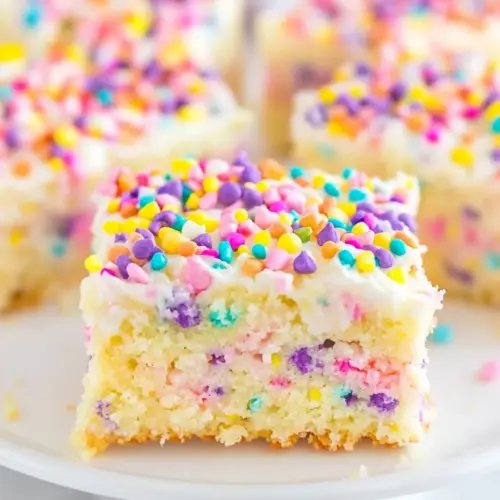
Springtime Sugar Cookie Bars with Cream Cheese Frosting
Springtime Sugar Cookie Bars with Cream Cheese Frosting are buttery and soft with a silky, tangy topping and pastel sprinkles for a festive look. These easy dessert bars are perfect for spring gatherings and quick celebrations, offering creamy texture and playful color. They are ideal for make ahead occasions and crowd pleasing service, a great reason to bake them today.
Equipment
- 8×8-inch pan
- Aluminum Foil
- Wire Rack
- Electric Mixer
- Offset Spatula
Ingredients
- one 14-ounce box vanilla sugar cookie mix Provides a premixed combination of flour, sugar, leavening, and vanilla flavor to form the cookie bar base quickly and consistently; simplifies measurements and ensures a uniform texture when combined with wet ingredients. Adds foundational sweetness and structure so the bars bake evenly and hold their shape.
- 1 large egg Adds moisture and acts as a binding agent to help the dough hold together while contributing a tender crumb; helps activate some mixes and enriches flavor. Promotes browning and helps incorporate air for a lighter texture when beaten with butter.
- 1/2 cup unsalted butter, softened Contributes richness, tenderness, and moisture to the dough while adding buttery flavor that enhances the cookie mix; softened butter blends smoothly with sugar and egg for a cohesive batter. Affects final texture and mouthfeel, producing soft, tender bars rather than dry ones.
- 1/4 cups springtime-colored sprinkles Provides colorful visual appeal and a slight sugar crunch when folded into or sprinkled on top of the dough; complements the springtime theme with pastel hues. Primarily decorative, these sprinkles make the bars festive and attractive for celebrations.
- one tub storebought whipped cream cheese frosting Offers a quick, creamy topping option that saves time and delivers a smooth, sweet finish without additional mixing; ideal for spreading directly on cooled bars for immediate serving. Delivers tangy-sweet cream cheese flavor and a fluffy texture depending on the tub variety.
- OR Offers an alternative choice indicating flexibility between using a storebought ready-to-spread option or preparing a homemade frosting; clarifies that one should pick either the tubbed frosting or the following homemade version. Helps readers decide based on convenience or preference for fresh ingredients.
- 6 ounces cream cheese, softened (lite okay) Adds tangy creaminess and stabilizes the frosting while contributing moisture and richness; softened cream cheese blends smoothly with butter and sugar to create a luscious, slightly tangy topping. Light versions reduce fat while still providing body and flavor to the frosting.
- 1/4 cup unsalted butter, softened Provides additional fat and buttery flavor to the homemade frosting, helping achieve a smooth, spreadable consistency when creamed with cream cheese. Softened butter also lightens the frosting when whipped, improving texture and mouthfeel.
- 1 1/2 cups confectioners’ sugar Sweetens and thickens the frosting while helping it pipe and hold shape; confectioners’ sugar dissolves easily into the butter and cream cheese for a silky finish. Adjusting the amount controls sweetness and consistency of the frosting.
- 1/2 teaspoon vanilla extract Adds warm, aromatic vanilla notes to enhance overall flavor and round out the sweetness; small quantity elevates the taste profile without overpowering the cream cheese. Works well dissolved into the frosting for uniform flavor distribution.
- 1/2 teaspoons salt, or to taste Balances sweetness and enhances flavor depth by tempering the frosting’s sugary profile; salt sharpens other flavors and prevents the frosting from tasting flat. Pinching to taste allows customization based on personal preference and the sweetness level of other components.
- 2 tablespoons springtime-colored sprinkles, pastels, pinks, yellows, etc. Provides a finishing decorative touch and subtle crunch when sprinkled on top of the frosted bars; pastel sprinkles reinforce the springtime presentation. Small amount ensures visual appeal without overwhelming texture or flavor.
Instructions
- Preheat oven to 350 F, line an 8×8-inch pan with aluminum foil, spray with cooking spray; set aside.: The oven will emit a warm, slightly toasty scent as it comes to temperature, which is comforting and tells you the baking environment is ready. Lining the pan with foil makes removal and slicing cleaner, and a quick spray ensures the bars release easily. A common mistake is skipping the lining, which can make the bars stick and tear when you lift them. Take a moment to smooth the foil into corners, and press it down so you have neat edges to lift the bars once cooled.
- To a large bowl add the cookie mix, butter, egg, and mix or stir to combine.: As you stir, you will notice the dry mix absorbing the softened butter and egg , forming a pliable dough that smells faintly of vanilla and butter. Use a sturdy wooden spoon or a paddle attachment for even incorporation. Overworking the dough can lead to a denser texture, so combine until the ingredients disappear into a uniform mass. If the dough seems overly dry, check that your butter was softened properly rather than cold.
- Stir in 1/4 cup sprinkles.: The batter will brighten visually as you fold in the pastel sprinkles , adding playful color without changing the texture much. Fold gently so you do not bleed too much color from the sprinkles into the dough. Avoid stirring vigorously because some sprinkle types can melt or fracture, discoloring the batter.
- Turn the dough out into the prepared pan and bake for about 23 to 27 minutes, or until center is set and a toothpick inserted in the center comes out clean or with a few moist crumbs but no batter.: As the bars bake, the kitchen fills with a warm, buttery aroma and you may hear a faint crackle as edges set. Watch for the center to stop looking glossy, and allow a toothpick check rather than relying strictly on time, as ovens vary. A common error is underbaking, which leaves a gummy interior; another is overbaking, which dries the bars. Aim for a slight golden edge while the center remains tender to the touch.
- Set aside to cool completely on a wire rack while you prepare the frosting.: Cooling lets the bars firm up so the frosting will not sink in. Placing the pan on a wire rack encourages even air circulation so the bottom does not become soggy. If you frost warm bars, the frosting may melt and slide off, so patience here ensures a neat finish. Avoid leaving them out in a very humid spot which can affect texture.
- Use storebought frosting OR to a large bowl (or the bowl of a stand mixer), add the cream cheese, butter, confectioners’ sugar, vanilla, salt, and beat with an electric mixer (or the paddle attachment of a stand mixer) on high power until smooth and fluffy.: The cream cheese and butter will combine into a silky, pale mixture that smells lightly tangy and sweet. Beating on high introduces air, resulting in a fluffier frosting with a light mouthfeel. If you overbeat, the frosting can become too loose or incorporate too much air and collapse, so stop once it is uniformly smooth and holds soft peaks. If lumps appear, a brief low speed can smooth them out, but do not overmix.
- Turn frosting out over bars in an even, smooth flat layer.: When you spread the frosting, you should feel a cool, creamy glide as it smooths across the bars, and it will create a uniform surface that highlights the pastel sprinkles. Use an offset spatula or the back of a spoon to achieve a level top. If the frosting is too soft, chill it briefly to firm up so you can create clean edges. Rushing this step risks a sloppy appearance and uneven slices.
- Evenly sprinkle with 2 tablespoons sprinkles before slicing and serving the bars.: The final scatter of pastel sprinkles adds a subtle crunchy contrast and bright visual appeal, catching light and making each square feel festive. Press them gently so they adhere to the frosting without sinking. One mistake is waiting too long to add sprinkles, which can prevent them from sticking; another is overdoing it, which overwhelms the frosting and can create gritty bites.
Notes
- Speedy swap Use a tub of storebought whipped cream cheese frosting when you need a quick finish, it offers consistency and saves time without sacrificing much in flavor.
- Texture control Chill the pan briefly after baking if you want cleaner slices, a chilled bar is firmer and cuts with less crumb.
- Adjusting sweetness If you prefer a slightly less sweet finish, reduce the confectioners’ sugar in the frosting by a couple of tablespoons and taste as you go to avoid under sweetening.
- Softening tips Soften cream cheese and butter to room temperature to ensure a lump free frosting and fast whipping to fluffy consistency.
- Decorating idea Add a few larger candy pearls or a mix of sprinkle shapes for more visual interest, just be mindful of how crunchy additions affect the bite.
- Storage advice Keep extra frosting airtight in the fridge for up to two weeks as noted, and bring it to room temperature before using to regain spreadability.