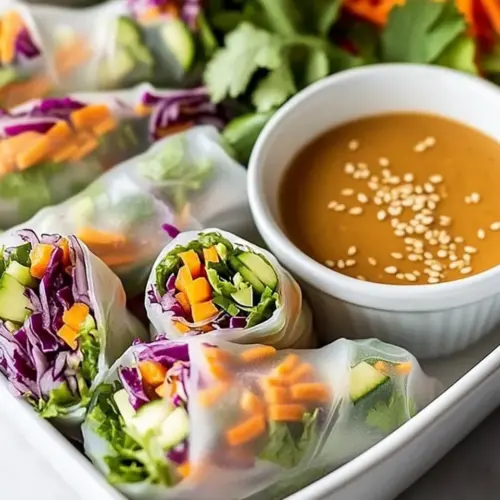
Spring Rolls with Peanut Sauce
Spring Rolls with Peanut Sauce are fresh, crispy, and irresistibly saucy, combining crunchy red cabbage and julienned carrots with tender vermicelli rice noodles. The creamy peanut butter dipping sauce is sweet, tangy, and nutty, perfect for an easy weeknight meal or casual gathering. Light and satisfying, these rolls are a colorful crowd pleaser and a great reason to make them tonight.
Equipment
- Shallow Bowl
- Mixing Bowl
- Pot
- Colander
- Cutting Board
Ingredients
- 1/4 cup creamy natural peanut butter Provide a rich, creamy base for the peanut dipping sauce that adds body and nutty flavor; whisk smooth to prevent graininess and combine easily with liquids. Balance richness by adjusting amount to taste and stirring until fully incorporated for a glossy texture.
- 1/2 tablespoon rice vinegar Add a mild, tangy acidity to cut through the richness of the peanut butter and brighten the sauce; use sparingly to maintain balance. Stir into the dressing to lift flavors and provide a slight fermented note characteristic of rice vinegar.
- 1/2 tablespoon lime juice fresh Contribute fresh, zesty citrus brightness that enhances overall flavor complexity and adds a subtle tart edge; squeeze just before mixing for peak freshness. Combine with other acidic components to create a lively counterpoint to sweet and savory elements.
- 2 tablespoons soy sauce low sodium Deliver savory, umami depth and saltiness to season the peanut sauce while complementing Asian flavor profiles; choose low-sodium to control salt levels. Stir in gradually and taste as you go so the sauce reaches the desired savory balance.
- 2 tablespoons maple syrup Introduce sweet, natural sweetness that rounds out the peanut sauce and balances acidity and salt; maple adds a warm, caramel-like undertone. Adjust amount to preference to achieve a harmonious sweet-savory profile without overpowering other flavors.
- 2 teaspoons toasted sesame oil Impart a toasty, aromatic finish with concentrated sesame flavor that deepens the sauce profile; use toasted sesame oil sparingly for strong impact. Incorporate at the end to preserve its aroma and avoid overheating which can make it bitter.
- 2 tablespoons water Thin the peanut sauce to a pourable, dip-friendly consistency and help emulsify ingredients for smooth texture; add incrementally until desired thickness is reached. Use room-temperature water to ease blending and prevent seizing of the peanut butter.
- 2 ounces vermicelli rice noodles Provide a tender, neutral base inside the spring rolls that soaks up flavors and adds subtle chewiness; cook briefly until soft then drain thoroughly. Rinse with cool water after cooking to stop cooking and keep noodles separate for easy rolling.
- 1 cup butter lettuce torn Add crisp, delicate green leaves that provide a fresh, tender-textured layer and mild flavor contrast to crunchy vegetables. Tear into manageable pieces to create a soft bed that helps contain other fillings and adds moisture.
- 1 cup red cabbage thinly sliced Contribute crunchy texture, vibrant color, and mild peppery-sweet flavor that holds up well inside rolls; slice thinly to ensure easy rolling. Use shredded or thinly sliced cabbage to add volume without overpowering other fillings.
- 2 carrots peeled and sliced with a julienne peeler Bring sweet earthiness and firm crunch with long julienne strips that add bright color and fresh flavor; use a peeler for uniform matchsticks. Keep slices thin to maintain bite-sized consistency and easy chew within the roll.
- 2 Persian cucumbers thinly sliced Provide cool, crisp hydration and mild cucumber flavor that refreshes the palate and balances richer components; slice thin for texture. Pat slices dry if very watery to prevent sogginess inside the rolls.
- 2 green onions thinly sliced Offer a mild oniony bite and aromatic green freshness that lifts the other vegetables; slice diagonally for visual appeal. Sprinkle in evenly to ensure bursts of flavor throughout each roll without overpowering delicate ingredients.
- 1/3 cup cilantro chopped Add bright, herbaceous citrus notes and a slightly peppery undertone that elevate the fresh profile of the rolls; chop coarsely for texture. Distribute cilantro throughout to provide aromatic pops and complement the peanut sauce.
- 1 red bell pepper thinly sliced Supply sweet, crisp bell pepper slices that add color, crunch, and a juicy bite to the rolls; slice thin for easy rolling. Choose ripe red bell pepper for its natural sweetness and attractive contrast against greens.
- 12 Vietnamese spring roll wrappers Provide thin, pliable rice-based wrappers that encase the fresh fillings and create classic translucent spring rolls; work quickly as wrappers become sticky when exposed to moisture. Soften each wrapper in water briefly and fill without overstuffing to ensure secure rolling.
- small bowl of water Facilitate dampening and softening of spring roll wrappers during assembly and help seal edges for proper closure; keep at room temperature and refill as needed. Use a small bowl so wrappers can be moistened easily one at a time to prevent tearing.
Instructions
- In a small bowl, whisk the ingredients for the peanut sauce and set aside.: The moment you mix the peanut butter with soy sauce , maple syrup , rice vinegar , and lime juice , you will notice a glossy, creamy texture forming, and an aroma that combines sweet, salty, and bright citrus notes. Whisk until smooth, then add the water a little at a time to reach a dipping consistency that coats the back of a spoon. This emulsification gives the sauce a silky mouthfeel, and it is why I always taste and adjust at this point, maybe adding a touch more acid if the sauce feels heavy. A common mistake is adding too much water too quickly, which can make the sauce watery rather than saucy, so add gradually and whisk constantly. If the mixture feels grainy, whisk vigorously or briefly warm it to help everything come together.
- Cook the vermicelli noodles according to the instructions on the package. Then rinse them with cold water.: When you cook the vermicelli rice noodles , watch for the texture cue described on the package and remove them the moment they become tender, they should be slightly springy rather than mushy. After draining, rinse under cold water until the steam and starch are gone, which keeps the strands separate and gives a cool, slippery texture that pairs well with crisp vegetables. The rinsing step also stops residual cooking, preventing clumping. A frequent issue is overcooking, which makes the noodles gummy and difficult to roll, so set a timer and check them early. Toss gently with a few drops of toasted sesame oil if they look sticky, this keeps them loose without adding too much flavor.
- Make sure your ingredients for the spring rolls are in reach. Dip the spring roll wrapper into the water, then layer each ingredient in the middle lower half of the spring roll wrapper. Fold the sides of the spring roll wrapper inward, then proceed to rolling the spring roll the way you would a burrito, making sure to tuck the veggies into the roll. Repeat this process until all the veggies are used.: The cool rinse transforms the noodles from hot and sticky to cool and pliable, and you will feel the change in temperature under your fingers when you test a strand. The sound of the water running over the noodles and the slightly translucent look when they are properly rinsed are helpful indicators. Rinsing also firms the noodles slightly, so they maintain a pleasant chew inside the roll. Avoid squeezing the noodles dry as that compresses them and can create clumps; instead, use a gentle shake to remove excess water. If the noodles stick together after rinsing, separate them with your fingers while they are still damp rather than letting them sit and glue together.
- Make sure your ingredients for the spring rolls are in reach: Having all fillings laid out, torn, and sliced makes the assembly meditative rather than chaotic, and you will notice how much smoother rolling becomes with an organized station. Arrange piles of butter lettuce , red cabbage , ribbons of carrot , thin slices of red bell pepper , discs of cucumber , chopped cilantro , and the vermicelli rice noodles so you can build each roll rapidly. The visual of even piles helps you control portion size and creates consistent rolls. A typical misstep is trying to roll with unevenly prepared veggies, which leads to tearing or lumpy rolls, so take a few extra minutes to prep evenly. If you have a tendency to overfill, remember less is more, you can always add another roll rather than ruin one.
- Dip the spring roll wrapper into the water, then layer each ingredient in the middle lower half of the spring roll wrapper: The wrapper should become soft and slightly translucent after a brief dip, and you will notice the surface go from dry white to a glossy, workable sheet. Lay it on a clean board and place a small bed of butter lettuce first to create a base, then a modest tangle of vermicelli rice noodles , followed by a colorful stripe of red cabbage , carrot , cucumber , red bell pepper , and finish with a sprinkle of green onions and cilantro . The goal is a balanced cross section so each bite contains multiple textures. If the wrapper becomes too wet, the edges will tear, so pat off excess water before laying it down. Over-saturating the wrapper is the main error here, which is why timing and a small bowl of water is helpful for consistent dips.
- Fold the sides of the spring roll wrapper inward: Folding the sides in creates tidy edges and prevents the filling from escaping while you roll, and you will hear a faint softening sound as the wrapper hugs the filling. Press gently to compact the vegetables without bruising them, this creates a compact center that holds together. This technique helps the roll keep its shape and ensures even distribution of ingredients, which matters when you dip the roll in the sauce. Be careful not to press so firmly that the wrapper tears; if it starts to split, ease the pressure and use a slightly smaller amount of filling next time.
- Then proceed to rolling the spring roll the way you would a burrito, making sure to tuck the veggies into the roll: As you roll forward, keep the tension even so the wrapper tightens around the filling and the roll becomes snug rather than loose. The motion should be smooth and continuous, with the final tuck sealing the edge under the roll so it stays closed. When done properly, the roll will feel firm and spring slightly under your fingers, and the translucent wrapper will showcase the colorful filling inside. A common mistake is rolling too loosely, which results in a floppy roll that falls apart when picked up, so maintain steady tension. If the wrapper does not seal, dampen the edge lightly with water to act as glue.
- Repeat this process until all the veggies are used: Rolling in batches keeps the pace steady and allows you to serve a fresh platter of Spring Rolls with Peanut Sauce while keeping extras in the refrigerator. I like to rotate the fillings a bit so some rolls have more herbs and others more noodles, giving variety on the plate. Store finished rolls seam side down on a damp towel to keep them from drying out if not serving immediately. The main pitfall here is letting assembled rolls sit uncovered which dries the wrapper and causes cracking, so cover them lightly with a damp cloth until ready to serve.
Notes
- Start with dry ingredients, pat your vegetables lightly so they do not add excess moisture which can make the wrappers soggy and fragile.
- Use a shallow bowl of water, dip the wrapper briefly and lay it on a flat surface immediately to control the pliability without over saturating it.
- Prep everything before you start rolling, mise en place speeds the process and prevents mistakes from rushing while handling delicate wrappers.
- Taste and adjust the sauce, add more lime juice for brightness or a touch more maple syrup for sweetness until it hits a balance you love.
- Roll with even pressure, keep tension consistent to ensure the rolls are snug and will not unravel when served.