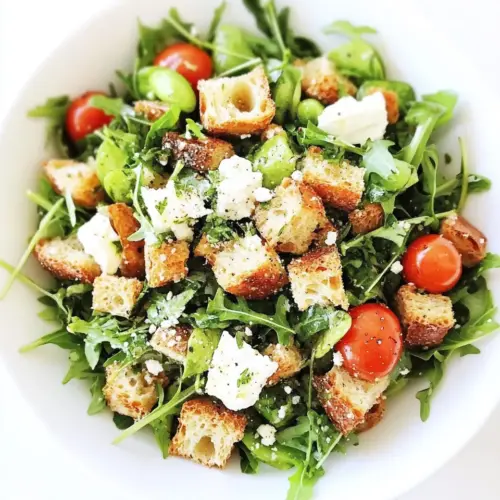
Spring Panzanella Salad
Spring Panzanella Salad is a crisp, bright combination of toasted bread, roasted asparagus, fresh arugula, and sweet peas tossed in a lemony vinaigrette with crumbled feta. The textures range from crunchy to tender, creating an easy weeknight lunch or light dinner that feels celebratory. Make it for spring gatherings when you want a simple dish that tastes fresh and comforting.
Equipment
- Oven
- Baking Sheet
- Large Bowl
- Small Bowl
- Whisk
- Spatula
Ingredients
- 8 cups cubed artisan bread cut into 1/2-inch pieces Cubed into 1/2-inch pieces and used as the hearty base, provides texture and soaks up dressing and juices to create a satisfying panzanella structure; toasts or sits soft depending on preparation and balances the crisp vegetables.
- 1/2 stick 1/4 cup Land O Lakes® Butter with Olive Oil & Sea Salt, melted Melted and brushed or tossed with the bread to add richness and a subtle olive oil and sea salt flavor; enhances browning and contributes a silky mouthfeel that complements the salad's fresh components.
- 1 teaspoon finely chopped chives Finely chopped and sprinkled sparingly to lend a mild onion-like freshness and delicate herbaceous note; integrates into both the bread mixture and dressing for a subtle green accent.
- 1 teaspoon finely chopped parsley Finely chopped and used to add fresh, slightly peppery herb flavor that brightens the dish; distributed through the salad to provide aromatic lift and visual contrast.
- 1 large bunch asparagus ends trimmed and cut into 1-inch pieces Trimmed and cut into 1-inch pieces and blanched or roasted to deliver tender-crisp vegetal bites; provides seasonal snap and a slightly sweet green flavor to balance bread and cheese.
- 1 tablespoon olive oil Used to coat the asparagus or for sautéing to facilitate even cooking and add a fruity, savory fat; helps transfer heat and carry fat-soluble flavors throughout the salad.
- Salt and freshly ground black pepper to taste Seasoned to taste to enhance the natural flavors of the vegetables and bread; provides essential balance and can be adjusted to personal preference for overall seasoning.
- 3 cups baby arugula Added as fresh, peppery leaves to introduce a peppery, slightly bitter component and delicate texture; contributes leafy volume and contrasts with the heavier bread cubes.
- 1 cup fresh or frozen peas thaw peas if using frozen Included fresh or thawed to add sweet, tender pops of green that contrast with the other textures; provides a bright, sweet element and seasonal color.
- 1/2 cup crumbled feta cheese Crumbled and scattered to supply tangy, salty creaminess that offsets the bread and greens; adds savory depth and a crumbly texture that melds with the dressing.
- 1/3 cup olive oil Emulsified into the dressing to act as the primary fat, carrying flavors and providing a silky mouthfeel; helps bind the lemon and vinegar into a cohesive vinaigrette.
- 2 tablespoons fresh lemon juice Squeezed into the dressing to provide bright acidity and fresh citrus aromatics; balances the oil and complements the herbs and cheese with zesty lift.
- 1 teaspoon white or golden balsamic vinegar Measured into the dressing to contribute mild, sweet acidity and complexity; rounds the lemon's sharpness and adds a subtle aged-sweet note.
- 1/2 teaspoon honey Added to the dressing to impart a touch of natural sweetness that mellows the vinegar and lemon; helps balance acidity and enhances the overall harmony.
- 1 tablespoon minced shallot Minced and incorporated into the dressing to contribute a mild onion-y depth and slight sweetness when raw; blends with oil and acid to provide savory nuance.
- 1 clove garlic minced Minced and mixed into the dressing for a pungent, aromatic kick that enhances flavor complexity; small amounts provide pronounced garlicky warmth without overpowering.
- Salt and freshly ground black pepper to taste Seasoned to taste to ensure the dressing and assembled salad reach proper savory balance; allows control over saltiness and pepper bite for the final dish.
- 1 tablespoon chopped chives Chopped and used as a garnish or mixed into the dressing to supply fresh, mild onion flavor and visual green flecks; reinforces herbal continuity with the other chives.
- 1 tablespoon chopped parsley Chopped and sprinkled to lend fresh, slightly peppery herb notes and bright green color as a finishing touch; pairs with parsley listed earlier to echo flavors throughout the salad.
Instructions
- Preheat oven to 400 degrees F. Place bread cubes in a large bowl. In a small bowl, combine melted butter, chives, and parsley. Pour herb butter over the bread cubes and toss until well coated. Pour bread cubes on a large baking sheet. Place asparagus pieces on a separate large baking sheet and drizzle with olive oil. Toss until well coated. Season the bread cubes and asparagus with salt and black pepper, to taste. Place baking sheets in the oven and cook for 30-35 minutes, or until bread cubes are crunchy and slightly golden brown and asparagus is tender, but still crisp. You will want to stir the bread crumbs and asparagus 1-2 times while they are in the oven. Remove pans from oven and cool to room temperature.: Warm, even air is key so the bread and asparagus cook properly. You should feel the oven heating up as it approaches temperature, and the hot air will help the bread cubes brown evenly and the asparagus to caramelize slightly. A common problem is opening the oven too often, which drops the temperature, so resist frequent peeks. If your oven runs hot or cool, use an oven thermometer to confirm accuracy.
- In a large bowl, combine the bread cubes, asparagus, arugula, peas, and feta cheese.: The texture of the cubes matters here, the interior should be slightly airy while the exterior stays sturdy enough to crisp. When you move the bowl, you might hear the soft thud of the cubes settling, and their porosity will become obvious when you pour in the butter. Avoid using very soft sandwich bread, which can collapse into mush when dressed.
- To make the dressing, in a small bowl, combine olive oil, lemon juice, balsamic vinegar, honey, shallot, and garlic. Whisk until well combined. Season with salt and black pepper, to taste.: The aroma of warm butter combines with fresh herbs to create a fragrant coating. Whisk until the herb flecks are evenly distributed and you can smell the herbs rising from the bowl. If the butter is too hot it can make the herbs wilt, so let it cool slightly before mixing. One mistake is adding herbs to boiling butter, which will mute their flavor.
- Drizzle dressing over the salad and gently toss. Garnish panzanella salad with additional chives and parsley. Serve.: Coating should be thorough so each cube develops a golden crust while absorbing a hint of herb flavor. Toss gently so the cubes do not break, you want to hear the slight rustle of pieces moving against each other. If you overdress the cubes, they may become soggy instead of toasty, so aim for an even, light sheen.
- Note - this salad is best the day it is made. It can be made a few hours in advance.: Spread them in a single layer so air circulates and browning is uniform. You should see the cubes spaced so none are piled on top of another, leaving room for crisping. Crowding is a common slip that leads to uneven browning and soft centers, so always use a large rimmed sheet.
- Place asparagus pieces on a separate large baking sheet and drizzle with olive oil: When you toss the asparagus pieces they should glisten with oil and move freely on the pan. The oil helps encourage caramelization and makes a faint sizzling sound as the vegetables roast. Missing the oil step can yield dry, leathery asparagus, so be generous but even when coating.
- Toss until well coated: The tactile cue is slickness without pooling, and the asparagus should have a light, glossy sheen. This ensures even roasting and pleasant caramelized spots. Overcrowding or undercoating are typical issues, causing sticking or uneven texture, so toss thoroughly for the best results.
- Season the bread cubes and asparagus with salt and black pepper, to taste: Seasoning at this stage allows the flavors to infuse as they roast. You will smell the salt and pepper when you bring the pans to the oven, and the seasoning will help draw moisture out for better browning. A frequent error is underseasoning, which makes the final salad dull, so be confident but measured.
- Place baking sheets in the oven and cook for 30 to 35 minutes, or until bread cubes are crunchy and slightly golden brown and asparagus is tender, but still crisp: Watch for visual cues, the bread should develop an even golden color and the asparagus should show tiny browned tips while retaining bright green color. You may hear faint crackles as moisture escapes. The usual mistake here is leaving items too long, resulting in burned bread or overly soft asparagus, so check at the 30 minute mark.
- You will want to stir the bread crumbs and asparagus 1 to 2 times while they are in the oven: Stirring encourages uniform browning and prevents hot spots, and you will notice the surfaces becoming evenly toasted after each turn. Use a spatula to move pieces gently, and aim to do this quickly to limit heat loss. Forgetting to stir is common and leads to uneven texture, with some pieces overdone and others barely touched by heat.
- Remove pans from oven and cool to room temperature: Cooling allows the toasted bread to set into a satisfying crunch and keeps the asparagus from steaming in residual heat. The smell will be warmly toasty, and the bread will stop sizzling as it cools. A regular misstep is combining warm components immediately, which can soften the bread and make the salad limp.
- In a large bowl, combine the bread cubes, asparagus, arugula, peas, and feta cheese: As you add these components together you will see color contrasts and hear the soft shuffle of ingredients settling. Toss gently so the textures remain distinct and the crumbled feta distributes without melting. Vigorous tossing can break the bread too much, so be gentle to preserve crunch.
- To make the dressing, in a small bowl, combine olive oil, lemon juice, balsamic vinegar, honey, shallot, and garlic: Whisk until the mixture glistens and the aromas of citrus and garlic mingle. The dressing should smell bright and balanced, and the consistency should be smooth enough to coat but not pool. A common mistake is overwhisking and creating a clotted appearance if using very cold ingredients, so ensure everything is at room temperature for best emulsification.
- Whisk until well combined: You want a cohesive, glossy dressing where the oil and acid are married. The visual cue is a uniform sheen without separation, and the taste should be a lively balance of acid and sweetness. If the dressing separates, whisk again briskly or add a pinch of mustard to help emulsify next time.
- Season with salt and black pepper, to taste: Adjust seasoning after tasting, because acidity can change perceived saltiness. Add small increments and taste between pours so you do not overdo it. A typical error is adding too much salt at once; correct by balancing with a touch more lemon or honey if needed.
- Drizzle dressing over the salad and gently toss: The sensory cues are a glossy finish on leaves and a faint citrus scent in the air. Toss carefully to keep the bread pieces intact while ensuring they pick up some dressing. Tossing too vigorously will pulverize the cubes, so fold rather than beat the mixture.
- Garnish panzanella salad with additional chives and parsley: The final chop of fresh herbs adds a bright herbal perfume and a neat visual flourish. You should see little flecks of green across the plate and smell fresh herbs when you lean in. Skipping fresh herbs reduces the lively finish, so sprinkle them liberally for the best presentation.
- Serve: promptly so the textures remain lively, and notice how each forkful balances crunch, creaminess, and brightness. The salad is happiest fresh, and waiting too long will soften the toasted bread . A common slip is letting it sit for hours assembled, which robs it of its appealing contrasts.
- Note - this salad is best the day it is made. It can be made a few hours in advance: If you plan ahead, keep components separate until just before serving to preserve the crispness. The bread will hold up for a few hours if stored in an airtight container, but once dressed, it will gradually absorb the vinaigrette. Avoid this by prepping the toasted cubes and vegetables separately for the best final texture.
Notes
- Smaller cubes for delicate bites: If you prefer a more delicate mouthfeel, cut the bread into slightly smaller than 1/2 inch cubes so each forkful has a more even balance of bread to vegetables without a dominant chunk of crust. Smaller cubes will brown faster, so watch the oven closely to prevent overbrowning.
- Make components ahead: Toast the bread and roast the asparagus up to a day in advance and keep them in airtight containers. Store the dressing separately at room temperature and assemble just before serving to preserve texture and freshness.
- Adjust herb intensity: Increase the chives and parsley in both the herb butter and as a finishing garnish if you want a more pronounced herbal character. Fresh herbs can vary in potency, so add incrementally and taste as you go to avoid overpowering the salad.
- Switch vinegars thoughtfully: If you do not have white or golden balsamic, a small splash of apple cider vinegar can provide brightness while keeping the dressing balanced. Use slightly less and taste to maintain the right sweet acid ratio.
- Temperature balance: Serve the salad at room temperature for the best texture contrast, not cold from the fridge. Let roasted items cool briefly so they do not wilt the arugula, and combine within an hour for optimal results.
- Honey as a balance tool: If the dressing tastes too sharp, a touch more honey will tame acidity without masking the lemon. Add in small increments until the flavor is rounded and harmonious.