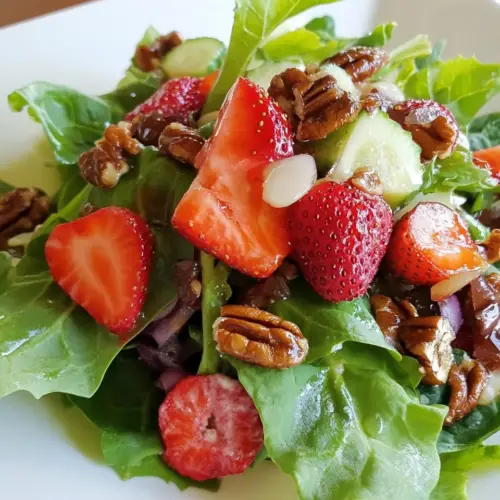
Spring Greens with Strawberries and Candied Pecans
Spring Greens with Strawberries and Candied Pecans is a bright, easy salad that mixes crisp romaine and tender spring mix with juicy strawberries, sweet mandarin oranges, tangy feta cheese, and crunchy candied pecans. This colorful, fresh recipe makes a fantastic easy weeknight dinner side or a showstopping picnic salad, perfect for spring when fruit is at its best.
Equipment
- Large salad bowl
- Knife
- Cutting Board
Ingredients
- 4 cups spring mix of leafy greens Provide a tender, varied base of textures and mild flavors that lets brighter ingredients shine; contributes volume and a leafy foundation for the salad. Offer subtle bitterness and freshness that balances sweet and tangy components while easily absorbing dressing.
- 2 cups romaine heart lettuce torn into bite-size pieces Add a crisp, crunchy element and a clean, slightly bitter backbone that contrasts softer greens; helps bulk the salad and provides satisfying bite. Tear into bite-size pieces to distribute crunchy texture evenly and enhance overall mouthfeel.
- 11 ounces mandarin oranges in natural juice can, drained Contribute bright, citrusy sweetness and juicy bursts that cut through richer elements; drained to prevent watering down the dressing while preserving natural syrupy flavor. Add small segments throughout the salad to deliver intermittent pops of acidity and aroma.
- 1 cup strawberries fresh, sliced Bring fresh, fruity sweetness and pleasant acidity that complements the citrus and balances salty cheese; slicing ensures even distribution and easy eating. Provide color contrast and a summery flavor that highlights the salad's seasonal character.
- 1 red onion small, sliced into thin rings Introduce sharp, pungent rings that add a savory bite and aromatic depth; thin slicing keeps the onion from overpowering other flavors. Layer sparingly to add complexity and a crisp contrast against softer greens and fruit.
- 1/2 cup feta cheese crumbles Offer creamy, salty crumbles that contribute tang and richness; scatter over the salad to create pockets of savory flavor. Counterbalance sweet fruits and candied nuts while enhancing the overall flavor complexity.
- 1/2 cup candied pecans for garnish, recipe for Candied Pecans Provide a crunchy, sweet garnish that adds caramelized flavor and texture contrast; used sparingly to top the salad and deliver a final sweet-savory note. Make separately using a candied pecan recipe to ensure proper glaze and crunch before sprinkling on the salad.
Instructions
- Combine all the above ingredients in a large salad bowl, drizzle with 1/2 cup White Balsamic Vinaigrette or other salad dressing, toss to combine.: Close your eyes for a second and notice the layered aromas as you bring the components together, the green scent of the spring mix mingling with bright citrus from the mandarin oranges and the sweet perfume of sliced strawberries . Mixing in a large bowl prevents bruising and allows you to see if the distribution is even. Use gentle, sweeping motions so the leaves do not tear, which preserves the delicate texture and appearance. A common mistake is using a bowl that is too small, which leads to overhandling and limp greens. If you see the stems bunching, separate them with your fingers to keep the salad airy. Pay attention to the visual contrast when everything is together, this tells you whether you need more of one ingredient to balance the colors and textures.
- drizzle with 1/2 cup White Balsamic Vinaigrette or other salad dressing: When you pour the dressing, do it slowly and from a slight height so it disperses across the leaves, creating an even coating rather than puddling. The scent of white balsamic will be bright and slightly sweet, complementing the strawberries and mandarin oranges . The reason an even drizzle matters is distribution, the dressing binds flavors and prevents one part of the salad from tasting dry. Avoid the common error of overdressing; you want a light sheen, not saturated leaves. If you notice dressing pooling at the base of the bowl, lift and gently fold to redistribute, and consider serving any extra dressing on the side.
- toss to combine: Listen for the soft rustle of the leaves as you toss, and watch the colors mingle; the deep red of the strawberries should kiss the pale orange of the mandarin oranges , and the white crumbles of feta cheese will stand out against the greens. Tossing is about creating harmony, not pulverizing the ingredients, so use a loose, lifting motion. Doing too vigorous a toss can bruise the spring mix and cause early wilting, which is a common pitfall. If the salad looks uneven after the first toss, give it one or two more gentle folds and then stop. The tactile feedback of the leaves will tell you when they are adequately dressed but still springy.
- garnish with candied pecans: Right before serving, scatter the candied pecans on top so their sugar glaze remains crisp. The contrast between warm bowl temperatures and cold nuts can affect crunch, so add them last. The pecans should sparkle and clink slightly as you serve, which is a good sensory indicator that they are fresh and not stale. A common oversight is mixing them in too early, which results in lost texture and a softened glaze. If you see any pecans losing their sheen, consider replacing them or adding a small handful at plating time to restore crunch.
- serve immediately: Serve the salad right away to enjoy the full spectrum of textures from crisp romaine to juicy mandarin oranges and crunchy candied pecans . The visual appeal is at its peak when colors are bright and the greens are unbruised. Serving later can lead to moisture release from the fruit, which will wilt the leaves and dilute the dressing, a mistake I have learned to avoid by timing assembly close to service. If you must prepare in advance, keep the dressing and candied pecans separate until plating to protect texture and flavor. When you plate, aim for slices of strawberries on top so each guest sees the salad’s vibrant components.
Notes
- Greens swap: If you donât have spring mix, use a combination of baby spinach and arugula for similar tenderness and peppery notes.
- Fruit alternatives: Replace mandarin oranges with fresh orange segments or use extra sliced strawberries when citrus is out of season.
- Cheese adjustment: If you prefer milder tang than feta cheese, try a small amount of goat cheese crumbles for creaminess with less salt.
- Nuts maintenance: Store candied pecans in an airtight container at room temperature for up to three days to retain crunch, and toast briefly before serving if they soften.
- Onion milder: To reduce the bite of red onion, soak the slices in iced water for ten minutes, then drain and pat dry to keep crispness but lose sharpness.
- Dressing balance: If using a different dressing, aim for one with a touch of sweetness and acidity to mirror the white balsamic profile and harmonize with the fruit.