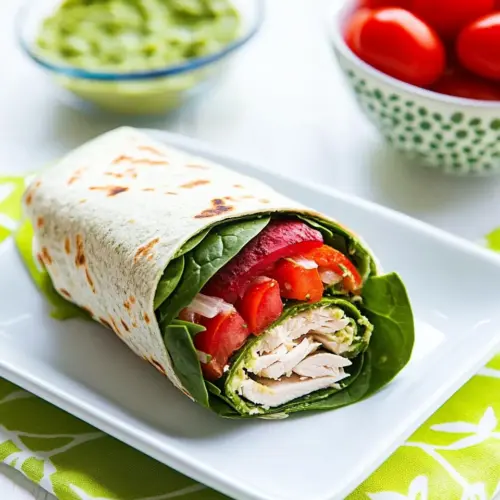
Spinach Lunch Wrap with Turkey and Hummus
Spinach Lunch Wrap with Turkey and Hummus is a creamy, crunchy, and easy portable lunch that comes together in minutes. The earthy spinach tortilla complements smooth hummus and lean sliced turkey for an easy weeknight lunch or on the go meal. Perfect for packed lunches and light afternoons, this wrap makes wholesome eating simple and satisfying.
Equipment
- Equipment
- 101 Packed Lunches
- Kids Lunch Box
- 1
- ice pack
Ingredients
- 1 spinach tortilla wrap Foldable and soft, provides the structural base to hold all fillings together and makes the wrap easy to eat on the go. Adds subtle spinach flavor and visual appeal while supplying whole-grain or vegetable nutrients depending on variety.
- 2 tablespoons hummus Creamy and spreadable, adds moisture and rich, savory flavor that helps bind fillings and prevents dryness. Contributes protein and healthy fats while enhancing overall mouthfeel and seasoning.
- 2 ounces sliced deli turkey Thinly sliced and tender, supplies savory, lean protein and a satisfying chew that makes the wrap more filling. Offers savory flavor and helps balance textures while contributing essential amino acids for a balanced meal.
- 1/4 cups shredded carrots Crisp and slightly sweet, adds color, crunch, and mild natural sweetness to contrast softer fillings. Provides fiber and vitamin A, enhancing nutrition and textural complexity in every bite.
- Fruit Fresh and naturally sweet, complements savory components and provides a refreshing contrast that rounds out the meal. Supplies vitamins, hydration, and a light, healthy dessert element to complete the lunch.
- Veggies Crunchy and nutrient-dense, supplies additional vitamins, minerals, and texture to balance the wrap. Encourages variety and adds freshness, making the meal more satisfying and healthful.
Instructions
- Spread the hummus over the spinach wrap and top it with the sliced turkey. Place the shredded carrots on top of the turkey, in the middle of the wrap. If you want to add lettuce or spinach place it on top of the carrots.: The hummus should be applied in an even layer across the center third of the tortilla, leaving a small border so the edges fold cleanly. As you spread, you will notice the smooth, slightly grainy texture of the hummus , and the aroma will be mildly nutty. This creamy layer is essential because it acts as an adhesive for the other fillings, helping everything stay in place when you roll. If you skip this step or spread too thin, the filling may shift. A common error is applying hummus too close to the edges which prevents a tight fold, so leave space around the rim.
- Fold the sides in and roll the tortilla tightly into a wrap before cutting it in half.: Scatter the shredded carrots evenly across the turkey so each bite includes some crispness. The carrots should sit dry and springy, offering a bright orange contrast. This step provides textural interest and a mild sweetness that balances the savory turkey . If the carrots are clumped or damp they can cause uneven rolling, so fluff them with your fingers and remove excess moisture. Avoid overloading this layer because too much bulk can lead to tearing when folding.
- Place the wrap in a lunch container and pack it with fruit and veggies or any other sides.: If you choose extra greens, lay them flat and overlapping rather than bunched. Fresh spinach or crisp leaves will add a cool, leafy bite and fresh scent. The leaves also create another barrier against moisture moving into the tortilla. A frequent mistake is adding wet greens straight from a wash; always pat them dry to prevent sogginess. Layering greens incorrectly can make the wrap lopsided, so distribute them evenly for balance.
- Refrigerate until ready to place inside a lunch bag, along with an ice pack if necessary.: Bring the left and right edges inward first, then begin rolling from the edge nearest you with firm, steady pressure so the wrap compacts. You will feel resistance as the fillings compress, and the roll should be taut without bursting. This technique matters because a tight roll keeps the interior from spilling and makes the wrap easier to eat. Rolling too loosely is the most common error, leading to unravelling; take the extra moment to tuck and press as you go.
- Place the wrap in a lunch container and pack it with fruit and veggies or any other sides: Set the wrap seam side down in the container to help it hold its shape, and arrange the fruit and veggies around it so they do not press into the tortilla. The container should give the wrap a snug fit, which prevents shifting during transport. A key why here is that a stable arrangement minimizes pressure that could cause the wrap to open. A common packing mistake is layering heavy items on top, which can flatten and leak into the wrap.
- Refrigerate until ready to place inside a lunch bag, along with an ice pack if necessary: Chill the container to keep the turkey and spreads fresh, especially if you will not eat the wrap for several hours. The cold will also firm the hummus slightly, which helps maintain structure. If you are packing for more than a few hours, an ice pack is essential. Leaving the wrap at room temperature too long is a safety risk and may lead to sogginess; make refrigeration a habit.
Notes
- Use a moderate hummus layer to provide creaminess and adhesion without saturating the tortilla; too much spread can lead to sogginess over time.
- Dry your vegetables after rinsing so the spinach tortilla keeps its structure and the filling stays crisp instead of watery.
- Roll tightly and tuck to ensure the wrap remains compact; a loose roll is prone to opening and spilling while you eat.
- Pack seam side down in your lunch container to help the wrap hold its shape during transport and prevent unraveling.
- Choose firm fruit for packing alongside the wrap so juices do not leak and compromise the tortilla during travel.