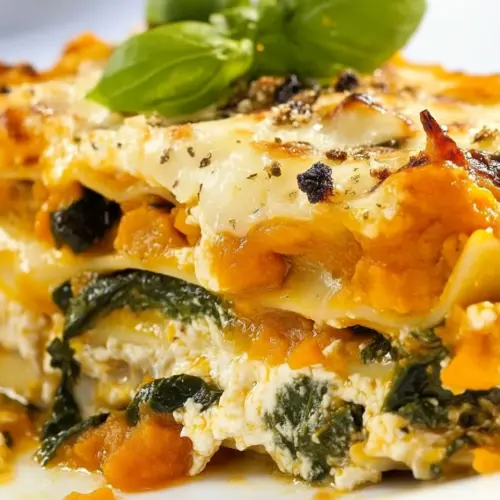
Spinach Butternut Squash Lasagna
Spinach Butternut Squash Lasagna is a creamy, seasonal bake with roasted butternut squash puree, tender whole grain lasagna pasta, and a savory ricotta and spinach filling. This easy weeknight dinner offers sweet roast flavors, herbaceous warmth, and a cheesy finish, perfect for fall gatherings or meal prep. Make it for a crowd pleasing, comforting vegetarian main that tastes even better the next day.
Equipment
- Oven
- Cookie Sheet
- Blender
- Bowl
- Crockpot
Ingredients
- 2 cups butternut squash peeled and chopped into 1 inch shapes Provide sweet, creamy body and tender texture when roasted; adds natural sugars and a rich autumnal flavor that complements savory cheeses and greens in the lasagna. Help bind moisture into the layers while offering a mild, slightly nutty mouthfeel when mashed or chunked. Roast or sauté until caramelized to enhance depth and a golden color in the finished dish.
- 1/2 yellow onion chopped Add mild sharpness and savory aromatics when softened; contributes a subtle sweetness and depth to the sauce base. Sweat until translucent to release natural sugars and meld with garlic and herbs for balanced layering. Provide texture contrast and build a savory backbone without overpowering delicate spinach and ricotta.
- 1 shallot minced Contribute delicate onion-like sweetness and a refined aromatic note when minced; elevates the overall flavor profile with a hint of sharpness and subtle floral tones. Cook briefly with onions and garlic to integrate its nuanced flavor into the squash mixture. Offer a gentle complexity that pairs well with sage and nutmeg.
- 4 garlic cloves peeled, chopped into 3-4 pieces Deliver pungent, aromatic intensity and savory depth when chopped; infuse the oil with a fragrant base that permeates the squash and spinach layers. Sauté until fragrant but not browned to avoid bitterness, enhancing overall umami and aroma. Provide balance to sweet squash and creamy cheeses while supporting herb flavors.
- 1 tablespoon extra virgin olive oil Carry flavors and aid in gentle sautéing while adding a fruity, peppery note; act as the cooking medium for softening vegetables and blooming dried herbs. Use sparingly to coat pan surfaces and transfer heat evenly without overwhelming the dish. Create a subtle richness and mouth-coating quality for the lasagna layers.
- 4 fresh sage leaves minced Offer warm, slightly peppery and aromatic herbaceous notes when minced; brighten the filling with a savory, slightly citrusy accent that pairs beautifully with roasted squash. Scatter into the sauté to release essential oils that complement butteriness of cheeses and toasted qualities of the pasta. Provide a distinctive autumnal herb character without needing large quantities.
- 1/2 teaspoon ground rosemary Impart a concentrated piney, resinous background flavor; blend into the seasoning to reinforce savory herbal complexity alongside thyme and sage. Use in moderation to avoid becoming overpowering, supporting the squash and spinach without masking delicate cheeses. Add to the sauté or ricotta mixture for consistent herb layering.
- 1/2 teaspoon ground thyme Contribute earthy, savory, and slightly floral undertones to the herb blend; anchor the seasoning profile and harmonize with sage and rosemary. Sprinkle into the squash or ricotta mixtures to provide low, steady herbal warmth throughout the bake. Enhance the overall aromatic bouquet with a comforting, familiar flavor.
- 1/2 teaspoon black pepper Introduce a sharp, warming edge that enhances overall spice balance and rounds savory flavors; integrate into the seasoning to season the ricotta or squash filling evenly. Grind or measure into the filling to provide subtle heat and accentuate the sweetness of roasted vegetables. Help cut richness of cheeses for a well-balanced bite.
- 1/2 teaspoon nutmeg Add warm, sweet, and aromatic baking-spice notes that complement squash and ricotta; provide a cozy accent that lifts the dish's flavor toward autumnal profiles. Use lightly to avoid dominating the savory elements, blending particularly well with sage and nuts. Offer a comforting background nuance that deepens overall flavor complexity.
- 4 cups fresh spinach 3 big handfuls Contribute bright, leafy freshness and a tender, slightly earthy green note when wilted; add volume and nutrients while balancing creamy cheeses and roasted squash. Sauté or quickly wilt to remove excess water and concentrate flavor, preventing sogginess in the lasagna layers. Provide color contrast and a light vegetal quality throughout the casserole.
- 15 ounces Ricotta part-skim Provide creamy texture, tangy richness, and gentle protein to bind and enrich the filling; contribute a smooth mouthfeel that complements both spinach and squash. Mix with seasonings and herbs to add moisture and a mild lactic acidity that balances sweetness. Help create cohesive layers and a luxurious, custard-like inner filling.
- 1/2 teaspoon black pepper Season with balanced savory depth and enhance umami when combined with other cheeses; sprinkle into or on top of layers to deliver a salty, nutty finish. Use sparingly to avoid overwhelming the fresh ricotta while creating a golden, flavorful crust when baked. Blend thoroughly for even distribution and flavorful bites.
- whole grain lasagna pasta uncooked (about 10 noodles) Form the structural layers and provide a chewy, comforting pasta element that holds fillings; cook or use uncooked according to package instructions to achieve proper texture. Create separation between the squash, spinach, and cheese layers while absorbing sauce and flavors from surrounding ingredients. Offer body and a familiar lasagna mouthfeel once baked.
- 1/4 cup parmesan and asiago cheese pre mixed and shredded Add sharp, savory, and nutty finishing flavor when sprinkled into or on top of the lasagna; contribute to browning and a crunchy, flavorful crust. Combine with other cheeses to elevate umami and provide a satisfying contrast to creamy ricotta and soft squash. Use as a final layer or mixed into fillings for enhanced depth.
Instructions
- Prep oven for 400 degrees.: The air should feel warm and full of anticipation when you open the oven, and you will notice the rack positioned in the center gives the most even roast. Preheating ensures the vegetables sear and caramelize quickly, locking in flavor instead of slowly drying out. A common mistake is not allowing the oven to fully reach temperature, which results in longer roast times and less browning. Check that the oven thermometer reads steady before inserting the tray.
- In a bowl, place the prepared (chopped or minced) butternut squash, onion, shallot, and onions. Add the sage leaves, rosemary, thyme, black pepper, and extra virgin olive oil. Stir all the ingredients. Place on a cookie sheet and roast for 1 hour (stir every 20 minutes).: You will smell a warming blend of herbs and softened onion almost immediately as the vegetables begin to roast. Stirring every 20 minutes encourages even browning on all sides, creating golden edges that turn jammy and sweet. The roasting concentrates juices and produces caramelized bits that become flavor bombs in the puree, which is why patience matters here. Avoid skipping the stirring, otherwise some pieces will char while others remain underdone, producing an uneven puree texture.
- After 1 hour, place the roasted mixture in a blender and mix until a puree.: When you transfer the hot vegetables to the blender, you will notice steam and a rich roasted aroma. Pureeing until silky creates a luscious body that will bind the layers together, giving the lasagna a custardy mouthfeel. Pulse first, then blend to smooth consistency, scraping down the sides to ensure no fibrous bits remain. A common error is overfilling the blender and risking spills or insufficient blending. Work in batches if needed and be careful with hot liquids to avoid splatters.
- Pour pureed butternut squash into a bowl and stir in the nutmeg.: The texture should be glossy and velvety, and stirring in nutmeg wakes up a warm spice note that complements the natural sweetness. Taste a spoonful to check seasoning and mouthfeel. Nutmeg should be subtle, rounding the puree rather than dominating it. Adding too much will push the flavor toward cloying, so add a little and taste, then adjust.
- In another bowl, mix the ricotta, spinach, and black pepper (easier to mix with your hands!).: The mixture will feel cool and creamy, and using your hands helps fold wilted Spinach into the Ricotta evenly without overworking it. You will sense little pockets of leaf and creamy pockets of cheese, which is ideal. Press gently to combine and ensure excess water is squeezed from the Spinach beforehand, because leftover moisture will thin the filling and can cause sogginess. Avoid mixing with violent motions that break the ricotta into a watery consistency.
- Spray your crockpot with olive oil.: The surface should glint lightly when you spray, creating a nonstick barrier so the lasagna releases more easily after the long, low cook. This small step helps the final presentation and reduces the chance of burned edges sticking. A common oversight is skipping this coat, which can lead to tearing when you serve the slices.
- Now you are all set to start layering your lasagna!: The air will be aromatic with squash and herbs as you begin. Lay out your components and prepare to build alternating layers so each bite has a balance of puree, pasta, and cheese. Keep a damp towel over unused noodles to prevent them from drying. Rushing the assembly can create uneven layers and pockets of dry pasta, so take your time aligning textures and quantities.
- 1/3 of the butternut squash puree: Spoon out a glossy, thick layer of the puree that should sit smoothly and evenly on the base, offering a sweet, velvety platform for the pasta. Spread carefully so the layer is even in thickness, ensuring consistent cooking and texture throughout the casserole. If the puree is too loose, the lasagna may become watery; if too thick, it may not meld with the pasta. Aim for a spreadable, pudding like consistency.
- Lasagna: Break up the noodles to make a layer: Break up the noodles to make a layer : The broken noodles should nestle into the puree and form a continuous sheet without large gaps. You will sometimes hear a soft crack as the noodles settle, and the contrast between firm pasta edges and the smooth puree sets up the structure. Avoid forcing whole sheets where they do not fit, as that can create uneven cooking and dense pockets. Break gently to preserve texture.
- Another 1/3 of the butternut squash puree: Add the next glossy band of puree, which will seep into the pasta slightly, marrying the layers. This is where you sense the melding of flavors as the puree begins to soak into the noodles and the herbs and roast notes become more integrated. If you see watery separation, check that the spinach was sufficiently drained earlier, because excess moisture will accumulate here and thin the layer.
- 1/2 of the spinach ricotta and a sprinkle shredded parmesan/asiago cheese: Dollop the creamy Ricotta and Spinach mix evenly, then scatter a light dusting of the shredded parmesan and asiago . The cheese will add a salty spark and begin to melt into little pockets during the long cook, offering textural highlights. Press gently so the filling hugs the pasta. Overfilling this layer can push the structure off balance and create slipping layers when serving.
- Another lasagna layer: Place the next broken noodles to cover the filling, aligning them for an even surface. You will notice the assembled stack becoming sturdier, and each noodle seals against the puree and cheese. Keeping edges tidy prevents overflow during cooking. Crowding too many noodles in a small area can make dense, undercooked sections.
- The rest of the butternut squash puree: Finish the final puree layer so the casserole has a smooth top that will set into a delicate skin while cooking low and slow. This final top layer preserves the squash flavor front and center while the cheese melts beneath. If the top seems too wet, a light sprinkle of the shredded cheese will create a better finished texture.
- The rest of the spinach ricotta and a sprinkle shredded parmesan/asiago cheese: Spread the remaining ricotta mixture and finish with the last of the shredded cheese so the top melts into golden, savory flecks. The aroma at this point should be warmly herbed and cheesy, promising comfort. Beware of packing too tightly, as steam needs space to circulate during the long cook.
- Cook lasagna for 3 hours on LOW.: The crockpot will hum softly while the layers slowly come together, and you will notice steam escaping and a gentle bubbling around the edges when it is nearly done. This long, low cook allows starches to soften fully, flavors to meld, and cheese to knit with the puree, producing a cohesive, sliceable lasagna. A frequent error is shortening this time, leaving firm pasta and unblended flavors. Check for gentle bubbling at the edges as a cue that the internal temperature is sufficient, but resist the urge to open repeatedly which lowers the internal heat.
Notes
- Make-ahead friendly If you want to save time, roast the vegetables and prepare the ricotta mixture a day ahead, then refrigerate both covered; this helps flavors to deepen and assembly becomes quicker. Assemble the lasagna the next day and cook as directed, or store assembled and cook from chilled, adding a little extra time if needed.
- Use fresh herbs If fresh sage is available, finely chop and add a little more for brighter aromatics, but if using fresh rosemary adjust down since it is stronger in flavor; always taste as you go for balance.
- Drain spinach well Press cooked or wilted Spinach in a clean towel or cheesecloth to remove excess moisture; failing to do so is the most common reason for a runny lasagna.
- Adjust for sweetness If your roasted squash is exceptionally sweet, balance the filling with slightly more black pepper or a touch more shredded parmesan to add savory counterpoint and prevent cloying notes.
- Texture control If the puree seems too thick to spread, stir in a tablespoon or two of water or olive oil to loosen it slightly; conversely, if it is too thin, roast a bit longer to reduce liquid before pureeing.
- Cheese finish For a more pronounced crust, sprinkle an additional tablespoon of the shredded parmesan and asiago on top in the last thirty minutes of cooking, if your slow cooker has a high setting or you transfer briefly to an oven broil to brown carefully.
- Serving leftovers Store leftovers in an airtight container in the refrigerator for up to four days; reheat gently in the oven to maintain texture rather than using the microwave which can make it rubbery.