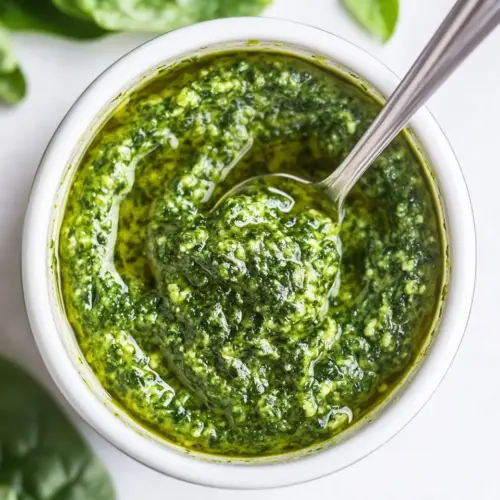
Spinach Basil Pesto
Spinach Basil Pesto is a bright, creamy, and herb forward sauce that blends fresh basil and spinach with nuts, garlic, and olive oil. Perfect as an easy weeknight dinner topper for pasta or a vibrant spread for sandwiches, this quick and versatile pesto adds fresh flavor and silky texture to many dishes. Make it to lift simple meals into something memorable.
Equipment
- Food Processor
- High Speed Blender
Ingredients
- 1 cup fresh basil Add bright, aromatic flavor and act as the herbaceous base that defines the pesto's signature taste; chop or pack loosely before blending to release oils and aroma.
- 1 1/2 cups spinach Provide mild, leafy bulk and a vibrant green color while mellowing basil's intensity; wash thoroughly and squeeze out excess water to prevent a watery pesto.
- 1/2 cup pine nuts see note Offer rich, buttery texture and nutty depth that helps emulsify the sauce when blended; toast lightly for extra flavor and pulse with the greens for even distribution.
- 2 garlic cloves Impart pungent, savory sharpness and aromatic bite that lifts the pesto; mince or crush to ensure it disperses evenly and does not dominate the mixture.
- 1/4 cup extra-virgin olive oil more as needed Bind ingredients while contributing fruity, peppery richness and smooth mouthfeel; drizzle slowly into the blend to create a cohesive, silky emulsion.
- 1 -2 tablespoons warm water as needed for dryness Adjust consistency by thinning the pesto and preventing clumping when the mixture is too dry; add gradually until the desired spreadable texture is reached.
- Big pinch of salt and pepper Season and balance flavors by enhancing savory notes and taming bitterness; sprinkle and taste, increasing gradually to avoid oversalting.
- Red pepper flakes to taste Introduce a touch of heat and complexity that livens the sauce without overpowering basil; add sparingly and taste to reach a pleasant warmth.
- 2 tablespoons parmesan cheese optional Add savory umami and creamy saltiness that deepens the pesto's flavor profile when included; grate finely and fold in at the end for best texture.
- A squeeze of fresh lemon juice for bright flavor! Brighten and lift flavors with acidic freshness that cuts through oil and richness; squeeze in small amounts and adjust to taste for a lively finish.
Instructions
- Add all of the ingredients, except the olive oil and warm water, to a food processor or a high-speed blender. Pulse until you have a smooth consistency. Note: You can absolutely use either a food processor or a high-speed blender here!: You can absolutely use either a food processor or a high-speed blender here! : Close your eyes for a moment and notice the fresh scent of chopped basil and the gentle green sweetness of spinach being agitated, it should smell herbaceous and slightly garlicky as the blades chop. The pulsing action creates a coarse initial texture that gradually smooths, and this rhythm prevents over heating the herbs which can turn their flavor bitter. If you hear a motor strain, pause and scrape down the sides to keep everything moving evenly. A common mistake is running the machine continuously which can produce a warm, flattened flavor and a pasty texture, so pulse in short bursts and check the color and scent often. Aim for a texture that is mostly smooth with tiny flecks visible, which tells you the pesto will cling beautifully to pasta or toast.
- With the motor running, drizzle in the olive oil. If needed you can add in a tablespoon of hot water as needed to make a smooth pesto.: As you slowly stream in the extra-virgin olive oil , pay attention to the way the mixture becomes satin like and glossy, this is the moment the emulsion forms and the pesto transforms from chopped herbs into a cohesive sauce. The steady drizzle helps the oil suspend small herb particles rather than separating, giving a silky mouthfeel. If the blend seems too thick or the blades struggle, a tablespoon of warm water will ease movement and preserve vibrancy without cooling the mixture too much. Avoid pouring the oil in too quickly or all at once, because that can cause the oil to pool and make the texture greasy rather than emulsified. Your goal is a spreadable, spoonable consistency that coats ingredients evenly.
- Taste and adjust seasoning.: Right after you blend, bring the bowl to your nose and palate and sample for balance, you should detect herb brightness, a touch of garlic warmth, and enough salt to lift flavors. Small tweaks matter now, a pinch more salt can make herbs pop, extra red pepper flakes add a pleasant linger of heat, and another squeeze of lemon will brighten the entire profile. If the pesto tastes flat, check for too little acid or salt rather than adding more oil. A frequent misstep is over seasoning early, so adjust incrementally and taste between additions to reach the ideal harmony.
- Use immediately or store for up to 1 week in a tightly sealed container.: The first bite right after making it will be vivid and aromatic, perfect for tossing with warm pasta where the heat releases fragrant oils, or spooning over grilled vegetables. When storing, press a thin layer of oil on the surface and seal tightly to minimize oxidation and color loss; you will notice the pesto remains brightest in the first two days and mellows over the week. A common storage error is leaving air pockets in the container which accelerates browning, so press the surface flat and keep chilled. If the pesto thickens in the fridge, let it sit at room temperature and stir in a little warm water or oil to restore silkiness before serving.
Notes
- Swap the nuts Try slivered almonds or cashews in place of pine nuts for a different richness and cost savings, they toast well and blend into a creamy texture.
- Make it nut free If you cannot have nuts, increase parmesan cheese slightly or use sunflower seeds for body, they create a similar buttery mouthfeel.
- Omit cheese For a dairy free version, skip the parmesan cheese and add a touch more lemon for brightness and nutritional yeast for umami if desired.
- Turn it into a marinade Thin the pesto with more extra-virgin olive oil and use it to marinate vegetables or tofu for quick grilling or roasting.
- Boost the garlic Increase to three cloves if you prefer a more pungent, savory profile, but allow the pesto to rest briefly to mellow the raw edges.