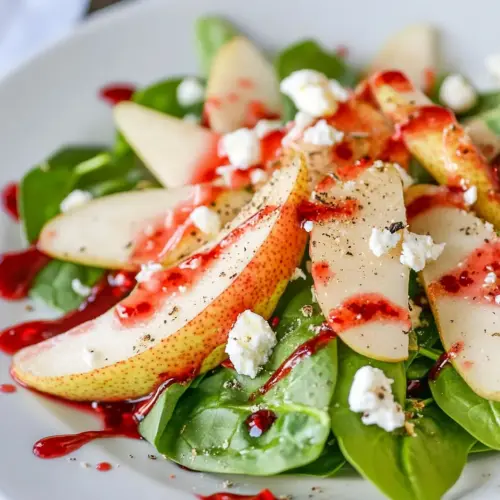
Spinach and Pear Salad with Raspberry Vinaigrette
Spinach and Pear Salad with Raspberry Vinaigrette combines tender baby spinach, juicy pear, crunchy walnuts, and creamy blue cheese with a bright raspberry white balsamic dressing. This fresh, easy salad brings sweet and tangy contrasts and is perfect as a light lunch or easy weeknight dinner accompaniment, compelling you to make it for spring gatherings and casual meals.
Equipment
- Blender
- Large Bowl
- Skillet
Ingredients
- 6 cups baby spinach Provide a crisp, tender bed of leafy greens that carries flavors and adds volume; offers a mild, slightly sweet backdrop to stronger ingredients and contributes vitamin-rich nutrients and color contrast to the salad.
- 2 red pears sliced Add a sweet, juicy fruit element sliced for easy forkfuls; supplies a pleasant texture and natural sugars that balance savory and tangy components while enhancing presentation with vibrant red skin.
- 1 red onion sliced thin Lend a sharp, pungent bite when sliced thin to distribute flavor without overpowering; offers crunchy texture and aromatic layers that cut through creamy or sweet elements in the dish.
- 1 cup walnuts chopped Contribute rich, toasty crunch and earthy nuttiness when chopped; provide healthy fats and a satisfying textural contrast while complementing both fruit and cheese.
- 1/2 cup blue cheese crumbles low-fat Offer creamy, tangy crumbles with salty depth to create a savory counterpoint; low-fat version reduces richness while still adding a mellow, distinctive flavor and creamy mouthfeel.
- 1/2 cup white balsamic vinegar Provide bright acidity and subtle sweetness as a light, fermented vinegar base; white balsamic supplies depth and sharpness that helps balance oil and sweet components in the vinaigrette.
- 2 tablespoons honey Bring concentrated sweetness and a smooth viscosity to help bind and balance the dressing; honey rounds out acidity and enhances fruit flavors while adding a glossy finish.
- 1/4 cup raspberries fresh Add bright, fresh berry flavor and natural tartness when crushed or blended into the vinaigrette; fresh raspberries give color, aroma, and a fruity lift that ties the salad elements together.
- 3 tablespoons olive oil Emulsify the dressing while contributing fruity, savory richness; olive oil smooths the vinaigrette, helps coat ingredients evenly, and adds healthy monounsaturated fats.
Instructions
- In large bowl, lightly toss all ingredients. Divide into serving bowls. Drizzle with raspberry vinaigrette and serve.: The moment you toss, you'll notice the leaves glisten and the pears begin to pick up the dressing sheen, a visual cue that everything is marrying. Listen for the soft rustle of the leaves as they fold together and breathe in the mingled scents of pear and onion . This step matters because gentle tossing prevents bruising and helps the dressing coat without saturating. If you overwork the salad it will weep and become limp, so aim for a few careful turns rather than vigorous mixing. Troubleshoot by stopping once the ingredients look evenly coated, not soaked.
- Combine all ingredients except oil in a blender, puree until smooth. On low speed, gradually add oil. Drizzle desired amount over salad. Serve and enjoy!: As you spoon into bowls, notice how the textures separate into pockets of crunch and creaminess, which gives each serving visual appeal. I like to distribute the walnuts and blue cheese so every plate has a bit of each element. This step matters for presentation and eating balance, because concentrated clusters can overpower a bite. Common mistakes include piling everything in one spot, so spread ingredients evenly across bowls for consistent flavor.
- Drizzle with raspberry vinaigrette and serve: When you drizzle, watch the light glint of the vinaigrette as it lands on the leaves, an immediate sign of freshness. The aroma of raspberries lifts and the honey adds a warm sweetness on the nose. Drizzling last preserves texture, so the salad retains its crunch until it reaches the table. Avoid pouring too much at once, which will make the leaves soggy; apply a little, toss gently if needed, and add more to taste.
- Combine all ingredients except oil in a blender, puree until smooth: While pureeing, you will see the raspberries break down into a vivid purplish red, and their bright perfume will fill the kitchen. The white balsamic vinegar and honey should blend to create a balanced base, and pureeing ensures tiny berry bits distribute evenly. This technique matters because a smooth base helps form a cohesive vinaigrette rather than a grainy salsa like finish. One error to avoid is overheating the blender motor by running it too long at high speed; pulse until the mixture is just smooth.
- On low speed, gradually add oil: As you pour the olive oil in a thin stream while the blender runs low, you will see the dressing thicken slightly and take on a glossy sheen. The gradual addition allows emulsification, which gives the dressing a pleasant mouthfeel that clings to the leaves. The why here is emulsification creates a stable dressing so flavors stay married and the salad does not separate quickly. If you add oil too fast, the dressing may not emulsify and will separate, so proceed slowly and steady.
- Drizzle desired amount over salad: Taste the vinaigrette first, and then drizzle a little at a time while observing how the leaves respond visually. The optimal amount lightly coats without puddling, leaving the texture intact and the flavors lively. This approach matters because the right balance preserves the crispness of the spinach and the brightness of the pear . A pitfall is assuming more dressing equals more flavor, which can overwhelm the salad; adjust gradually and save extra dressing on the side for guests who want more.
- Serve and enjoy: Plate your salad and note how the colors pop against the bowl, an invitation to dig in. The first bite should offer a mix of tender leaf, juicy fruit, crunchy nut, and creamy crumble, all brightened by the raspberry tang. This step is about the sensory payoff, and it matters because the culmination is what your guests will remember. Avoid letting the salad sit too long after dressing, as the leaves will lose their snap and the pears may soften excessively.
Notes
- Choose fresh ingredients, because top quality spinach and ripe pears are the backbone of this salad and will elevate the overall result.
- Adjust sweetness, taste the vinaigrette before adding to the salad and increase or decrease the honey to suit the natural tartness of the raspberries.
- Keep textures distinct, add the walnuts and blue cheese just before serving to maintain crunch and creamy contrast.
- Make dressing ahead, the vinaigrette can be refrigerated up to two days, just whisk or shake before using to recombine.
- Thinly slice the onion, so the red onion mellows quickly and disperses in small, pleasant bursts rather than large pungent bites.