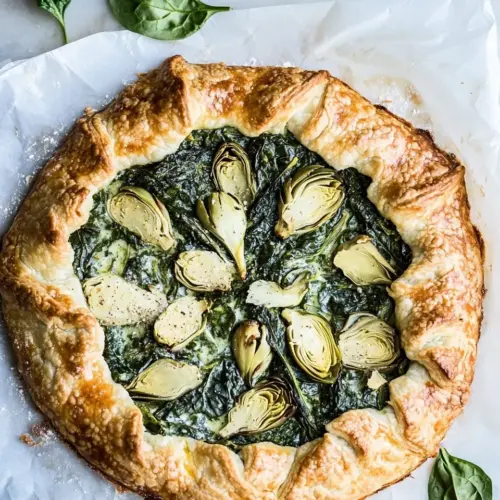
Spinach and Artichoke Galette
Spinach and Artichoke Galette is a rustic, creamy and crispy pastry that combines tender spinach, tangy artichoke hearts, melty mozzarella, and sharp blue cheese in a flaky crust, perfect for an easy weeknight dinner or a springtime gathering. The mix of textures and bright lemon and basil notes makes every slice irresistible, so bake one for a fuss free special meal.
Equipment
- Food Processor
- Large Skillet
- Baking Sheet
- Parchment Paper
Ingredients
- 3/4 cup all purpose flour Combine to form the base of the pastry, providing structure and tender crumb while absorbing liquids for a workable dough.
- 1/2 cup cornmeal Add to introduce a slightly gritty texture and subtle corn flavor that helps make the crust crisp and rustic.
- 1/4 cup whole wheat flour Incorporate to boost whole-grain flavor and add slight nuttiness and additional structure to the dough for heartiness.
- 1/2 teaspoons salt Season to enhance overall flavor balance in the crust and keep the pastry from tasting flat.
- 1 teaspoon black pepper Season to contribute a warm bite and depth to both the crust and the filling when combined with other spices.
- 10 tablespoons cold unsalted butter cut into 1/2 inch cubes, 1 stick + 2 Tbs Cut into small cubes and chill to create flaky layers as the butter melts during baking, adding richness and tender texture.
- 1 egg yolk Enrich to bind dough particles and add richness and color, helping create a supple, cohesive pastry.
- ice water Add sparingly to hydrate the dough, allowing for proper consistency while keeping it cold to ensure flakiness.
- 1 egg beaten Brush to create a glossy, golden finish and help toppings adhere, enhancing appearance and browning.
- 1/4 cup olive oil Drizzle to provide a fruity, savory fat that flavors both the filling and the crust, aiding sautéing and moistness.
- 3 cloves large garlic minced Mince finely to infuse aromatic savory notes into the filling and brighten the overall taste with pungent garlic character.
- 10 ounces fresh spinach or frozen thawed and drained Cook or thaw and drain to supply tender leafy body and vibrant green flavor, adding nutrition and bulk to the filling.
- 1 tablespoon fresh lemon juice Squeeze to brighten and balance richness in the filling with a touch of fresh acidity and lift flavors.
- 2 cups marinated artichoke hearts drained, about two 7 ounce jars Drain and chop to contribute tangy, tender bites that add texture and a savory, preserved-artichoke flavor to the galette.
- 1 teaspoon dried basil Sprinkle to add a concentrated herbal Mediterranean flavor that complements the artichokes and cheeses in the filling.
- 1 teaspoon freshly ground black pepper Grind fresh to intensify peppery heat and aromatic complexity, enhancing overall seasoning in the filling.
- 1/2 teaspoons salt Season to control saltiness and enhance the other flavors in the crust and filling without overwhelming them.
- 4 ounces fresh mozzarella sliced thin or grated, about 1 cup Layer or sprinkle to add creamy, mild milky texture that melts into the filling, providing background richness.
- 2 -4 ounces blue cheese broken into chunks Crumble to contribute sharp, tangy, and pungent pockets of flavor that contrast with milder cheeses and greens.
- 2 tablespoons pine nuts Toast lightly to bring nutty crunch and warm aroma as a finishing textural contrast sprinkled on the galette.
- 1 egg beaten Brush again to ensure an even golden sheen across the baked pastry and help hold garnishes in place.
- 2 tablespoons fresh basil for garnish Garnish chopped to add fresh herbal fragrance and a bright green visual accent that complements the savory filling.
Instructions
- In the bowl of a food processor combine the flour, cornmeal, whole wheat flour, salt and pepper. Pulse once or twice to combine. Add the diced butter and pulse until you end up with small pieces of butter, similar to the size of rice.: Listen for the processor's pulses as the dry ingredients turn into a homogenous mix, then watch the butter break into pea and rice sized bits that promise flakiness when baked. The cold butter should remain in small, distinct pieces rather than melting into the dough; those bits will steam in the oven, creating lift and texture. You should smell a faint nutty scent from the cornmeal, and the mixture will look sandy. A common mistake is overprocessing so the butter fully incorporates; avoid this by pulsing briefly and checking frequently, because overworked dough will lose its flaky quality.
- In a small bowl, whisk together the one egg yolk and 3 tablespoons ice cold water. Add it to the dough and pulse until the dough comes together. If needed add 1-2 tablespoons more ice water. Turn the dough onto a floured work surface, knead a couple of times and then form the dough into a flat disk. Wrap in plastic wrap and refrigerate for at least 30 minutes.: At this stage you will feel the dough begin to collect into clumps as the chilled liquid binds the crumbs. The tactile feedback is important, the dough should hold together when squeezed but not be sticky. Forming a flat disk chills faster and makes rolling easier later. The fridge time firms up the butter again, which protects the delicate pockets that give a tender crust. A common error is adding too much water; add sparingly, because excess moisture yields a tough, rather than flaky, crust.
- Meanwhile, heat a large skillet over medium heat, add the olive oil and the garlic. Cook for one to two minutes, until the garlic is fragrant (PLEASE - watch closely!! Don't burn the garlic.). Add the spinach and cook until just wilted. Remove and stir in the artichokes, basil, lemon juice, pepper and salt. Set aside.: When the olive oil warms, the minced garlic will sizzle and give off an aromatic perfume, signaling it is time to add the spinach . The leaves will rapidly collapse, releasing moisture and turning a glossy dark green; listen for a gentle sizzle, that means the water is evaporating. Stirring in the drained artichoke hearts and lemon juice brightens the mix, and the aroma becomes a layered, savory citrus-herb scent. Avoid browning the garlic , as burnt garlic tastes bitter and will dominate the filling.
- Now grab your dough from the fridge. Flour your work surface and roll the dough to about 1/8-inch thick. Transfer to a baking sheet lined with parchment paper. Leaving a 3-inch border around the edges, top the dough with the mozzarella cheese, then the spinach + artichokes mix, then scatter on the blue cheese crumbles and finish off with a sprinkle of pine nuts.: As you roll, you will feel the chilled dough relax; rolling to an even 1/8-inch thickness creates a crisp base and a tender rim. The parchment helps you transfer the galette to the oven without stretching the dough. Layering the mozzarella first gives a melty barrier between crust and filling, which helps prevent a soggy bottom. The visual is important here, the green filling with white melted cheese and blue flecks should look vibrant and inviting. A typical pitfall is overfilling; leave that 3-inch margin so you can fold the edge for a secure crust.
- Fold the edge of the dough over the filling. Brush the crust with the beaten egg. Place the galette in the fridge for 15 minutes or until ready to bake.: Folding the edges creates a rustic, pleated rim that will brown and crisp in the oven. Brushing the crust with beaten egg gives a glossy, golden finish and signals when the galette is done by its color. Chilling again solidifies the butter and prevents the crust from loosening and spreading during baking. If you skip the chill, the butter can soften and cause a less flaky outcome, so be patient and keep it cold.
- Preheat the oven to 375 degrees F. Bake the galette for 45-55 minutes or until the crust is golden. Allow to cool 5 minutes and then slice and serve with fresh basil and a drizzle of balsamic reduction if desired. The crust will be crumbly so cut small slices for easier serving.: The oven heat will gradually brown the crust and melt the cheeses into bubbling pockets; you should hear a faint crackle as the crust sets and smell a toasty, buttery aroma. The internal filling will be hot and molten, so waiting five minutes before slicing allows it to settle for cleaner slices. The final color is a dependable cue, the crust should be deep golden and the pine nuts slightly toasted on top. A common mistake is slicing too soon, which results in a runny filling and messy portions, so give it that short rest before cutting.
Notes
- Cheese swap: Use a mix of mozzarella and a milder sheep or goat cheese if you want a tangier profile without the assertive bite of blue cheese.
- Nuts and crunch: Substitute toasted walnuts or chopped almonds for the pine nuts for a deeper toasted note and firmer crunch.
- Greens mix: Combine spinach with tender arugula or baby kale for a peppery or earthy lift, but cook briefly to avoid excess moisture.
- Herb boost: Fold chopped fresh basil or parsley into the filling right before assembling to intensify freshness and color.
- Crust options: Replace part of the all purpose flour with pastry flour for an even more delicate, melt in your mouth crust.
- Make ahead: Prepare the filling a day ahead and keep chilled, then assemble and bake on the day you plan to serve for effortless hosting.