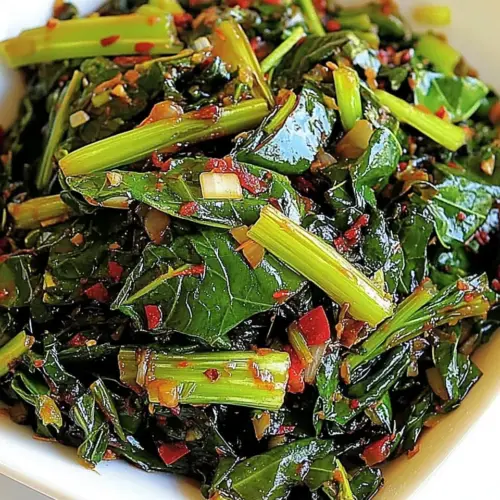
Spicy Stir Fried Swiss Chard
Spicy Stir Fried Swiss Chard is a quick, savory side that combines tender swiss chard, fragrant garlic, and a bold, slightly sweet sauce for an easy weeknight dinner. The stems stay crisp while the leaves wilt into glossy ribbons, creating a delightful texture contrast and bright flavor that pairs with rice or noodles, making it a go to for busy nights.
Equipment
- Wok
- Large Frying Pan
- Knife
- Cutting Board
- Salad spinner
Ingredients
- 1 lb . swiss chard, stems and leaves chopped separately Provide a sturdy leafy base with mild, slightly bitter flavor; stems and leaves chopped separately allow even cooking as stems take longer to tenderize while leaves wilt quickly. Add nutritional value with vitamins A, C, and K plus fiber, contributing bulk and a pleasant texture contrast between tender leaves and crisp stems. Pair well with bold seasonings and quick stir-fry technique to absorb aromatics and sauces without becoming soggy.
- 1 T peanut oil (see notes) Offer a high smoke point and subtle nutty richness that helps transfer heat quickly for effective stir-frying while preventing sticking. Use sparingly to coat the pan and bloom aromatics, enhancing flavor without overwhelming the dish or making it greasy. Complement the greens by carrying and marrying the garlic and any seasonings into the chard for balanced flavor distribution.
- 1 T minced garlic Provide pungent, aromatic intensity that flavors the oil and infuses the entire dish with savory depth when lightly cooked. Mince finely to release flavor compounds quickly so they meld into the stir-fry without large raw pieces dominating texture. Add bright, garlicky notes that balance the chard’s bitterness and elevate the overall savory profile.
Instructions
- Cut stems away from swiss chard leaves, folding over the leaf to cut some of the larger part of the stem (ribs) that run through the leaves.: You will notice a firm, white or pale green rib running through each leaf, and removing it cleanly helps the leaves and stems cook at their ideal rates, preventing some pieces from overcooking while others remain tough. You should hear a light tearing sound as you separate the parts, and the stems will feel firmer and denser than the delicate leaves. One common mistake is leaving long ribs attached which can create chewy, undercooked bites later. Take your time here, working in small bundles so your knife glides smoothly, and keep fingers curled to protect them.
- Cut stems/ribs into short pieces.: The chopped stems should be about a half inch to one inch long so they become tender quickly while retaining a pleasant snap. Visually they'll look like short, bright green sticks. When tossed in the hot oil they will begin to soften but still give resistance under your fork. Avoid cutting stems too large which prolongs cooking and can leave them fibrous. If you have uneven pieces, the smaller ones will brown faster, so try to be consistent for even texture and timing.
- Pile the leaves up in a stack and slice about 1 inch thick; then turn the cutting board and cut the slices the other way, repeating until the chard is all chopped.: This cross cutting creates short ribbons that cook uniformly and are easy to pick up with a fork. The leaves will collapse slightly as you stack them, and you will see clean, even ribbons that wilt quickly in the pan. A common error is shredding them too finely, which can lead to a mushy finish; keep them chunky enough to hold some structure after wilting.
- Wash in a salad spinner if needed and spin dry.: Washing removes grit trapped in the leaves and ribs, and spinning dry prevents water from cooling the pan and steaming the greens instead of searing them. You want the leaves mostly dry so they sizzle on contact rather than steam. If you skip drying, the pan will hiss and release a lot of water which dilutes flavor and prevents browning, so take the extra minute to dry thoroughly.
- Mince enough garlic to make 1 tablespoon.: Fresh garlic should be finely minced so it disperses throughout the dish, releasing its fragrance quickly when added to hot oil. When minced properly the garlic will bloom and smell sweet and pungent without burning. If garlic is added in large chunks it may not flavor evenly, or it can char, turning bitter. Keep an eye on it during the final cooking stage to avoid scorching.
- Mix together the soy sauce or Gluten-Free Soy Sauce (affiliate link), Hoisin sauce or Gluten-Free Hoisin Sauce (affiliate link), Chili Garlic Sauce (affiliate link), and Golden Monkfruit Sweetener (affiliate link) or sweetener of your choice to make the sauce.: Combining the sauce components ahead of time ensures the flavors marry quickly when added, and you can taste and tweak before it hits the pan. You should see a glossy, slightly thickened mix that smells savory with a hint of sweetness and chili heat. A misstep is adding the sauce directly from different containers to the hot pan, which can lead to uneven distribution; pre-mix it for balance.
- Turn the heat under the wok (or large frying pan) to medium high, add the oil and heat until the oil is slightly shimmering.: The oil should be hot enough that a drop of water sizzles and evaporates on contact, producing a shimmering surface. This temperature creates immediate searing and prevents the greens from stewing. If the oil smokes heavily you are too hot, which can impart a bitter note. Conversely, too cool and the food will absorb oil and become greasy instead of crisp tender.
- Add the chard stems and stir-fry about 2 minutes.: When the stems hit the hot oil you'll hear a bright sizzle and see them take on a slight gloss, indicating they are sealing and beginning to tenderize. Stir often so they brown evenly and do not burn on one side. A common mistake is overloading the pan which causes steaming rather than stir frying, so cook in a single layer and give each piece room to sear.
- Add the leaves and minced garlic and stir-fry for about 3 minutes more, turning leaves over several times until all the chard has wilted.: As the leaves hit the pan they will immediately collapse and release moisture, softening into ribbons. The garlic will fragrance the oil, releasing sweet savory notes. You should see bright green tones dull slightly as the leaves tenderize. Avoid leaving the leaves untouched for long periods; constant movement ensures even cooking and prevents pockets of overcooked, slimy greens.
- Add the sauce and stir to combine it with the chard, then cook 2-3 minutes more, or until the chard is tender and all coated with sauce.: When the sauce hits the hot pan it will steam briefly then cling to the leaves, creating a glossy coating. Stir to distribute the sauce so every piece is flavored, and cook until the liquid reduces slightly and the leaves are tender but still have body. A usual pitfall is adding too much sauce early, leaving the dish soupy; start with the measured amount and adjust after tasting.
- Serve hot.: Serve this dish right away while the aroma is fresh, the leaves tender, and the stems slightly crisp. The heat enhances the flavors and texture, so cooling will soften the stems further and dull the bright notes. If you let it sit too long you lose that lively mouthfeel, so plate promptly and enjoy.
Notes
- Adjust the heat by varying the amount of Chili Garlic Sauce, starting with a small spoonful and tasting before adding more so you control the spice level precisely.
- Swap the sweetener if needed, using a teaspoon of your preferred sweetener in place of the Golden Monkfruit Sweetener to maintain balance between salty and sweet.
- Toast the stems slightly longer for added caramelization and nutty depth, but watch carefully so they do not scorch and become bitter.
- Double the sauce when serving over grains, ensuring every forkful of rice or noodles gets saucy flavor, and taste to keep the salt level comfortable.
- Use different oils if peanut oil is not available, choosing another high smoke point oil while noting the subtle flavor differences this creates in the final dish.