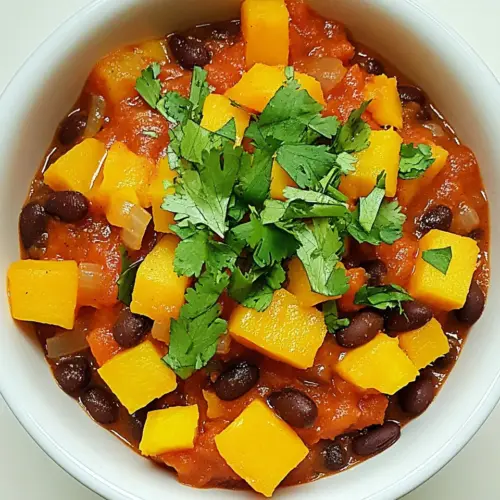
Spicy Sriracha Black Bean and Butternut Squash Chili
Spicy Sriracha Black Bean and Butternut Squash Chili is a creamy, smoky, easy weeknight dinner full of texture and warming heat. Tender butternut squash and hearty black beans simmer in a tomato rich base with bold spices and a tangy hit of sriracha. This comforting bowl is perfect for fall evenings and makes a persuasive case for adding it to your rotation.
Equipment
- Heavy bottomed large pot
- Wooden Spoon
Ingredients
- 3 tablespoons olive oil Heat-focused oil that provides a flavorful cooking medium and helps sauté aromatics evenly without burning.
- 1 large red onion, chopped Sweet and savory vegetable that adds a mild oniony depth and soft texture when sautéed until translucent.
- 1 large white onion, chopped Pungent and slightly sharper vegetable that contributes layered onion flavor and balances sweetness in the base.
- 8 garlic cloves, minced Aromatic bulbs crushed to release pungent oils that build savory complexity and enhance overall chili aroma.
- 2 1/2 cups butternut squash, peeled and cut into 1/2-inch pieces Tender winter squash cut into uniform pieces to add natural sweetness, body, and a creamy bite as it cooks.
- 2 tablespoons chili powder Earthy spice blend used to introduce warm heat, smoky notes, and classic chili flavor to the stew.
- 2 1/2 teaspoons ground cumin Warm, slightly bitter spice that adds citrusy earth and depth to complement the chili powder and beans.
- 2 tablespoons sriracha hot sauce Fiery condiment that brings vinegary heat, umami, and a bright spicy kick to elevate the chili's spiciness.
- 2 cups kale, thick ribs removed and chopped Hearty leafy green with stems removed that adds color, nutrition, and a slightly bitter, chewy texture.
- 3 15-ounce cans black beans, rinsed, drained Protein-rich legumes preserved in liquid that contribute creaminess, substance, and a satisfying bite to the chili.
- 2 1/2 cups vegetable broth Savory liquid that provides a flavorful cooking base, helps deglaze the pan, and controls the stew's consistency.
- 1 1/2 cups crushed tomatoes Tomato product broken down into small pieces that imparts body, acidity, and rich tomato flavor to the sauce.
- 1 cup diced tomatoes Chunky tomato pieces that add freshness, texture contrast, and bursts of bright tomato flavor throughout.
- 2 teaspoons salt Flavor enhancer that seasons the dish, balances acidity and sweetness, and helps bring out other ingredient flavors.
- Avocado slices, for serving (optional) Creamy fruit slices served optional to add a cool, buttery contrast and mellow spicy flavors when garnished.
- Sour cream, for serving (optional) Tangy dairy topping offered optional to add richness, cool heat contrast, and a smooth finish to each serving.
Instructions
- Heat oil in heavy bottomed large pot over medium heat. Add onions and sauté until tender and golden, about 10 minutes. Add garlic and cook another minute, or until garlic is fragrant. Add squash; stir; and cook for 4 minutes, stirring occasionally. Stir in chili powder and cumin; cook for 2 minutes. Stir in sriracha, kale, beans, broth, tomatoes, and salt; increase heat to medium-high and bring to boil. Reduce heat and simmer, uncovered, for 45 minutes. Season with additional salt and pepper as needed. Ladle chili into bowls, top with avocado and sour cream (if using), and serve.: A warm, well oiled pan should shimmer slightly and emit a faint aroma when it is ready, signaling it will encourage even sautéing. The heavy bottom helps distribute heat and prevents hot spots that can burn the onion . You want a gentle sizzle when you add aromatics, not a violent pop. A common misstep is turning the heat too high, which causes the oil to smoke and the flavors to char instead of sweeten.
- Add onions and sauté until tender and golden about 10 minutes: During this time you will smell a transformation as the natural sugars in the onion caramelize and the mixture turns glossy and slightly brown at the edges. Stir every couple of minutes so no pieces cling and burn, scraping up the fond for depth. Rushing this step leaves raw onion flavor and a sharp bite instead of the gentle sweetness we want.
- Add garlic and cook another minute or until garlic is fragrant: The scent of softened garlic should bloom quickly, a warm, savory perfume that fills the kitchen. Since garlic cooks fast, keep it moving in the pan and watch closely; it benefits from gentle toasting but turns bitter if blackened. If it starts to brown too rapidly, pull the pot off heat briefly to cool down.
- Add squash stir and cook for 4 minutes stirring occasionally: As you incorporate the butternut squash , you will hear a softer sizzle and see the pieces take on a faint sheen. This pre cooking jumpstarts the breakdown of starch so the squash becomes tender during the simmer. Stir occasionally so pieces brown lightly on different sides. Mistakes include adding too much at once which can steam rather than brown the squash.
- Stir in chili powder and cumin cook for 2 minutes: When the spices hit the hot pan they will release aromatic oils, and the kitchen will smell smoky and warm. This brief toasting blooms flavor and prevents the spices from tasting flat later. Keep stirring so the powder does not clump or scorch; burnt spices taste acrid and will ruin the pot.
- Stir in sriracha kale beans broth tomatoes and salt increase heat to medium high and bring to boil: Once liquids join the pot you should see steam rise and the mixture start to bubble at the edges as it reaches a boil. The sound shifts from light sizzle to a steady simmering chatter, and you will notice the color deepen. Increasing heat helps the flavors sync, but be attentive, because a vigorous boil can break down the beans and squash unevenly.
- Reduce heat and simmer uncovered for 45 minutes: During the long simmer the chili will thicken, flavors will concentrate, and the butternut squash will become tender and creamy. You will notice a gentle bubbling and the pot will fill with a rich aroma. Stir now and then to prevent sticking and to ensure even cooking. A typical trouble is leaving it unattended so it reduces too far and becomes dry; if that happens, add a splash of broth.
- Season with additional salt and pepper as needed: After simmering, taste carefully to see how the salt level has concentrated. Adjust gradually and allow a minute for it to dissolve into the chili before tasting again. Seasoning at the end helps you avoid oversalting at an early stage. Overcorrection can mask subtle flavors, so season in small increments.
- Ladle chili into bowls top with avocado and sour cream if using and serve: When serving, the aroma and steam should rise, and the bowl will look colorful and inviting. The cool, creamy avocado or sour cream mellows heat and adds contrast in texture. A last minute garnish keeps toppings bright; adding them too early will cause browning or melting and diminishes presentation.
Notes
- Swap greens for variety: If you prefer a milder leaf than kale, try adding it later in the cook or use tender baby greens at the very end to wilt gently, preserving their color and delicate texture.
- Temper the heat: Start with one tablespoon of sriracha and add more after simmering to better judge the final level of spice, especially if you are serving kids or heat sensitive guests.
- Make it chunkier or thicker: For a heartier chili, mash some of the cooked black beans against the pot wall and stir them in to create a thicker body without adding starches.
- Boost umami: Add an extra cup of crushed tomatoes near the end of cooking if you want a tangier, more tomato forward base that brightens the pot.
- Keep toppings fresh: Prepare avocado slices and sour cream right before serving to preserve color and texture, and place them on top so each bowl looks finished and inviting.