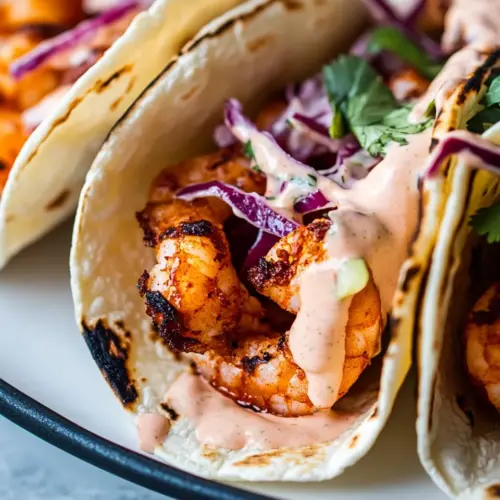
Spicy Shrimp Tacos with Creamy Sriracha Sauce Cilantro Lime Slaw
Spicy Shrimp Tacos with Creamy Sriracha Sauce Cilantro Lime Slaw blends creamy, zesty, and spicy notes into an easy weeknight dinner. Juicy seasoned shrimp, crisp cabbage slaw, and a silky sriracha drizzle come together for a quick, crowd pleasing meal. Perfect for summer evenings when you want bold flavors without fuss, this recipe is fast, flexible, and irresistibly tasty.
Equipment
- Large heavy duty skillet
- Mixing Bowls
- Tongs
- Whisk
Ingredients
- 20 medium shrimp peeled and deveined Provide peeled and deveined shrimp as the main protein for the tacos, offering a sweet, briny flavor and tender texture that cooks quickly; season and cook them briefly to retain juiciness and prevent toughness while forming the core of each taco.
- 2 tablespoons olive oil Coat shrimp and slaw components lightly with olive oil to help spices adhere and to facilitate quick, even cooking while adding a subtle fruity richness that enhances overall mouthfeel in both sautéing and dressing.
- 1 teaspoon paprika Impart smoky warmth and color using paprika, which complements the shrimp and ties together the heat elements; sprinkle evenly to build a balanced, aromatic crust during searing.
- 1/2 teaspoon ground cumin Add earthy depth and a hint of citrusy warmth with ground cumin to elevate the shrimp seasoning blend; use sparingly to avoid overpowering delicate seafood flavors while contributing savory complexity.
- 1/4 teaspoon onion or garlic powder, optional Enhance savoriness and convenience with onion or garlic powder as an optional boost for umami and aromatic background; incorporate modestly when fresh aromatics are not desired or available.
- 1/4 teaspoon black pepper, optional Introduce a mild peppery note with black pepper optionally to accentuate other spices and add subtle heat complexity; grind fresh if possible for brighter, more vibrant flavor.
- 1/4 teaspoon kosher salt Provide seasoning balance and enhance natural shrimp flavor with kosher salt, used to draw out moisture slightly and to season both protein and slaw components for overall harmony.
- 2 cups cabbage shredded Supply crisp texture and mild, slightly sweet flavor with shredded cabbage, forming the base of the cilantro lime slaw that adds crunch and contrasts the warm shrimp in each taco.
- 1/4 cup red onion, thinly sliced Contribute sharpness and subtle crunch with thinly sliced red onion, offering a zesty bite that brightens the slaw and cuts through the richness of creamy sauce and cooked shrimp.
- 1/4 cup cilantro, minced Deliver fresh herbal brightness with minced cilantro to the slaw, imparting citrusy, green notes that complement lime and balance spicy elements for a vibrant finish.
- 1/2 jalapeno, seeded, optional Bring optional fresh heat and a vegetal pop with seeded jalapeno, used sparingly to add liveliness to the slaw without overwhelming other flavors when heat is desired.
- 1 tablespoon olive oil Bind and lightly dress the slaw using olive oil to add silkiness and help carry flavors; use it to mellow acidity and provide a glossy mouthfeel in the mixture.
- 1 tablespoon honey Add a touch of sweetness and balance to the slaw with honey, which rounds out acidity and heat while helping dressings cling to cabbage for a harmonious flavor profile.
- 2 tablespoons lime juice Provide bright acidity and tang with lime juice to the slaw, cutting through richness and enhancing freshness while bringing citrus notes that pair exceptionally with seafood.
- salt and pepper, to taste Season the slaw to personal preference with salt and pepper to taste, allowing fine-tuning of overall flavor balance and ensuring the mix complements the seasoned shrimp and sauce.
- 1/4 cup ranch dressing, or sour-cream or greek yogurt Create a creamy base for the sriracha sauce using ranch, sour cream, or Greek yogurt, contributing cooling richness that tempers heat while adding tang and body to the tacos.
- 1 tablespoon sriracha Introduce bold, spicy flavor and vibrant color with sriracha, which when mixed into the creamy base gives controlled heat and a touch of vinegar-forward sweetness for the sauce.
- 6 small corn or flour tortillas Serve the assembled tacos using small corn or flour tortillas to hold fillings; warm them briefly to increase pliability and bring slight toasty aroma while providing the foundation for each bite.
Instructions
- Combine shrimp, oil, and spices in a medium bowl or ziplock bag. Use right away OR cover and refrigerate for at least 10 minutes or up to 48 hours. Heat a large heavy-duty or cast iron skillet on high heat for 2 minutes. Add a teaspoon of oil to the pan and shrimp. Cook shrimp until pink and cooked through, about 4-5 minutes.: The aroma of the paprika and cumin mingling with the oil is immediate, giving you a preview of the final flavor. Coating the shrimp evenly helps them sear uniformly and ensures each bite is seasoned. A common misstep is overcrowding the bowl, which can leave some pieces undercoated; use a roomy container or massage the bag gently to distribute the spices. When you rub the mixture into the shrimp , you should notice a faint sheen from the oil and a light dusting of the spices. This step allows the spices to adhere so that when heat hits the surface, they toast slightly and deepen in flavor. If you plan to marinate longer, refrigerate covered, and before cooking bring the shrimp back to near room temperature so they cook evenly. Avoid leaving them in a dense pile, separate them as much as possible within the bowl so air can circulate around each piece.
- Combine all the ingredients in a large bowl until mixed through. Use right away or cover with plastic wrap and place in the fridge for up to 24 hours.: Letting the seasoned shrimp rest gives the spices a chance to meld with the seafood, which enhances depth and uniformity of flavor. If you refrigerate, the oil and spices penetrate more fully and the texture firms slightly, which can help with searing. A typical error is marinating too long in acidic mixtures; because this recipe uses oil and dry spices, the window up to 48 hours is safe. When removing from the fridge, pat the pieces dry briefly to remove excess moisture that could steam them instead of searing. The scent will be stronger after a short refrigerate, indicating the spices have settled in. If you’re short on time, a 10 minute rest still improves adhesion and gives you a head start.
- Whisk sriracha and ranch or sour-cream or mayo in a small bowl. Taste and add more sriracha if desired.: A properly preheated skillet delivers an immediate sizzle, creating a flavorful crust on the shrimp . The cast iron will hold heat and give a more even sear, while other heavy pans also work. You should hear a distinct hiss when oil contacts the surface. If the pan isn’t hot enough, the shrimp will release moisture and steam, which prevents browning. A typical mistake is rushing this step; take the time to heat the pan so you get color quickly without overcooking inside. Test with a single piece first if you’re unsure, watching for a golden edge and a tight curl when it’s ready to flip.
- Grill tortillas on the stovetop over the flame until lightly charred (this step is optional). Top each tortilla with 4-5 pieces of shrimp and some slaw. Drizzle with sriracha sauce. Serve with lime wedges on the side. Enjoy!!: Introducing a small amount of oil right before the shrimp is added ensures a slick surface for contact and immediate browning. Too much oil can fry rather than sear, and too little can cause sticking, so keep it modest. When the shrimp hits the pan you want a loud sizzle; that sound signals rapid moisture evaporation and crust formation. Avoid crowding the skillet because packed pieces lower the pan temperature and lead to uneven cooking. If you have a lot of shrimp , cook in batches and keep finished portions loosely tented to stay warm.
- Cook shrimp until pink and cooked through, about 4-5 minutes: Look for a firm texture, opaque flesh, and a pink color with slightly charred edges. The shrimp will curl and tighten as they cook; modest curling to a loose C-shape means perfect doneness. Overcooking will make them rubbery, so watch closely and use visual cues rather than strictly timing, since pan heat can vary. A common error is assuming all pieces are identical in size, so check larger pieces for translucence in the center. Remove them promptly and rest for a moment so residual heat finishes the cook without drying them out.
- Combine all the ingredients in a large bowl until mixed through: When you toss the shredded cabbage , sliced red onion , minced cilantro , and dressing elements, the slaw should look glossy and well coated. The dressing will slightly soften the cabbage while keeping its crunch. If dressing sits too long before tossing, the cabbage can become soggy, so add just before serving if you want maximum snap. Taste and adjust with more lime juice or salt, remembering that a balance of acid and sweet is the goal. Avoid overdressing; you want each shred to be lightly coated, not drenched.
- Use right away or cover with plastic wrap and place in the fridge for up to 24 hours: Making the slaw ahead allows flavors to meld and calms raw onion sharpness. In the fridge the slaw will keep its texture if not overdressed, and chilling helps the flavors knit together. A mistake is storing it too long with dressing; after 24 hours the cabbage softens more than preferred. When ready to serve, give it a quick toss and a final squeeze of lime juice if it tastes muted from chilling. The aroma of the cilantro will be subdued after refrigeration, so refresh with a tiny extra pinch if needed.
- Whisk sriracha and ranch or sour-cream or mayo in a small bowl: The creamy sriracha sauce should be smooth and slightly glossy, with a bright heat that complements the shrimp . Whisking incorporates air and makes the sauce silkier, and tasting as you go ensures it sits at your preferred spice level. A common pitfall is adding too much sriracha at once; start conservatively and build. If the sauce is too thick, thin with a splash of water or lime juice , mindful that acid will change the flavor balance. The final sauce should cool the tongue slightly while offering a lick of warmth, ready to drizzle.
- Taste and add more sriracha if desired: Adjusting spice to preference guarantees the sauce matches your tolerance. Adding a little at a time prevents overshooting the heat, and tasting with a bit of slaw or a reserved shrimp gives a true sense of how it pairs with the full taco. Remember that sauce distributed over the taco will feel milder than a spoonful on its own, so err on the side of restraint if unsure. If you find it too fiery after the fact, a touch more ranch or yogurt will mellow it quickly.
- Grill tortillas on the stovetop over the flame until lightly charred: A brief char enhances aroma and adds a smoky warmth that complements the components. Hold each tortilla with tongs over a medium flame and rotate until you see small darkened spots or light blistering. This step is optional but worth doing for texture and flavor. Be careful not to burn them; a quick, even char is ideal. If you prefer, warm them in a dry skillet until pliable, watching for pockets of golden brown rather than long exposure to high heat.
- Top each tortilla with 4-5 pieces of shrimp and some slaw: Assemble by layering textures so each bite includes tender shrimp , crunchy slaw, and warm tortilla . The balance of quantities matters, aim for even distribution so no one component overwhelms. Overstuffing can cause the tortilla to tear, while too little filling makes tacos feel insubstantial. A helpful trick is to fan the slaw first, then place the shrimp atop so the sauce and juices mingle without sogging the base too quickly.
- Drizzle with sriracha sauce: A finishing touch of the creamy sauce ties the flavors together and provides visual appeal. Drizzle in a zigzag or dot pattern so each portion gets an equal amount, and remember a little goes a long way. If you apply sauce too early and then stack tacos, it can make them soggy; add the sauce right before serving for best texture. The scent of the sriracha will lift the final plate and invite people to dig in.
- Serve with lime wedges on the side: A squeeze of fresh lime brightens the entire bite and sharpens the flavors. Serving wedges allows guests to adjust acidity to taste, which is especially helpful with spicy dishes. Avoid pre-squeezing all the lime onto the tacos because some may prefer less acid; offering wedges preserves that control. The citrus aroma right at the table signals freshness and completes the sensory experience.
- Enjoy!!: This is the satisfying moment when flavors, textures, and the warmth of shared food come together. Notice the interplay of creamy, spicy, and tangy as you take a bite, and remind yourself that small adjustments like a little extra cilantro or an extra squeeze of lime can personalize the experience. If someone mentions the bright slaw or the crunchy bite, you’ll know you hit the right balance.
Notes
- Swap the sauce base Try ranch dressing or greek yogurt in place of the listed creamy base for a tangier or lighter sauce, which brightens the overall profile without changing the cooking process.
- Control the heat Increase or decrease the amount of sriracha or include the optional jalapeno seeded to suit your spice tolerance while preserving the balance between sauce and slaw.
- Tortilla choice Use warm corn tortillas for extra corn flavor, or flour tortillas if you prefer a softer, more flexible wrap that holds more filling.
- Make ahead components Prepare the slaw and sauce up to 24 hours in advance to save time on the day of serving, keeping the textures intact if you store them separately.
- Batch cooking If serving a crowd, cook the shrimp in batches and keep them loosely tented in foil to retain warmth while you finish the rest.