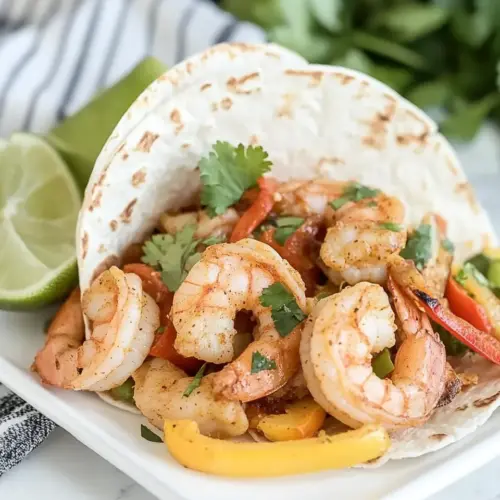
Spicy Shrimp Fajitas
Spicy Shrimp Fajitas are a quick, sizzling weeknight favorite with tender shrimp, charred bell peppers, and bright lime. This easy weeknight dinner delivers smoky, aromatic spices and fresh cilantro for a lively handheld meal perfect for sharing. Make it for casual gatherings or a fast family dinner that feels special and satisfying.
Equipment
- Large saute pan
- Mixing Bowls
- Tongs
Ingredients
- 2 pounds medium shrimp, deveined with shells removed Peel and devein the shrimp, ensuring shells are removed for easy eating; provide the primary source of protein and quick-cooking seafood flavor in the fajitas. Rinse and pat dry to promote even seasoning adhesion and a good sear when cooked. Keep shrimp chilled until ready to cook to maintain texture and safety.
- 1 teaspoon chili powder Season with chili powder to add concentrated earthy heat and smoky warmth that complements the shrimp and peppers. Sprinkle evenly over the shrimp and vegetables to build the characteristic fajita spice profile. Adjust amount slightly based on desired spiciness.
- 1 teaspoon cumin Sprinkle cumin to impart a warm, slightly nutty and aromatic foundation that deepens the overall flavor profile. Combine with other spices to create a balanced, southwestern-style seasoning. Toast briefly in oil if desired to amplify its aroma before adding other ingredients.
- 1/2 teaspoon dried oregano Crumble dried oregano to contribute a subtle herbal, slightly bitter note that brightens savory elements and blends well with cumin and chili powder. Use sparingly to avoid overpowering delicate seafood flavors. Rehydrate slightly when mixed with lime juice and oil for better distribution.
- 1 1/4 teaspoons salt, divided Measure and divide salt to enhance natural flavors and control seasoning in stages; some is used in the marinade and some added at the end for final adjustment. Use the larger portion to season vegetables and protein early, reserving a small pinch to taste after cooking. Dissolve in lime juice or oil when marinating for even coverage.
- 1/4 teaspoon freshly ground black pepper Grind black pepper fresh to add sharp, aromatic heat and complexity to the seasoning mix; balance with chili powder and cumin for depth. Add to both shrimp and vegetables to create a cohesive flavor throughout the dish. Taste and adjust at the end for a final peppery lift.
- A pinch-1/8 teaspoon crushed red pepper flakes Crush red pepper flakes to provide optional concentrated heat and visual flecks of spice that elevate the overall spiciness. Use a pinch to complement chili powder without overwhelming the shrimp’s delicate texture. Incorporate into the marinade or sprinkle atop finished fajitas for an extra kick.
- 2 -3 tablespoons olive oil Heat olive oil to serve as the cooking medium that promotes even browning and prevents sticking while adding a fruity, mellow richness. Use enough to coat the pan and help carry spices onto shrimp and vegetables. Choose higher heat-stable oil or monitor temperature to avoid burning.
- Juice of 1/2 lime Squeeze lime juice to add bright acidity that balances richness and enhances the seafood’s natural flavors; helps tenderize proteins slightly when used in a quick marinade. Combine with oil and spices to create a vibrant dressing for shrimp and vegetables. Add additional juice to taste for finishing brightness.
- 1 red bell pepper, seeds removed and sliced into strips Slice red bell pepper into strips to contribute sweet, crisp texture and vibrant color that complements both shrimp and spices. Cook until slightly charred but still tender for ideal fajita bite and visual appeal. Use equal-sized strips for uniform cooking.
- 1 yellow bell pepper, seeds removed and sliced into strips Slice yellow bell pepper into strips to offer mild sweetness and a pleasant crunchy contrast that melds with onions and shrimp. Cook until softened with slight caramelization to enhance sweetness and savory depth. Include for balanced color and flavor diversity.
- 1 orange bell pepper, seeds removed and sliced into strips Slice orange bell pepper into strips to deliver bright citrusy-sweet notes and colorful variety that make the dish visually appealing. Sauté until tender-crisp so it retains texture while absorbing spices. Combine with other peppers for a layered, sweet-savory profile.
- 1 yellow onion, cut into strips Cut yellow onion into strips to provide aromatic sweetness and body that softens during cooking and forms the savory backbone of the fajita filling. Caramelize slightly to bring out natural sugars and enhance overall depth of flavor. Cook with peppers for unified texture and taste.
- 2 cloves garlic, minced Mince garlic finely to release pungent, savory aromatics that infuse the oil and elevate the seasoning of shrimp and vegetables. Add toward the end of sautéing to avoid burning and maintain bright, robust flavor. Use fresh garlic for best aromatic impact.
- Cilantro, minced, to garnish Chop cilantro finely to garnish and introduce fresh, herbaceous brightness that lifts the finished fajitas with green, citrusy notes. Scatter just before serving to preserve its delicate flavor and vibrant color. Adjust amount based on preference for herbal intensity.
- Flour tortillas, to serve Warm flour tortillas to serve as the handheld vessel that wraps the shrimp and vegetables and holds all toppings together. Heat briefly on a hot skillet or directly over a flame for pliability and slight char for added flavor. Keep covered to maintain softness until serving.
Instructions
- Place the shrimp in a large bowl and set aside.: The neutral coolness of the bowl contrasts with the warm pan later, making prep calm and organized. You'll notice the shrimp feel firm and slightly slick; patting them lightly with a paper towel can remove excess moisture so they sear rather than steam. This step matters because dry surfaces brown better and develop more flavor. A typical error is skipping this and ending up with pale, steamed shrimp instead of a glossy sear.
- In a smaller bowl, mix together the chili powder, cumin, oregano, 1 teaspoon of the salt, pepper, and red pepper flakes to taste. Add to shrimp and toss to combine. Let the shrimp 'marinate' as you prepare the other ingredients.: The spice blend should smell aromatic and earthy when combined, with the cumin standing out as warm and slightly nutty. Mixing the spices first lets them distribute evenly over the shrimp , ensuring each bite has balanced flavor. Rushing this step can create clumps of spice on some pieces and blandness on others, so whisk thoroughly until the powders are uniform.
- In a large saute pan, heat 2 tablespoons of the olive oil. Add the peppers, onions, garlic, remaining salt, and cook until vegetables are tender. Remove to another bowl and toss with the juice of half a lime.: As the spices coat the shrimp , you'll see a light dusting of rust colored seasoning. Marinating briefly allows salt to start drawing flavors inward, and the aromatics to adhere. While you chop the peppers and onion, the spice will become more pronounced on the surface. Avoid marinating too long with citrus or salt heavy blends, or the texture can begin to firm up excessively.
- Add another tablespoon of oil to the pan and cook the shrimp just until they turn pink, about a minute on each side. Remove to the bowl with the vegetables as soon as they're cooked.: The oil should shimmer but not smoke, which signals the ideal temperature for sautéing. You want it hot enough to produce a quick sizzle when the vegetables hit the pan, that sizzling sound indicates moisture evaporating and edges caramelizing. If the oil smokes, remove the pan from heat briefly to cool, because burnt oil imparts bitter notes.
- Toss together the vegetables and the shrimp. Taste and add more seasonings as desired. Top with minced cilantro and serve with flour tortillas.: Toss the sliced peppers and onion into the hot oil and listen for a lively sizzle. As they cook, you will smell a sweet, savory aroma and see edges soften and gain charred flecks. Stir occasionally until pieces are tender crisp to your liking; this preserves a bit of bite that contrasts with the shrimp . A common mistake is overcrowding the pan, which causes steaming instead of searing, leading to limp, pale vegetables.
- Serve in tortillas.: The warm vegetables will soak up the lively citrus and release a bright perfume. Tossing them while warm helps the lime juice meld with the pan oils and spices, coating each strip. This acidic touch balances the heat and oil, preventing the dish from tasting flat. If you add too much lime, the vegetables can become soggy, so use the measured half lime and adjust at the table if needed.
- Add another tablespoon of oil to the pan and cook the shrimp just until they turn pink, about a minute on each side: When the pan is hot again, the shrimp should sizzle as they hit the surface, quickly changing from translucent to opaque with bright pink edges. You'll hear a quick popping sound and see the spice caramelize slightly. Cook briefly to maintain a tender interior, because overcooking makes shrimp tough. A frequent error is leaving them in too long, so watch closely and flip once.
- Remove to the bowl with the vegetables as soon as they're cooked: The contrast of the hot, seasoned shrimp hitting the warm vegetables releases an inviting steam and mixes aromas. Combining them off heat prevents the shrimp from carrying on cooking in the residual pan heat, which helps preserve juiciness. Leaving them in the pan risks overcooking while you finish other tasks.
- Toss together the vegetables and the shrimp, taste and add more seasonings as desired: When you toss, notice how the glossy oil and lime cling to the surfaces, and how the spices have attached to each piece. Tasting at this point allows you to correct salt, heat, or acidity so the flavors sing in harmony. If it tastes flat, a pinch more salt or a squeeze more lime brightens the dish; avoid dumping extra spices without tasting, which can throw off balance.
- Top with minced cilantro and serve with flour tortillas: Finely minced cilantro adds a fresh, herbaceous lift when scattered over the warm mixture. Serve immediately with warmed flour tortillas to preserve the contrast of textures. If you wait too long to serve, the vegetables will cool and lose some of their vibrancy, so plan plating to coincide with finishing the last steps.
- Serve in tortillas: The final assembly is tactile and fun, with warm flour tortillas wrapping the spiced shrimp and charred peppers. You'll hear the soft rustle of the tortilla and feel the warmth as you fold it over the filling. Encourage guests to add extra lime or red pepper flakes to their preference. A common mistake is overfilling the tortilla, which makes eating messy and detracts from the balance of flavors.
Notes
- Use fresh shrimp when possible, because freshness impacts both texture and flavor significantly. Frozen shrimp work fine if thawed properly overnight in the refrigerator or quickly under cold running water, then patted dry thoroughly. Avoid letting shrimp sit at room temperature for long periods to maintain food safety. Fresh shrimp will sear more evenly and have a sweeter profile that pairs beautifully with the spice blend.
- Slice vegetables uniformly, so they cook at the same rate and present a harmonious texture. Aim for consistent thickness when cutting the bell peppers and onion, and keep the strips roughly the same size as the shrimp to create balanced bites. Irregular pieces can lead to some being overdone while others remain undercooked, which affects the overall eating experience.
- Control heat with red pepper flakes, add them sparingly to the mix and serve extra at the table. This way you cater to heat sensitive eaters while still delivering a lively flavor to those who like spice. If you accidentally add too much early, a squeeze of lime can help tame the heat slightly.
- Finish with fresh citrus and herbs, a final squeeze of lime and a sprinkle of minced cilantro elevate the dish by adding brightness and freshness. These finishing touches cut through the richness and tie the flavors together, creating a more complex and balanced bite.
- Warm tortillas properly, place them in a dry skillet for a few seconds per side or wrap them in a clean towel to keep them soft. Properly warmed tortillas are more flexible and make assembly neater, improving the overall presentation and eating experience.