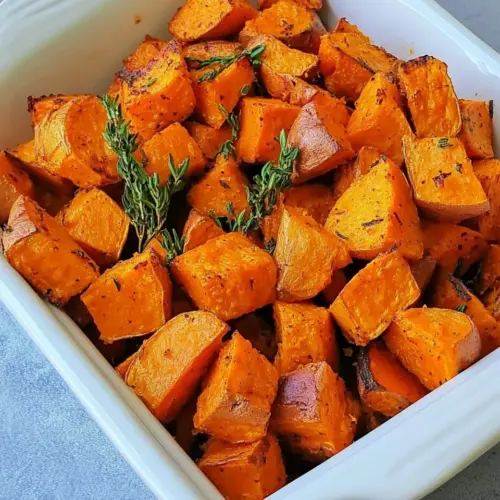
Spicy Roasted Sweet Potatoes
Spicy Roasted Sweet Potatoes are a crispy and slightly spicy fall side, full of warm, caramelized flavor and tender interiors. This easy weeknight dinner friendly recipe balances sweet and heat with simple ingredients for a comforting dish that travels well. Make it for gatherings or cozy meals when you want something soulful and reliably delicious.
Equipment
- Baking Sheet
- Large Bowl
- Oven
- Spatula
- Hot pads
Ingredients
- 2 1/2 pounds sweet potatoes (yams) peeled and cut into 1 1/2-2 inch chunks Provide bulk and natural sweetness while offering a tender interior and caramelized edges when roasted; cut into uniform 1 1/2–2 inch chunks to ensure even cooking and maximize surface browning.
- 2 large sweet onions (Maui, Walla Walla or Vidalia), cut into chunks Add savory-sweet flavor and soft texture when roasted; cut into chunks similar in size to the sweet potatoes so they cook evenly and contribute caramelized layers.
- 3 tablespoons fresh rosemary leaves removed from sprigs Infuse a fragrant, piney aroma and savory herbal note; strip leaves from sprigs and scatter over vegetables so the rosemary becomes toasted and aromatic during roasting.
- 2 tablespoons olive oil Coat vegetables to promote even browning and help seasonings adhere; drizzle and toss the chunks so oil distributes heat and encourages caramelization.
- 1 teaspoon kosher salt if salt sensitive use less to taste Season and enhance natural flavors while balancing sweetness; sprinkle evenly and adjust to personal taste, keeping in mind kosher salt’s granule size affects perceived saltiness.
- 1 teaspoon crushed red pepper flakes NOTE: if spice sensitive start with 1/2 tsp and add more to taste Add a bright, lingering heat and a touch of smoky spice; sprinkle crushed red pepper flakes sparingly at first if sensitive, then increase to achieve desired spiciness.
Instructions
- Place baking sheet into the oven and preheat the oven to 450 degrees F. Place all ingredients into a large bowl and toss to combine, making sure all the potatoes and onions are evenly and lightly covered with oil and seasonings.: You will notice a faint warmth in the kitchen as the oven climbs to 450 degrees F , and preheating an empty baking sheet gives the vegetables immediate contact with a hot surface. That contact accelerates browning, producing a lively sizzle when the pieces hit the metal. The smell will shift from neutral to slightly toasty as the pan heats, and that sets the stage for caramelization. One common mistake is not preheating the sheet, which leads to steaming rather than roasting, resulting in limp edges. Use hot pads and be cautious when placing the tray in the oven, because the sheet gets very hot quickly.
- Use hot pads to carefully remove the heated baking sheet from the oven. Spread the vegetable mixture out onto the tray in an even layer, making sure all potatoes are touching the surface of the tray. Careful not to burn your hands on the tray!: As you toss the chunks with olive oil , rosemary , kosher salt , and crushed red pepper flakes , you will feel the oil coat each piece, and the aroma of rosemary will bloom. Even coating is essential so every cube gets the same chance to brown and not stick. The sound here is mostly the soft clack of tossed pieces, but visually you should see a sheen on every surface. A common oversight is using too much oil, which prevents crisping, or too little, which causes sticking and uneven color. Aim for a light, even gloss on the vegetables.
- Place tray back into the oven and let the vegetables roast for 20 minutes. Stir the vegetables and continue to roast for 10-20 more minutes or until they are tender inside and browned/crisp on the outside. Serve warm.: When you pull the preheated baking sheet free, the metal will sing with heat, and you may smell a slightly metallic warmth. This step matters because transferring the vegetables onto a hot surface jump starts the searing of the edges. Work quickly but safely, spreading the pieces out in a single layer so each item touches the tray, which encourages an even, golden crust. A frequent pitfall is crowding the pan, which leads to steaming and prevents that desirable crispness. Take care to avoid burns and use sturdy mitts.
- Spread the vegetable mixture out onto the tray in an even layer, making sure all potatoes are touching the surface of the tray: As you arrange the pieces, you want them to have breathing room, almost like they are each claiming a little territory on the sheet. Visual cues include clear gaps between chunks and a uniform single layer. The tactile feel when you spread them is slightly tacky from the oil, and the goal is to maximize surface area contact. If the tray is overcrowded, moisture will collect and delay browning, producing a less appealing texture. If you see steam building on the pan, that is a sign to use a second sheet.
- Careful not to burn your hands on the tray: The hot sheet will radiate heat strongly, and you may feel a wave of warmth as you lean over the oven. This short caution prevents painful contact and helps you stay focused on positioning the vegetables. If your mitts are thin, consider swapping to thicker pads to avoid accidental slips. A common mistake is underestimating the heat near the oven cavity, which can cause burns when you reach in to adjust the tray. Slow, deliberate movements reduce risk and keep the process steady.
- Place tray back into the oven and let the vegetables roast for 20 minutes: During the first 20 minutes, the oven fills with a toasty, sweet aroma. You will hear an occasional soft pop as moisture escapes and the edges begin to brown. This period sets the foundation for texture, allowing the interiors to steam gently while the contact points on the pan crisp. Avoid opening the oven door frequently, as that cools the environment and lengthens cook time. A typical error is checking too often, which interrupts the Maillard reaction responsible for deep color and flavor.
- Stir the vegetables and continue to roast for 10 to 20 more minutes or until they are tender inside and browned/crisp on the outside: When you stir, you will reveal browned patches and notice crispy, caramelized edges. The scent deepens into something nutty and sweet, and the sound is a soft scraping of the spatula against the sheet. This second roasting window allows even browning and ensures tender centers. Test a piece by piercing it with a fork; it should yield easily while still holding shape. Over stirring is a mistake because it can knock off crusted bits; instead, gently turn pieces to expose different sides. If pieces are browning too fast before tenderizing, lower the oven slightly and extend cooking time.
- Serve warm: Serving these Spicy Roasted Sweet Potatoes while warm preserves the contrast between the crisp exterior and the pillowy interior. The flavors feel more integrated when hot, and the heat amplifies the fragrance of rosemary and the kick of crushed red pepper flakes . A common serving error is letting them cool too long, which softens the crispness. If you need to hold them briefly, keep them loosely tented in a warm oven to maintain texture.
Notes
- Preheat the baking sheet: Heating the sheet before adding the vegetables creates instant contact browning. This is a subtle trick that changes the texture dramatically, producing crisp edges that contrast with tender centers.
- Match chunk sizes: Uniform 1 1/2 to 2 inch pieces yield even cooking. When sizes vary, you often end up with some pieces overdone and others underdone, so invest a little time in consistent chopping.
- Use just enough oil: Two tablespoons should coat the given quantity without pooling. Excess oil prevents crisping, while too little leads to sticking and uneven color. Aim for a light, glossy coating.
- Adjust heat to taste: If you prefer milder spice, halve the crushed red pepper flakes and add more after cooking if needed. Spices intensify slightly when roasted, so err on the side of caution.
- Hold briefly in a warm oven for serving: If you need to time the dish with other items, keep the tray at about 200 degrees F to preserve texture without overcooking while you finish other plates.