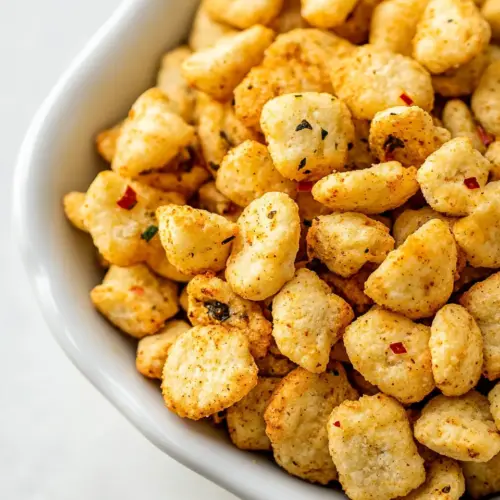
Spicy Oyster Crackers
Spicy Oyster Crackers deliver a crunchy, savory, and spicy snack made from pantry staples. These easy to make crackers are garlicky, tangy from ranch mix, and finished with crushed red pepper for heat, perfect for parties or quick munching. Make a big batch for game nights or to gift in a jar, they store well and keep their crispness for days.
Equipment
- Gallon zip bag
- Rimmed Baking Sheet
- Oven
Ingredients
- 1 pound oyster crackers or saltines Provide a crunchy base that soaks up flavors and delivers a salty, familiar snack texture; ideal for party platters and easy to portion. Works well with either oyster crackers or saltines, with saltines requiring a bit more oil to coat evenly.
- 2 packets ranch dip mix Add a tangy, herby seasoning that infuses the crackers with classic ranch flavor; contributes savory depth and a bit of powdered saltiness. Blended into the oil, it adheres well and helps distribute other spices evenly across the crackers.
- 2 tablespoons crushed red pepper Impart a sharp, warming heat that defines the snack’s spicy character while adding visual flecks and texture; adjust quantity to taste. Crushed red pepper blends into the oil to deliver consistent heat throughout the batch.
- 2 teaspoons garlic powder Introduce a warm, aromatic garlic note that enhances overall savoriness and complements both ranch seasoning and crushed red pepper. Garlic powder dissolves readily in the oil, ensuring even coverage without changing texture.
- 2/3 cup vegetable oil or light olive oil (1 1/4 cups for saltines) Bind and carry the dry seasonings onto the crackers while adding a slight richness and sheen; choice of vegetable or light olive oil affects flavor subtly. Use a larger amount when coating saltines to ensure full, even coverage without sogginess.
Instructions
- Place the crackers in a large gallon zip bag. Add in the ranch mix powder, crushed red pepper, and garlic powder. Shake the bag a little to distribute the seasoning.: As you pour in the crackers, listen for the soft cascade as they fill the bag, and notice how their dry, slightly salty aroma rises. Using a large gallon zip bag makes it easy to mix without spilling, and it lets you massage the seasoning into every nook. One common mistake is overfilling the bag which prevents even coating, so use a roomy bag so each cracker can move freely.
- Pour the oil into the bag. Zip and gently shake the crackers around to coat them evenly in seasoning. Allow the oyster crackers to rest for 30 minutes in the seasoning. (For saltines, it’s best to let them rest in the oil and seasoning for at least 3 hours, or even overnight!): When you add the powdered seasonings, take a moment to inhale the concentrated savory scent that hits you, a preview of the final snack. Sprinkle them evenly across the crackers so the flavors distribute as you shake. A frequent error is dumping all the seasoning in one spot which leads to clumps; try to scatter the powders and then close the bag to shake and diffuse the spices.
- Preheat the oven to 250 degrees F. Set out 2 large rimmed baking sheets. Spread the oyster crackers over the surface of the baking sheets.: The sound of the crackers rattling signals movement and mixing, and the light dusting on each piece should become visible. Gentle shaking ensures the powders contact the cracker surfaces so that when oil is added, the mixtures stick uniformly. Avoid aggressive shaking which can break fragile crackers and create crumbs that lead to uneven baking.
- Bake for 18-20 minutes. Cool completely before placing in an airtight storage container.: As you pour in the oil, watch how it glistens and coats the powders, turning them from dusty specks into glossy specks that will cling. The oil helps distribute the seasoning and penetrates tiny pores in the crackers. A common mistake is using too much oil at once which can make crackers soggy; measure carefully and add the recommended amount.
- Zip and gently shake the crackers around to coat them evenly in seasoning: Feel the bag as you gently tumble the crackers, and you will notice the mix begin to coat each piece with an even sheen. The goal is uniformity, so slow, controlled motion works best. If you skip this step or shake too roughly, some crackers will remain under seasoned and others over coated, affecting the balance of flavors.
- Allow the oyster crackers to rest for 30 minutes in the seasoning: During this pause, the oil and powders meld into the crackers, and you may catch a faint aroma of the spices deepening. Resting allows proper absorption, which prevents pockets of raw seasoning after baking. A mistake to avoid is shortening the rest period, because under rested crackers will have patchy flavor and a less integrated taste.
- For saltines, let them rest in the oil and seasoning for at least 3 hours or overnight: If you choose saltines , notice how they slowly darken as they absorb oil, a sign they are taking on the flavor. The extra rest time compensates for their density and helps achieve the same seasoned depth as oyster crackers. Rushing this step is the most common misstep with saltines , leading to a less flavorful end result.
- Preheat the oven to 250 degrees F: The oven should be set low so the crackers dry and toast evenly rather than browning too quickly. That warm, steady heat draws moisture out and crisps them uniformly. A frequent mistake is using a higher temperature which can scorch the seasonings and make the crackers bitter instead of toasty.
- Set out 2 large rimmed baking sheets and spread the oyster crackers over the surface: Arrange the crackers in a single layer so air circulates around each one, and listen for the quiet that comes with even spacing. Rimmed sheets keep any stray crumbs contained. Overcrowding the pan traps steam and leads to soggy crackers, so spread them out to maintain crispness.
- Bake for 18 to 20 minutes: During baking, breathe in faint toasty, nutty notes as the crackers warm and the seasonings bloom. Watch for a light golden hue developing, which signals they are ready. A common issue is underbaking which leaves them soft; if they still feel pliable at the edge of the time window, give them a few extra minutes but monitor closely to avoid over browning.
- Cool completely before placing in an airtight storage container: As the crackers cool, they firm up and reach their final crispness, and you will notice their aroma settle into a balanced savory heat. Cooling also prevents trapped steam from making them limp when stored. Placing them warm in a container is a typical mistake that causes condensation and ruins the crunch, so always wait until they are room temperature.
Notes
- Adjust the heat by reducing the crushed red pepper to 1 tablespoon for a milder snack, or increase to 3 tablespoons for a bolder kick. Taste as you go when you season to match your comfort level.
- Oil choices matter stick with neutral oils like vegetable oil or a mild light olive oil to keep the seasoning front and center. Strong flavored oils will compete with the ranch and garlic notes.
- Saltine swap if using saltines increase oil to 1 1/4 cups and rest for several hours so they absorb the seasoning fully and reach the same depth of flavor as oyster crackers.
- Make ahead you can season and bake crackers a day ahead, then store in an airtight container at room temperature to keep them crisp for up to 5 days, making them perfect for parties.
- Even coating ensure even distribution by shaking the bag gently and in stages rather than dumping everything at once, which prevents clumping and under seasoned pieces.
- Avoid overbaking check at 18 minutes and test a few crackers for crispness. If they are still slightly soft, add small increments of time, monitoring to prevent browning of the spices.