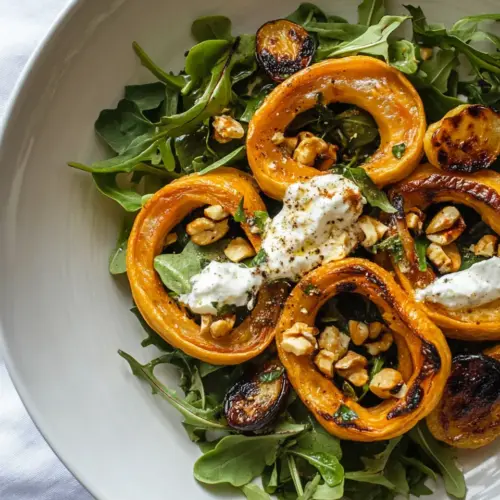
Spiced Delicata Breakfast Salad
Spiced Delicata Breakfast Salad blends roasted delicata squash with peppery baby arugula, creamy goat cheese, toasted pepitas, and jammy eggs for a textural, flavorful morning bowl. Easy to pull together and full of autumnal warmth, this salad offers crispy edges, tangy bites, and silky yolks, making it perfect for easy weeknight breakfasts or leisurely weekend brunches. Try it for a satisfying seasonal start to your day.
Equipment
- Sheet tray
- Knife
- Mixing Bowl
- Pot
- Spoon
Ingredients
- 1 delicata squash Roast to tender, caramelized perfection and provide a sweet, slightly nutty base for the salad; slice or half-moon to retain shape and concentrate flavors when oven-roasted or pan-seared.
- 1 tablespoon olive oil Coat squash pieces evenly to aid in roasting and promote browning; drizzle sparingly to enhance mouthfeel and help spices adhere without overpowering the vegetables.
- 2 to 3 teaspoons adobo seasoning Season roasted squash generously to introduce smoky, garlicky, and citrusy notes; adjust quantity to taste to balance heat and umami throughout the salad.
- 4 cups baby arugula (lightly packed) Toss gently to contribute a peppery, leafy contrast and provide a fresh, slightly bitter backbone that complements the roasted squash and creamy cheese.
- 1/4 cup crumbled goat cheese Crumble over the salad to add a tangy, creamy element that offsets sweetness and bitterness; sprinkle evenly so each bite gets a touch of richness.
- 1/4 cup toasted pepitas Scatter across the top to introduce crunchy texture and a toasty, pumpkin-seed flavor that reinforces the salad's autumnal profile and adds visual interest.
- 2 tablespoons (or so) lemon vinaigrette Dress lightly to brighten the whole dish with acidity and oil for cohesion; emulsify before tossing so the flavors coat greens and squash without sogginess.
- 2 jammy eggs (see note) Cook until yolks are jammy and serve warm to contribute a silky, rich component that melds with the dressing and enriches each forkful.
Instructions
- Heat your oven to 425˚F and cover a sheet tray with parchment (if desired - I don’t always use parchment). Trim the ends from the squash and cut in half length-wise. Scoop out the seeds and cut the squash into 1/4” thick slices. Place on a sheet tray and toss with the olive oil and adobo seasoning. Place in the oven and roast for 20 minutes or so. The squash should be browning and tender.: The aroma of a hot oven waking up is the first signal that roasting is on. You should hear nothing at this stage, but you will notice the warm, dry heat as you slide the tray in, which helps the edges of the delicata squash crisp and caramelize. Using parchment reduces sticking and makes cleanup easier, but it is optional; if you skip it, lightly oil the tray. A common mistake is preheating to a lower temperature which results in pale, steamed slices rather than browned, caramelized ones. Ensure the oven truly reaches 425 degrees before you roast, and avoid opening the door frequently to preserve steady heat.
- Add the arugula to a bowl along with the goat cheese, pepitas, delicata squash, and the dressing. Toss to combine then top with the eggs cut in half.: When you trim and halve the delicata squash , you release a faint, sweet squash scent that hints at the flavor to come. This cut exposes the cavity so you can remove seeds cleanly. Be sure to use a sharp chef knife for safe, clean cuts; dull knives slip and make the job harder. One trap is trying to slice the whole squash without stabilizing it, which can be dangerous. Place the cut side down for safer subsequent cuts.
- Scoop out the seeds and cut the squash into 1/4” thick slices: As you scoop, you may feel a slight resistance from the seeds and fibrous strands, and you will notice the bright orange flesh. Slicing into 1/4” pieces ensures even cooking, giving you tender centers and golden edges. If slices vary wildly in thickness, some will over roast while others remain firm, so aim for consistency. A spoon works well for scooping, and a steady hand for uniform slices helps achieve an even roast.
- Place on a sheet tray and toss with the olive oil and adobo seasoning: Tossing coats the slices in a glossy sheen of olive oil and evenly distributes the adobo aroma. You should see the spice granules clinging to the surface and smell a warm, slightly smoky scent. Ensure pieces are in a single layer with space around them so hot air can circulate; crowding leads to steaming rather than browning. Over seasoning is another pitfall, so start modest and adjust next time if needed.
- Place in the oven and roast for 20 minutes or so: During roasting, the kitchen will fill with a sweet, roasted scent and the edges of the delicata squash will begin to turn golden and slightly blistered. The sound is mostly quiet, but if the tray is very hot you may hear occasional tiny sputters as residual moisture evaporates. The goal is tender flesh with browned rims. Avoid the temptation to skip the full roast time; under roasted squash will be firm and lack that caramelized depth.
- The squash should be browning and tender: You can test tenderness by piercing with a fork, which should slide in with little resistance and leave a clean mark. Visually, look for even golden color and slight charring at the edges. If slices are soft but not browned, they likely steamed, meaning you may have overcrowded the pan or used too much oil. Let the tray rest a few minutes after removing it from the oven so the exterior firms slightly and flavor settles.
- Add the arugula to a bowl along with the goat cheese pepitas delicata squash and the dressing: When you combine the warm delicata squash with cool baby arugula , you will notice steam rising briefly and the greens bending slightly where warm slices touch them. The crumbled goat cheese will soften at those contact points, and the pepitas will retain crunch. The vinaigrette should glint on the greens, adding a bright citrus fragrance. Be careful not to overdress, which can wilt the arugula and mask the other flavors.
- Toss to combine then top with the eggs cut in half: Tossing brings the vinaigrette, spice, and textures into harmony, and you will hear the quiet rustle of leaves as they mingle. Cut the jammy eggs in half to expose glossy yolks that will gently spill into the salad when pierced. The yolk adds a silky, savory binder that elevates each bite. A typical error is adding the eggs too early, which warms them excessively and changes yolk texture; add them last for best results.
Notes
- Swap the cheese: Try a milder cheese if goat is too tangy, but keep the portion similar so creaminess remains balanced with the peppery baby arugula.
- Adjust the adobo: Increase to three teaspoons for more pronounced smokiness, or reduce to two for a subtler spice, tasting against the natural sweetness of the delicata squash.
- Change the seeds: If you prefer, use toasted sunflower seeds instead of pepitas for a lighter nutty crunch, keeping the same volume to maintain texture.
- Make vinaigrette bolder: Add a little more lemon or a pinch of salt to the lemon vinaigrette if your arugula tastes especially bitter, adjusting to balance brightness.
- Slice differently: Roast the squash in rings if you like the aesthetic, but scoop seeds first for efficiency as described in the note.
- Egg timing: For firmer yolks, extend the egg cook time slightly, but for the signature jammy texture follow the recommended precise timing method closely.