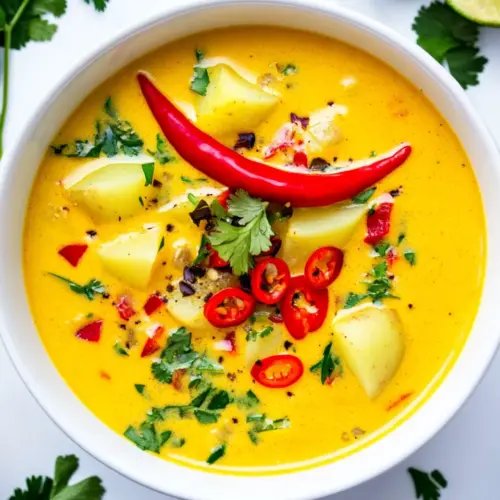
Spiced Coconut Potato Soup
Spiced Coconut Potato Soup is a creamy, aromatic bowl that blends coconut richness with tender potatoes and bright aromatics. This easy, cozy soup is perfect for an easy weeknight dinner or a warming winter meal, offering fragrant ginger and chilli notes that keep every spoonful lively. Make it for its comforting texture and lively finish.
Equipment
- Large Pan
- Knife
- Cutting Board
- Can opener
- Stirring spoon
Ingredients
- 2 onions Finely chop and sauté until translucent to build a savory aromatic base for the soup; provides sweetness and depth when caramelized and melds with spices.
- 4 garlic cloves Crush or mince and cook briefly to add pungent aroma and a subtle sharpness; enhances overall flavor and balances richer coconut notes.
- 2 inch ginger Grate or finely chop and fry with aromatics to contribute warm, peppery heat and a bright, zesty background; helps cut through creaminess.
- 2 red chillies Slice or finely chop and toast gently to release fruity heat that lifts the broth; adds fresh spiciness adjustable to taste.
- 1 tablespoon canola oil or coconut oil Heat gently to prevent sticking and to bloom spices; imparts a neutral fat for sautéing while maintaining a clean flavor profile.
- 1/2 tsp salt Dissolve into the pot to season and enhance all flavors; helps control and balance the soup’s overall taste.
- 2 teaspoon ground turmeric Stir in early with aromatics to color and flavor the oil; provides earthy warmth and subtle bitterness that defines the spiced profile.
- 3 cups vegetable stock Pour in as the liquid base to simmer potatoes and meld flavors; adds depth and allows ingredients to cook through evenly.
- 24 oz baby potatoes cut in half if large Halve if large and simmer until tender to provide hearty body and starchy thickness; contributes comfort and substance to the soup.
- 8 oz baby sweetcorn canned or fresh Add drained or chopped to introduce sweet, crisp kernels and textural contrast; offers a gentle corn sweetness that complements coconut.
- 1 can coconut milk/cream 400ml/13.6oz Shake or stir into the hot soup to enrich texture and add creamy, tropical richness; balances spices with smooth mouthfeel.
- 1 cup frozen peas Fold in near the end to introduce bright color and sweet vegetal bursts; freezes well and brings freshness to the finished bowl.
- 1 lime Squeeze over the finished soup to brighten flavors with acidic citrus notes; balances richness and enhances aromatics.
- fresh cilantro Chop leaves and sprinkle as a finishing herb to add an herbaceous, slightly citrusy fragrance; provides visual contrast and fresh flavor.
- red chilli Slice thinly and use as a garnish to add additional heat and color; offers sharp, decorative spice for those who prefer more kick.
Instructions
- Peel and finely chop the onion.: The moment you begin chopping onion , a sharp, sulfurous scent will fill the air, and as you cut them finely they will release more of their sweet juices during cooking. Finely chopped pieces soften more quickly and meld into the broth, creating a silky base. A common mistake is chopping too roughly, which leads to larger, undercooked bits that distract from the soup's smooth texture.
- Peel and mince/grate the garlic and ginger.: When you mince garlic and grate ginger , the kitchen fills with a warm and slightly pungent aroma that signals flavor is building. Minced garlic melds into the onions while grated ginger adds a bright, citrusy warmth. Avoid adding them raw to the hot soup without sweating first, because raw garlic can taste harsh and raw ginger can be overly fibrous.
- Finely chop the red chilli (if you want to reduce the heat remove the seeds and membrane).: Chopping the red chilli releases its fruity heat and oils which scent the air and flavor the dish. If you prefer milder heat, remove seeds and membranes; leaving them in will deepen the warmth with each spoonful. Take care not to touch your face after handling chillies, and wash hands thoroughly to prevent accidental eye irritation.
- Heat the oil in a large pan over a low heat.: As the oil warms gently, it will shimmer faintly and become the medium that helps extract flavors from the aromatics. Using low heat prevents the oil from smoking and keeps the aromatics from browning too fast. If the oil smokes, lower the heat and start again, because burnt oil will create a bitter background note.
- Add the onion, garlic, ginger, chilli and salt. Then fry for 3-4 minutes until everything has softened but not coloured.: During this gentle frying phase, the aromatics will become soft and fragrant, and you will notice a sweet, mellow scent replace the earlier sharpness. The salt draws moisture out of the onions, accelerating their softening. Avoid frying at high heat, which will brown the aromatics and shift the flavor away from the bright, fresh base we want.
- Add the turmeric and vegetable stock and bring to a simmer.: When you add the turmeric the oil picks up a golden color and an earthy aroma, which the vegetable stock carries throughout the pot as it comes up to a gentle simmer. A simmer, not a rolling boil, is key here, as violent bubbling can break down delicate flavors. If the stock tastes flat, check your seasoning, because the simmer will concentrate and reveal imbalances.
- Add the potatoes and simmer for 15 minutes.: As the potatoes simmer, the broth will take on a fuller body and the potatoes will become tender, releasing some starch to slightly thicken the soup. Listen for a steady, gentle bubbling and watch for the potatoes to pierce easily with a fork. Do not over simmer beyond tenderness unless you want a thicker, more mashed texture, because falling apart spuds change the soup's mouthfeel significantly.
- Cut the baby sweetcorn into 3 pieces and add them into the soup. Cook for a further 5 minutes. (See NOTES): Adding the baby sweetcorn at this point gives it time to warm through and soften slightly while retaining some bite. You will notice a faint corn sweetness in the steam and a pleasing pop in texture when you bite into the kernels. If using canned corn, follow the note and wait to add it later to avoid overcooking and a mushy result.
- Add in the coconut milk and the frozen peas. Bring back to a simmer and cook for 5 minutes.: Stirring in the coconut milk will create a silkier, creamier broth and mellow the spices, while the peas will turn bright green as they heat. As it simmers, the soup should look glossy and slightly thicker, and the aroma will shift toward cushiony coconut with herbaceous highlights. If the coconut milk splits, lower the heat and stir gently; high heat can separate the fats.
- Serve garnished with fresh cilantro, more chopped chilli and some wedges of lime.: At the finish, the smell of fresh cilantro and the sharpness of lime juice will lift the rich broth, and extra chopped red chilli provides a visual pop and optional heat. Garnish just before serving to preserve the herb's bright aroma. Over-garnishing early will wilt the herbs and mute their flavor, so add them at the last moment.
Notes
- Swap Oils Thoughtfully. If you prefer a more neutral frying medium, use canola oil for a clean backdrop, or use coconut oil for amplified coconut aroma which deepens the tropical notes in the soup.
- Control Heat With Seeds. Removing the seeds and membrane from the red chillies reduces heat while keeping flavor, which is perfect when serving people who are sensitive to spice.
- Use Canned vs Fresh Corn Strategically. If using canned sweetcorn, add it at the end to avoid a rubbery texture; fresh corn can handle the extra simmer time and adds a brighter bite.
- Make It Thicker or Brothier. For a thicker soup, gently mash some of the cooked potatoes against the side of the pot; for a lighter, brothy result, add a little more vegetable stock.
- Adjust Coconut Creaminess. Use full fat coconut milk for richness, or a lighter version if you want less indulgence, keeping in mind the mouthfeel will be thinner with reduced fat.