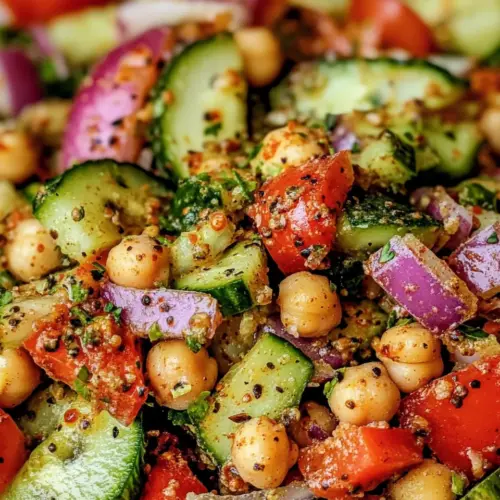
Spiced Chickpea Cucumber Salad
Spiced Chickpea Cucumber Salad is a crunchy vibrant salad featuring roasted, spiced chickpeas, crisp cucumber, and sweet cherry tomatoes. Bright lemon and toasted spices create a tangy, aromatic bite that works as an easy weeknight lunch or light dinner. Make the chickpeas ahead for quick assembly and enjoy a textural, flavorful dish that's perfect for warm weather meals.
Equipment
- Oven
- Sheet tray
- Dry pan
- Mortar and pestle
- Mixing Bowl
Ingredients
- 1 1/2 cup s(400 g) cooked chickpeas, drained Add cooked chickpeas to provide a hearty, protein-rich base and satisfying texture; toss gently so they hold shape and absorb flavors. Rinse or drain well to remove excess liquid and prevent dilution of the dressing. Use slightly firm chickpeas for best salad mouthfeel.
- 1 tablespoon olive oil Drizzle olive oil to lightly coat and bind spices to the chickpeas while adding a silky mouthfeel and subtle fruitiness. Whisk briefly with lemon juice and salt to create a simple vinaigrette that helps carry other flavors. Choose extra-virgin olive oil for brighter aromatics.
- 2 teaspoons cumin seeds Toast cumin seeds to release their warm, earthy aroma and deepen the flavor profile; crush lightly after to scatter flavor more evenly. Use a dry skillet over medium heat until fragrant, taking care not to burn them. Incorporate crushed seeds for rustic texture and aromatic notes.
- 2 teaspoons coriander seeds Toast coriander seeds to produce citrusy, floral notes that complement the cumin and brighten the salad. Lightly crush after to distribute their delicate flavor throughout the chickpeas and vegetables. Handle gently so seeds add taste without becoming gritty.
- 2 teaspoons sumac plus extra for serving Sprinkle sumac to introduce a tangy, lemony acidity and vibrant color that lifts the overall dish; reserve extra for finishing to amplify brightness. Mix into the salad for a subtle tartness that replaces or complements additional lemon. Adjust quantity to taste for balanced acidity.
- Zest from one lemon Grate lemon zest to add concentrated citrus oils and lively fragrance without extra liquid, enhancing freshness across the salad. Scatter evenly so zest permeates each bite and complements sumac and olive oil. Use a microplane for fine, even distribution.
- 1/2 teaspoon kosher salt plus extra as needed Season with kosher salt to enhance and balance all flavors while controlling overall seasoning; add extra as needed after tasting. Dissolve into the dressing or sprinkle across components to ensure even seasoning. Remember that kosher salt crystals vary by brand, so adjust to preference.
- 1 medium cucumber Slice cucumber to contribute crisp, cooling crunch and a mild vegetal note that contrasts the spiced chickpeas. Peel or leave skin on depending on texture preference, then dice or slice uniformly for balanced bites. Pat slices dry if excess moisture could dilute the dressing.
- 3 cups cherry tomatoes Halve cherry tomatoes to deliver juicy sweetness and acidic brightness that complements lemon and sumac; their burst of juice enlivens each forkful. Use ripe tomatoes for maximum flavor and vibrant color. Combine gently to avoid crushing and releasing too much liquid.
- 1/2 small red onion (thinly sliced) Thinly slice red onion to add sharpness, slight sweetness, and a crunchy bite that contrasts softer elements; soak briefly in cold water if you prefer milder flavor. Distribute slices evenly so their pungency is balanced across the salad. Keep slices thin to prevent overpowering other ingredients.
- 2 -3 tablespoons olive oil for serving Drizzle additional olive oil for serving to finish the salad with a glossy sheen, richer mouthfeel, and rounded flavor. Use high-quality olive oil to enhance aroma and bring cohesion to the vegetables and chickpeas. Add just before serving to preserve freshness.
- Juice from one lemon for serving Squeeze lemon juice for serving to impart bright acidity and refreshing tang that sharpens and balances the dish at the last moment. Add gradually and taste to achieve desired brightness without overwhelming other flavors. Use freshly juiced lemon for the cleanest citrus notes.
Instructions
- To make the chickpeas: preheat your oven to 425˚F. Pat your chickpeas dry in a clean tea towel and place them on a sheet tray. Drizzle with olive oil and toss until the chickpeas are well coated. Transfer to the oven and bake until the chickpeas are crispy, 25 to 30 minutes.: The hot oven is essential for crisping the chickpeas , creating a toasty aroma as their skins tighten and brown. You'll hear a subtle crackle as moisture evaporates, and the tray may rattle when the peas shrink and move. This high heat promotes Maillard reactions, delivering nuttiness and depth. A common misstep is using too low a temperature, which leaves them soft instead of crispy, so ensure the oven reaches the temperature before you pop the tray in.
- The chickpeas should appear darker and smaller in color, make a rattling noise when the pan shakes, and easily crush as they cool. If they still have a bit of softness to them, return them to the oven and bake for another few minutes.: Drying is key because surface moisture prevents crisping, resulting in steamed legumes rather than crunchy morsels. As you pat them, notice the skins separating slightly and the beans feeling drier to the touch. Lay them in a single layer so they roast evenly and do not steam. Crowding the tray is a frequent mistake, which causes uneven texture and slower browning.
- While the chickpeas are roasting, place the cumin and coriander seeds in a dry pan over medium heat. Toast, shaking the pan often until the spices are browning and fragrant. Transfer from the pan and crush the seeds using a mortar/pestle or spice grinder. I like to leave the spices in slightly bigger pieces, but you can also fully grind them into a powder. Transfer to a medium bowl and stir in the sumac, lemon zest, and salt.: The thin coat of olive oil helps the skins brown and allows spices to stick later. As you toss, look for a sheen on each chickpea rather than wet pools of oil. The oil will sizzle slightly when they hit the hot oven, and the scent will deepen. Using too much oil will prevent crispness and create a greasy finish.
- Once the chickpeas are done, let them cool slightly, then crush using the same mortar/pestle. Alternatively, place them on a cutting board and roll over them with a rolling pin. Add the chickpeas, while still slightly warm, to the spices. Stir until well combined.: During roasting you'll notice the chickpeas darken and their aroma shift from bland to toasty and slightly nutty. They may pop or rattle on the pan as they dry, and the skins will pull away from the bean slightly. Check at 20 minutes in case your oven runs hot, and stir the tray once for even browning. The usual error is walking away; check visually to avoid burning.
- To make the salad: Cut the cucumber into 1/2" pieces and place in a medium bowl. Halve or quarter the cherry tomatoes and add to the cucumbers and red onion. Stir in the crushed chickpeas and finish with the olive oil and lemon juice; taste and add more if desired. Sprinkle with more sumac before serving.: These are the visual and tactile signs that tell you they are properly roasted. Once out of the oven, the sound and the way they crumble when pressed signal complete crisping. Let them cool briefly so they firm up fully. If they still feel soft when cooled, return to the oven for a few minutes, as undercooked chickpeas will lose the desired crunch in the salad.
- While the chickpeas are roasting place the cumin and coriander seeds in a dry pan over medium heat: Toasting whole spices releases vivacious oils, producing an irresistible, warming fragrance. As you shake the pan, watch for tiny brown flecks and a perfume that becomes more complex, signaling readiness. Remove them before they darken too much to prevent bitterness. A common mistake is leaving them in the pan too long, which risks a charred, harsh flavor.
- Toast shaking the pan often until the spices are browning and fragrant: The popping and cracking of seeds is subtle, and the scent will deepen to an earthy citrus note. Once you see light browning, transfer immediately to avoid carryover cooking. Grinding warm seeds releases even more aroma, so work quickly. Overtoasting makes spices taste smoky and can overpower the lemony notes in the salad.
- Transfer from the pan and crush the seeds using a mortar pestle or spice grinder: Crushing gives texture and a burst of flavor when bitten. I like leaving slightly coarse pieces for mouthfeel, but you can grind finer for a uniform coating. The crushed seeds should look irregular and smell bright. A trap here is overgrinding to a dust, which loses the satisfying texture contrast.
- Transfer to a medium bowl and stir in the sumac lemon zest and salt: This spice blend becomes the seasoning bed for the warm chickpeas . As you stir, inhale the citrus and tart notes from the sumac and zest, which lift the toastiness of the seeds. Salt amplifies each element. If you skip tasting now, you might underseason the final salad, so sample and adjust cautiously.
- Once the chickpeas are done let them cool slightly then crush using the same mortar pestle: Crushing while still slightly warm helps the mix to coat the pieces more readily, and the scent intensifies. You want a mix of smash sizes, some larger for crunch and some finer to cling to the vegetables. Avoid pulverizing into dust, because then you lose satisfying texture in the salad.
- Alternatively place them on a cutting board and roll over them with a rolling pin: If you prefer not to use a mortar pestle, the rolling pin method works well and gives control over the degree of crush. The sound changes to soft cracking and you will see varied fragment sizes. Doing this on a wet surface can make them soggy, so keep your board dry.
- Add the chickpeas while still slightly warm to the spices stir until well combined: Warmth helps the oil and spice adhere, creating a uniform coating that tastes integrated. Stir and notice the shimmer of oil and flecks of spice clinging to the fragments, and how the aroma binds together. If you add them cold, the coating may not stick as effectively, leading to uneven flavor.
- To make the salad cut the cucumber into 1/2 inch pieces and place in a medium bowl: The uniform pieces ensure consistent bites and a pleasing mouthfeel. As you cut, the cucumber offers a cooling scent and crisp snap. If the pieces are too large, they dominate the bite; too small and they get lost among the chickpeas and tomatoes.
- Halve or quarter the cherry tomatoes and add to the cucumbers and red onion: The tomatoes burst with sweet juice as you toss them, creating small pools of flavor that mingle with the onion's sharpness. Thinly sliced red onion softens slightly when mixed with lemon, tempering its bite. Overmixing immediately can crush tomatoes, making the salad watery, so be gentle.
- Stir in the crushed chickpeas and finish with the olive oil and lemon juice taste and add more if desired: The final toss brings every ingredient into harmony, coating vegetables with spice and oil while lemon juice ties acidity to richness. Smell the lively citrus and tang, and listen for the delicate clack of chickpea fragments against the bowl. Taste and tweak salt and lemon as needed; a common misstep is not tasting at the end and missing balance adjustments.
- Sprinkle with more sumac before serving: A finishing dust of sumac adds a fresh tart hit and bright color, making the salad pop visually and on the palate. The final aroma should be vibrant, with toasted spice beneath. Avoid adding too much too early, which can mute the nuanced flavors developed during assembly.
Notes
- Make the chickpeas ahead Keep roasted chickpeas in a sealed jar at room temperature for up to three days and add them just before serving to preserve crunch.
- Adjust spice texture Crush the toasted cumin seeds and coriander seeds coarsely if you want a rustic, crunchy bite, or grind finer for a more integrated coating.
- Layer flavors gradually Add half the lemon juice and oil first then finish and taste, that way you avoid over acidifying the salad.
- Keep liquids separate If you are prepping early, toss the vegetables with a small amount of dressing and add the crushed chickpeas just before serving so they remain crispy.
- Finish with fresh sumac Sprinkle extra sumac at the table for a bright, tart lift that enhances visual appeal and flavor contrast.