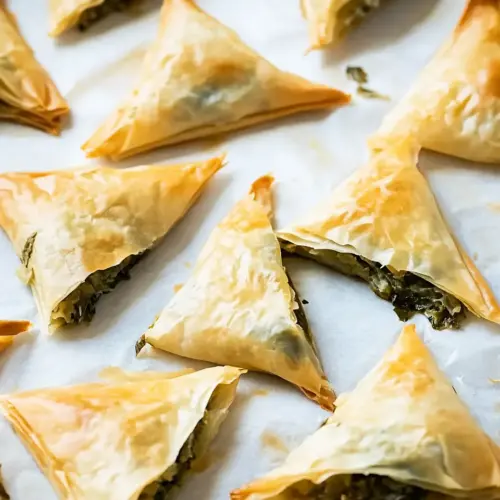
Spanakopita Triangles
Spanakopita Triangles are flaky, herb filled pastries with creamy feta and tender spinach, offering a crispy exterior and savory interior. This easy to scale appetizer delivers bright herbs, silky sautéed onion and garlic, and golden phyllo layers, ideal for easy weeknight dinners or entertaining a crowd. Make a batch to enjoy a reliably delicious reason to gather.
Equipment
- Large Skillet
- Baking Sheet
- Parchment Paper
- Pastry Brush
Ingredients
- 2 teaspoons olive oil Lightly coat a skillet to prevent sticking and provide a subtle fruity base flavor; olive oil also helps gently sauté aromatics and melds the filling together during cooking.
- 1/2 medium yellow onion, diced Finely dice to create small, tender pieces that soften when cooked; onion contributes sweet savory depth and moisture to balance the spinach and cheese.
- 5 cloves garlic, minced Finely mince to release pungent, aromatic oils that brighten the filling; garlic adds savory complexity and enhances the overall Mediterranean flavor profile.
- 1/2 teaspoon dried oregano Sprinkle sparingly to impart warm, slightly bitter herbal notes; dried oregano complements the spinach and cheese with classic Greek seasoning.
- 1 3/4 teaspoons dried dill Add for a fragrant, slightly citrusy herbal lift that pairs well with feta; dried dill contributes distinctive aromatic character throughout the filling.
- 1 pound frozen spinach, thawed and drained Thaw and thoroughly drain to remove excess water and prevent soggy pastry; spinach supplies the primary vegetable bulk, color, and nutrients of the filling.
- 1/3 cup parsley, finely chopped Finely chop to introduce fresh, bright herbaceousness and subtle texture; parsley helps cut richness and balances the heavier elements in the mixture.
- 3 tablespoons green onions, finely chopped Finely slice to add gentle oniony bite and mild freshness; green onions offer a crisp, scallion-like flavor that enhances layering in the filling.
- 1/2 teaspoon black pepper, freshly ground Grind freshly to provide a warming, sharp finish and to season the filling evenly; black pepper heightens other flavors without overpowering the dish.
- 5 ounces feta cheese, crumbled Crumble to distribute salty, tangy, and creamy pockets throughout the filling; feta brings signature Greek cheese richness and savory bite to each triangle.
- 20 sheets phyllo pastry, thawed Thaw sheets gently and handle carefully to build crisp, flaky layers; phyllo pastry forms the delicate, golden shell that contrasts the soft filling.
- Melted unsalted butter for brushing Brush over phyllo layers liberally to ensure golden browning and added richness; melted unsalted butter also helps create crisp, flaky texture without extra salt.
Instructions
- Add olive oil to a large skillet over medium heat. Add onions and cook until softened, about 5 minutes. Add garlic, oregano, and dill, cooking until aromatic, about 5 more minutes. Set aside to cool.: The kitchen will fill with a gentle, fruity aroma as the olive oil warms, a good sign you are at the right starting temperature. Keep the heat at medium so the oil shimmers but does not smoke, which preserves flavor. You want a sound that is quiet and steady, not a loud sizzle. A common error is overheating the oil, which can cause subsequent ingredients to brown too fast and develop bitter notes, so watch for a light ripple in the oil and adjust the flame if it starts spitting.
- In the skillet with cooled onion mixture, add drained spinach, parsley, green onions, black pepper, and feta cheese. Mix until well combined.: As the diced onion softens it will release a sweet, mellow scent and become translucent, signaling readiness. Stir occasionally so edges do not brown, which would change the flavor profile from sweet to caramelized. If the pan begins to color too quickly, lower the heat and add a splash of water to slow the process. Overcooked onion can become mushy and lose its ability to balance the other flavors.
- Preheat oven to 375°F. Lay out phyllo sheets, cutting into 3-inch wide strips. Keep covered with a damp towel.: When you add the minced garlic and dried herbs, the fragrance should bloom immediately, filling the air with an inviting herbal lift. Stir for a few minutes until you can smell the herbs and garlic without any burnt notes. Because garlic cooks fast, keep the flame moderate to avoid bitterness. If you detect a sharp, acrid smell, that is an indicator the garlic has taken on too much heat and you should start again with fresh aromatics.
- Place a dollop of filling on one end of a phyllo strip. Fold over to form a triangle, continuing to fold in the flag method until the strip ends. Place on a parchment-lined baking sheet and cover with a damp towel.: Allowing the mixture to cool prevents excess steam from releasing into the filling and making the phyllo pastry soggy. Cooling also stabilizes flavors so you can taste and adjust seasoning. I usually transfer to a bowl and let it rest until it is warm but not hot. A mistake at this stage is rushing to fold hot filling into the pastry, which compromises crispness.
- Brush triangles lightly with melted butter. Bake for 22 minutes or until golden brown and crisp.: When you mix the thoroughly drained spinach and fresh herbs into the cooled aromatics, you should notice a fresh vegetal scent and a creamy texture coming together. The feta cheese will create small pockets of salt and cream throughout the mixture. Ensure the spinach is well drained and roughly chopped, so the filling is not watery and folds easily into the pastry. One common pitfall is inadequate draining, which leads to a runny filling that wilts the phyllo.
- Mix until well combined: Use a spatula to fold the components with delicate movements, so the feta cheese remains in small crumbles and the herbs distribute evenly. The filling should look cohesive yet textured, with visible bits of parsley and green onion. Taste a small amount to check seasoning, adjusting black pepper as needed. Over mixing can break down the structure, making the filling pasty rather than pleasantly coarse.
- Preheat oven to 375°F: Preheating is essential so the phyllo pastry begins to crisp the moment it hits the oven, avoiding soggy underbakes. The oven should be fully up to temperature before the triangles go in, and you should use the middle rack for even heat circulation. An oven not at temperature will produce pale, limp pastry rather than the desired golden brown, so allow enough time for preheat.
- Lay out phyllo sheets, cutting into 3-inch wide strips: As you unroll the thawed phyllo pastry , keep a damp towel over unused sheets to prevent drying. Cutting into consistent 3 inch strips gives uniform triangle sizes and predictable baking times. If edges dry and tear, overlap gently to mend, but try to handle sheets minimally to keep layers intact. Dry, cracked phyllo will not seal properly when folded.
- Keep covered with a damp towel: Covering the phyllo preserves moisture so sheets remain pliable for folding. The towel should be damp, not wet, to avoid dripping onto the pastry. If sheets dry out they become fragile and will flake apart during assembly. Rewet the towel intermittently if you work slowly.
- Place a dollop of filling on one end of a phyllo strip: The visual cue you want is a neat mound about an inch from the edge, not so large it spills out when folding. The smell will be herbaceous and slightly salty from the feta cheese . Avoid overfilling, which causes the seams to burst in the oven and results in uneven baking.
- Fold over to form a triangle, continuing to fold in the flag method until the strip ends: As you fold, you should feel the pastry layers compress slightly, creating a compact triangle that will hold its shape when baked. The edges should align neatly, and the resulting triangles will have a layered, laminated appearance. A frequent mistake is loose folding, which leads to unraveling during baking, so keep tension while you fold.
- Place on a parchment-lined baking sheet and cover with a damp towel: Lining the sheet with parchment prevents sticking and helps the bottoms brown evenly. Covering assembled triangles keeps them pliable while you finish the batch. If left uncovered they can dry and become brittle, increasing the chance of cracking when brushed with butter.
- Brush triangles lightly with melted butter: Brushing with the melted unsalted butter gives the pastry its golden sheen and encourages distinct layers to separate and crisp. Use a pastry brush and a light hand to avoid pooling, which would make the base greasy. Too much butter also shortens baking time required for crisping, so apply thin, even coats.
- Bake for 22 minutes or until golden brown and crisp: When baking, look for an even golden brown across the top and a shattering crisp when you tap a triangle, those are your signals of doneness. You might hear a faint crackle as the layers crisp in the heat. If some pieces brown faster, rotate the pan midway. Underbaked triangles will be pale and floppy, while overbaked ones can become overly hard and dry.
Notes
- Prep the filling a day ahead, chilling overnight lets the flavors meld and reduces hands on time when you assemble, plus a cold filling is easier to portion onto phyllo without making it soggy.
- Work quickly with phyllo, keeping it covered with a damp towel prevents drying which can cause tearing, and if a sheet rips you can simply layer another to repair the gap without losing structure.
- Measure butter carefully, brushing too much will make the pastry greasy, while too little leads to pale layers, so aim for a thin, consistent coat on each triangle.
- Squeeze the spinach dry, using a clean towel or cheesecloth to press out water will preserve phyllo crispness and ensure a compact filling texture rather than watery pockets.
- Use parchment for baking, it helps the bottoms brown evenly and makes cleanup easier, especially when you bake large batches for entertaining.