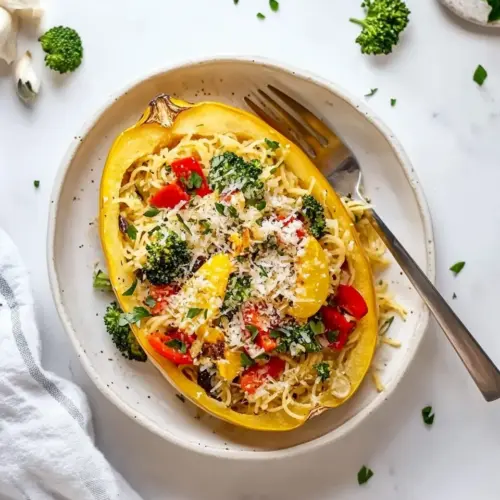
Spaghetti Squash Primavera
Spaghetti Squash Primavera is a colorful, easy weeknight dinner that pairs tender, noodle like spaghetti squash with crisp vegetables, bright lemon, and freshly grated Parmesan cheese. The dish is creamy from the cheese and lightly glossy from olive oil, while remaining light and satisfying, making it a perfect spring meal to enjoy with friends or family.
Equipment
- Oven
- Baking Sheet
- Parchment Paper
- Large Pan
- Knife
- Cutting Board
Ingredients
- 2 pounds spaghetti squash 1 large squash Roast or bake to separate flesh into long, noodle-like strands that serve as the low-carb pasta base for the dish. Provide a mildly sweet, tender texture that soaks up sauces and flavors from the vegetables and seasonings. Offer a hearty volume that makes the recipe feel substantial and satisfying.
- 2 teaspoons + 2 tablespoons olive oil Drizzle and sauté to create the cooking fat that helps brown and soften the vegetables while adding rich flavor and a silky mouthfeel. Combine the teaspoons for delicate sautéing and the tablespoons for roasting or finishing to balance flavor intensity. Serve as the carrier for the aromatics and seasonings that build the primavera profile.
- 1 cup carrots thinly sliced Slice thinly to add subtle sweetness, tender bite, and a pleasant textural contrast to the squash strands. Cook briefly to retain slight crunch and bright color while releasing earthy carrot flavor into the dish. Act as a natural sweet counterpoint to the savory and acidic components.
- 2 cups broccoli cut into small florets Steam or sauté the florets briefly to keep a vibrant green color and a firm-tender texture that provides substantial body and nutrition. Impart a slightly bitter, earthy note that complements the sweeter carrots and cherry tomatoes. Contribute fiber, vitamins, and a satisfying chew to the primavera.
- 3/4 cup onion roughly chopped Chop roughly to release aromatic compounds that form the flavor foundation when sautéed in olive oil. Soften and caramelize slightly to add depth, sweetness, and savory complexity to the vegetable medley. Bind flavors together and enhance overall mouthfeel.
- 1 red bell pepper diced Dice to introduce crisp, juicy sweetness and a bright, peppery note that lifts the dish. Sauté or add near the end to maintain a fresh texture and bold color contrast. Complement other vegetables and reinforce the primavera's vibrant appearance.
- 4 teaspoons Italian seasoning Sprinkle to infuse the entire dish with a classic blend of Mediterranean herbs that provide savory, aromatic complexity. Use during cooking and as a finishing touch to ensure balanced herbaceousness throughout. Tie together the vegetables, olive oil, and cheese with an Italian flavor profile.
- 1 teaspoon salt Season to enhance the natural flavors of the vegetables and squash while controlling overall taste balance. Add gradually and taste to avoid over-salting, especially if using salty cheese. Help draw out moisture from vegetables and intensify savory notes.
- Juice of 1 lemon or to taste Squeeze for bright acidity that cuts through richness and elevates the overall freshness of the dish. Adjust to taste to balance sweetness from carrots and tomatoes and saltiness from cheese. Provide a citrus aroma that lightens the primavera profile.
- 1/2 cup cherry tomatoes halved Halve to add pops of juicy sweetness and vibrant color that burst with flavor when bitten. Toss in near the end of cooking to preserve their texture and fresh tomato taste. Offer a pleasant contrast to roasted or sautéed vegetables.
- 3/4 cup Parmesan cheese grated Grate to deliver salty, nutty, and umami-rich richness that binds the components and adds savory depth. Sprinkle over the finished dish to create a creamy, slightly granular topping that melts into the warm squash strands. Enhance overall flavor complexity while contributing a polished finish.
- Fresh basil for garnish Garnish with fresh leaves to add herbal brightness, aromatic lift, and a visually appealing green contrast to the plate. Tear or chiffonade and scatter over the completed dish to release fresh basil oils without overpowering other flavors. Provide a fragrant finish that complements the Italian-seasoned vegetables.
Instructions
- Preheat your oven to 400℉. Slice the squash in half and scoop out the seeds. Rub the inside with 2 teaspoons olive oil and a pinch of salt and place, cut sides down, onto a parchment-paper-lined baking sheet. Bake until fork-tender, about 50-60 minutes. Let cool.: You will smell the faint mineral warmth as the oven climbs to temperature, and the even heat is crucial for roasting the spaghetti squash so it becomes tender without drying out. If the oven door is left open often, the heat will fluctuate and the squash could take longer to cook, so avoid peeking too frequently. A common mistake is using a lower temperature to hurry the process, which results in uneven cooking, so trust the 400℉ and allow the oven to fully preheat.
- While the squash cools, heat the 2 tablespoons olive oil in a large pan over medium heat. Add the carrots and cook until tender, about 3 minutes. Add the broccoli, onion, and bell pepper and cook, stirring frequently, until fork-tender. I find it helps to cover the pan and stir every so often.: The tactile feel of cutting through the tough skin tells you when the squash is ready to be opened, and scooping the seeds reveals the pale flesh that will become strands. Work on a stable cutting board and use a sharp knife for control, because a dull blade increases risk. One thing to avoid is leaving strings of seeds behind, which can burn during roasting and add bitterness.
- Once the veggies are tender, scrape the spaghetti squash into the pan and add the Italian seasoning and salt. Stir until well mixed and the squash is heated through. Remove from heat and stir in the lemon juice.: When you press the oil into the cavity, it helps the surface caramelize slightly and the pinch of salt begins flavoring the flesh. Placing cut sides down protects the delicate flesh from direct heat, encouraging even tenderness. If you skip the parchment, cleanup will be harder, and the squash may stick to the pan which can tear the flesh when you lift it.
- Divide between four plates and top with the tomatoes, cheese, and basil.: As the squash roasts, you will notice a sweet, toasty aroma filling the kitchen and the skin will darken a bit. Test with a fork in the thickest part, it should slide in with gentle resistance and the flesh should feel soft. Cutting too early results in stringy, undercooked strands, so be patient and test thoroughly.
- DEVOUR.: Allowing the roasted halves to cool for several minutes reduces steam and makes handling safer, and it helps the flesh settle so it shreds into defined strands rather than a mushy mass. If you scoop while very hot, the steam can burn your hands and the texture will be wetter than desired, so give it a cooling pause.
- Heat the 2 tablespoons olive oil in a large pan over medium heat: The oil will shimmer when ready, signaling the ideal time to add vegetables, and it acts as the flavor carrier for the aromatics. If the oil smokes, the pan is too hot and will quickly brown the vegetables without cooking them through, so lower the heat as needed. One common error is overcrowding the pan, which causes steaming rather than sautéing, leading to limp vegetables.
- Add the carrots and cook until tender, about 3 minutes: You will hear a gentle sizzle and see the carrots soften and their edges take on light color, releasing a sweeter aroma. This initial step gives carrots a head start because they are firmer than other vegetables. Avoid stirring constantly which prevents caramelization, but also do not leave them unattended or they may burn.
- Add the broccoli, onion, and bell pepper and cook, stirring frequently, until fork tender: The mix will sizzle and a fragrant, savory steam will rise as the onion softens and the broccoli brightens in color. Covering the pan briefly can trap steam to speed tenderness, but check and stir to prevent sogginess and sticking. A mistake to watch for is cooking too long which leads to dull colored, mushy vegetables instead of those with pleasant bite.
- Scrape the spaghetti squash into the pan and add the Italian seasoning and salt: As you combine the strands, you will notice their glossy surface absorbing flavors from the pan, and the herbs will perfume the mixture. The strands should mingle with the vegetables, not clump, so use a gentle folding motion. Overmixing vigorously can break the strands and create a mash like texture, so be gentle.
- Stir until well mixed and the squash is heated through: You will feel the warmth return to the squash and see steam rising as the mixture becomes cohesive. Heating through allows the flavors to meld and the seasonings to bloom. If the pan feels dry, a tiny splash of the reserved olive oil can help, but avoid adding too much which will make the dish oily.
- Remove from heat and stir in the lemon juice: The citrus will brighten the overall flavor, and you will notice a fresh, zippy lift that balances the savory Parmesan cheese and oil. Add the juice gradually and taste as you go so it does not overwhelm. A common misstep is adding too much at once which can mask the subtler vegetable notes.
- Divide between four plates and top with the tomatoes, cheese, and basil: The warm bowl will gently soften the halved cherry tomatoes and melt the grated Parmesan cheese slightly, creating appealing contrasts of temperature and texture. Garnish with the herbs last so they remain bright. Avoid tossing the cheese in early, as it will melt into the pan and lose its distinct finishing role.
- DEVOUR: Enjoy the combination of tender spaghetti squash , crisp vegetables, and bright finishes, savoring the varied textures and herbaceous notes. Eating immediately captures the intended contrasts and warmth. If you wait too long, the dish will cool and the textures will flatten, so plan to serve while warm.
Notes
- Roast with herb infused oil Toss a pinch of the Italian seasoning with the 2 teaspoons of olive oil before rubbing into the squash cavity to give the interior a subtle herb aroma as it cooks.
- Blanch for brighter greens Briefly blanch the broccoli then shock in ice water before sautéing to preserve a vivid color and crisp tender bite.
- Lemon adjustment If you prefer a milder brightness, stir in half the lemon juice first, taste, then add more gradually until it sings for you.
- Tomato timing Add the halved cherry tomatoes at the very end to keep them juicy and fresh, rather than cooking them down into the mixture.
- Cheese finish Sprinkle the grated Parmesan cheese on top off heat so it melts slightly and provides a salty, savory contrast without becoming gluey.
- Basil placement Tear the basil leaves by hand and scatter them over finished plates to release the aromatic oils and avoid bruising from a knife.