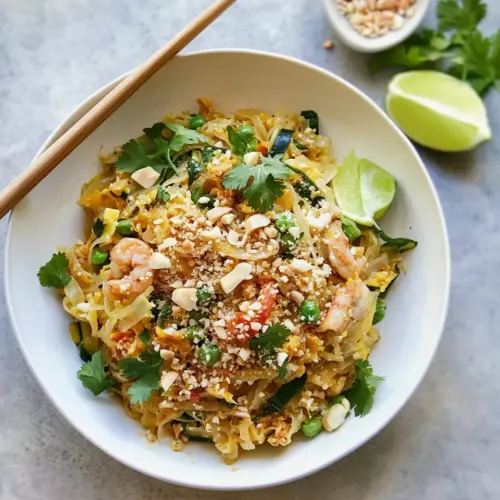
Spaghetti Squash Pad Thai
Spaghetti Squash Pad Thai is a light, flavorful twist on the classic, featuring tender vegetable noodles, savory proteins, and a tangy coconut aminos and rice vinegar sauce. The dish is creamy and slightly sweet with crunchy bean sprouts and chopped peanuts for texture, perfect for an easy weeknight dinner that still feels special. Try it for a healthy swap that does not skimp on satisfaction.
Equipment
- Instant Pot
- Chef's Knife
- Cutting Board
- Skillet
- Forks
Ingredients
- 1 medium-sized spaghetti squash about 3-4 lbs Roast or bake to create tender, noodle-like strands that serve as the primary low-carb base for the dish; scoop with a fork to separate into spaghetti-like ribbons and season lightly before combining.
- 1 tablespoon avocado oil Sauté briefly to provide a neutral, high-heat fat that helps brown proteins and vegetables while adding a mild buttery texture without overpowering other flavors.
- 1 lb . chicken breasts about 2, diced Cook thoroughly in the pan to add lean protein and substance; dice into bite-sized pieces to ensure even cooking and absorb surrounding sauce flavors.
- 12 large shrimps cleaned and deveined Sear quickly to contribute sweet, briny seafood flavor and a contrasting texture to the chicken; pat dry before cooking for better browning and toss in near the end to avoid overcooking.
- 2 cloves garlic crushed Crush and sauté early to release aromatic oils that build the savory backbone of the dish; infuse the oil with pungent garlic flavor that complements both shrimp and chicken.
- 1 small red onion diced Sauté until translucent to add mild sweetness and a subtle bite; dice finely so the onion melds into the sauce and balances the overall flavor profile.
- 2 mushrooms thinly sliced Slice thinly and cook briefly to add earthy, umami notes and a meaty texture; distribute evenly so mushrooms absorb the sauce and complement the vegetables.
- 1 carrot diced Dice and sauté to introduce sweetness, color, and a slight crunch that contrasts with the soft squash strands; carrots also add natural sugars that balance tangy elements.
- 1/2 cup bean sprouts Toss in near the end to provide crisp, fresh crunch and a light vegetal flavor; bean sprouts brighten the texture and add classic Pad Thai character.
- 4 scallions thinly sliced Finish scattered on top to add mild oniony flavor and a crisp, green freshness; slice thinly and sprinkle as a garnish or stir in for delicate flavor.
- 3 eggs scrambled Scramble and fold into the mixture to add richness, silkiness, and protein; cook gently so eggs form small curds that cling to the squash and sauce.
- 2 tablespoons coconut aminos Whisk into the sauce as a savory, slightly sweet soy alternative that brings umami without wheat; use to season proteins and bind ingredients together.
- 3 tablespoons rice vinegar Mix into the sauce to add bright acidity and a gentle tang that balances sweetness and saltiness; helps deglaze the pan and lift flavors.
- 2 tablespoons coconut sugar optional, omit for Whole30 or keto Stir in to add sweet depth and help achieve a balanced sauce; note optional status for dietary needs while providing caramelized sugar notes when included.
- 1 teaspoon red pepper flakes Sprinkle sparingly to introduce heat and a subtle smoky spice that elevates the overall flavor profile; adjust quantity to control the dish's spiciness.
- 1/2 teaspoon garlic powder Season lightly to add a concentrated garlic flavor where fresh garlic isn't desired; use sparingly to avoid overpowering other aromatics.
- chopped peanuts for garnish Crush or chop and sprinkle as a crunchy, salty garnish that adds texture contrast and nutty richness to each bite.
- lime for garnish Slice or wedge and serve alongside to provide bright citrus acidity for squeezing over the finished dish, enhancing freshness and balancing richness.
Instructions
- Cut 3 lb. spaghetti squash lengthwise and scoop out seeds.: You will notice a firm, pale interior that yields slightly under pressure when the squash is ripe; the seeds nestle in a fibrous pocket that smells mildly sweet when exposed. Use a sturdy chef's knife and a towel under the squash to stabilize it, pressing down with steady force until you slice through. Scoop out the seeds and pith with a spoon, which prevents excess moisture from steaming the flesh later. A common mistake here is trying to cut a slippery squash without support, which can be dangerous, so always secure it first.
- Add 1 cup of water to the Instant Pot.: The small pool of water creates steam that cooks the squash evenly and quickly, producing tender strands. Pour with care to avoid splashing the lid sealing ring, and double check that the insert is properly seated. If you skip liquid, the pressure cooker will not build steam and the squash will remain firm. You should hear the gentle hum as pressure builds, signaling the cooking environment is set.
- Stack the spaghetti squash on top of each other (cut-side up).: Positioning the halves cut-side up allows steam to penetrate directly into the flesh, softening it uniformly. Arrange them so they are stable, and if they wobble, tuck a rolled towel beneath the halves to stabilize. This orientation reduces the chance of one side overcooking and the other remaining firm. If placed cut-side down, the top may stay too firm and resist shredding.
- Close the lid and make sure the knob is turned to sealing.: Hearing the valve click into place gives you confidence that the Instant Pot will trap the steam. Ensure the silicone gasket is clean and properly seated, because a misaligned gasket can prevent pressure from building. If the lid does not seal and pressure fails to accumulate, the squash will steam rather than pressure cook, extending the time and producing a different texture.
- Set to manual high-pressure for 10 minutes (increase if your squash is larger than 3 lb.): Ten minutes at high pressure typically yields tender, shreddable strands for a 3 lb. squash, and the steam will perfume the kitchen with a sweet squash aroma. If your squash is noticeably larger, add a few extra minutes to ensure the center softens. The mistake here is underestimating size; an undercooked center will resist forming noodle like strands and feel dense when shredded.
- When the timer goes off, turn the vent on the top of the lid to venting to release the steam.: As you carefully flip the valve to venting, you will see a gust of steam and feel heat; use a long utensil or towel to protect your hand. This quick release reduces carryover cooking but you must do it responsibly to avoid burns. Do not place your face over the valve, and keep children away during venting, since the steam is intensely hot.
- Once the venting knob has dropped, open the lid and shred the spaghetti squash with two forks to turn squash into spaghetti-like noodles!: The first impression is a puff of warm, sweet squash aroma and delicate strands that pull away with little resistance; use two forks in opposite directions to tease out long noodles. Visually, you want thin, separated strands rather than clumps, and the texture should be tender yet slightly toothsome. If pieces are still dense, you may return the halves to the Instant Pot for a couple more minutes, as undercooked squash will create gummy clumps rather than separate strands.
Notes
- Use pre cooked chicken to save time: If you have leftover roasted or shredded chicken, fold it in at the end to warm through rather than cooking raw pieces, which cuts hands on time and preserves juiciness.
- Omit coconut sugar for low carb
- Adjust heat with red pepper flakes so you control the spice level: Add conservatively at first, then increase if you want a louder finish.
- Reserve crunchy garnishes to add at serving: Keep bean sprouts and chopped peanuts aside until plating so they stay crisp and texturally distinct.
- Double the sauce if you like saucy bowls: Preparing extra sauce ensures every strand is well coated, and leftover sauce stores well for quick reheats.